
Nastrond (Náströnd): Grisly Hall Of Corpses – Norse Vision Of Most Terrible Place In Niflheim, Kingdom Of The Dead
A. Sutherland - AncientPages.com - In Norse mythology, Nastrond (Náströnd) is the 'strand of corpses.' It is the most terrible part of Niflheim, ruled by the god Loki's terrible daughter, Hel.
The grisly Nastrond shore in Hel's kingdom, located under one of the roots of Yggdrasil, is a dark and wet underground cave. All the doors of Nastrond are oriented towards the glacial north to accommodate the terrifying sounds of the winds.
 People wade through venom dripping from the serpents above in Náströnd as attested in Völuspá. An illustration for Völuspá. Lorenz Frølich (1820–1908)
The walls are made of twisted snakes pouring their deadly venom. The condemned are tortured by the snakes' poisonous fangs turned towards them and the bites of the wolf Fenrir.
Nastrond is a destination of suffering for those guilty of murder, adultery, and oath-breaking. According to the Norsemen's beliefs, these were the worst possible crimes, and the only punishment they could get was the terrible afterlife in the horrors of Nastrond.
Nastrond is one of the nine punishment holes to which those who committed crimes are taken; they die for the second time after their sentence at the court.
Nidhogg, a dreadful winged corpse-eating dragon, feeds on the corpses of the evil dead. At Ragnarok, the end of the world, Nidhogg would harvest many corpses and continue living in the new world.
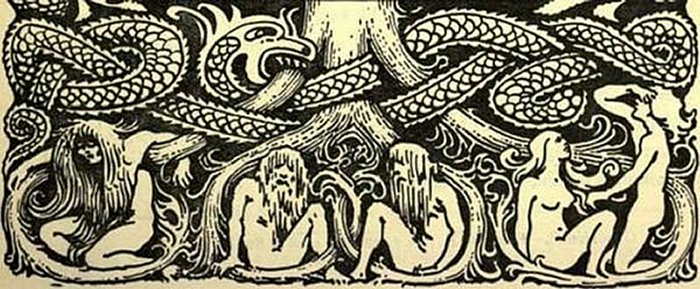 Norse Nastrond was a part of Hel's kingdom of dead.
Nastrond reminds us of the Greek Tartarus, where the wicked are punished with equal cruelty.
Nastrond is not particularly well-known, and it is cited only from two known sources: one is Völuspá, and another is Prose Edda.
According to the early 13th century Snorri's Edda, on the Nastrond, the nails of the dead built a ship called 'Nagelfare.'
In Norse beliefs, 'Nagelfare' (Old Norse "nail farer") is a boat made entirely from the fingernails and toenails of the dead. During the events of Ragnarok, 'Nagelfare' is prophesied to sail to Vigrid (or Vigridr) carrying the participants of the most significant confrontation of all times, the battle with the gods, which takes place on the plain of Vigrid.
Nearly all the participants must die.
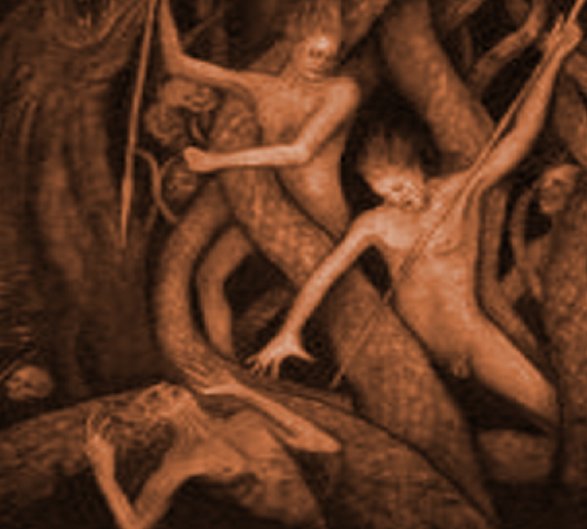
In the beliefs of the Norsemen, there are several places of death, such as Valhalla, Odin's hall that provides a posthumous home for those slain gloriously in battle, and Folkvang, a field ruled over by the goddess Freya where half of those that die in combat go upon death. There is also Niflheim, ruled by Hel, and the hall of the goddess Ran.
In fact, in none of these places, the dead suffer, but in Nastrond, they would suffer. At this point, Nastrond emerges as a symbolic place. In Nastrond, the deceased is punished forever. The condemned have no way out, only the afterlife full of suffering.
Thus this mythical place is somewhat different from other Norse posthumous conceptions.
Written by - A. Sutherland - AncientPages.com Senior Staff Writer
Updated on February 12, 2023
Copyright © AncientPages.com All rights reserved. This material may not be published, broadcast, rewritten or redistributed in whole or part without the express written permission of AncientPages.com
Expand for referencesReferences:
Sigfusson S. and Sturluson S. The Poetic Edda & The Prose Edda
Christiansen E. The Norsemen of the Viking Age
GG Koe, Nidhogg
More From Ancient Pages
-
 Spells And Magic Were Important To Samurai Warriors And Used In Battles
-
 Clay Tablets Reveal Sumerian Doctors Treated Disease With Spells Of Magic And Medicine
-
 Malagana Remarkable Sophisticated Goldwork: Legacy Of Colombian Pre-Hispanic Culture
-
 Archaeologists Focus On Greek Poet Aratus’ Memorial Tomb And Ruins Of Soli Pompeiopolis
-
 Fylgja – Norse Guardian Spirit Was Deeply Respected
-
 Cerne Abbas Giant: Researchers Attempt To Determine Age Of Giant Figure
-
 Giant Meteorite Impacts Created The Continents – Evidence Found
-
 Neanderthals In Swabian Jura Used Complex Tool-Making Techniques 45,000 Years Ago
-
 Unusually Arranged Skeletons And Artifacts Found Inside A 1,500-Year-Old Tomb In Berenice Troglodytica, Egypt
-
 Image Of The Day: Chacmool – Famous Ancient Statue Of Pre-Columbian Mesoamerica
-
 Unknown 8,000-Year-Old Human Settlement With A Rock-Cut Temple, Altar And Inscriptions Discovered In Al-Faw, Saudi Arabia
-
 Stonehenge Served As An Ancient Solar Calendar And We Know How It Worked – Scientists Say
-
 Mysterious Disappearance Of Louis Le Prince – Murder And Cover-Up?
-
 Oldest Sea Reptile From Age Of Dinosaurs Found On A Remote Arctic Island
-
 Rohonczi Codex Still Undeciphered – Is It The Most Secret Book Written In A Code?
-
 Stonehenge’s Monumental Altar Stone Came From Scotland – Not Wales As Previously Thought
-
 7,000-Year-Old Grains Hints At Origin Of Swiss Pile Dwellings
-
 Collection Of 2,500 Years Old Sealed Coffins Unearthed In Saqqara, Egypt
-
 Mysterious Manuscript 512 Reveals Lost Ancient City Hidden In The Amazon Jungle
-
 Valley Temple At Giza: Great Masterwork Testifies To Remarkable Engineering Skills Of Megalith Builders

