
Ancient Chinese Tai Chu Calendar Was Defined By Emperor Han Wu
Conny Waters - AncientPages.com - Have you ever wondered what the current Chinese calendar is called?
In ancient China, there were many different calendars. The current Chinese calendar was defined by Emperor Wu of the Han Dynasty in 104 BC. It was called the Tai Chu calendar.
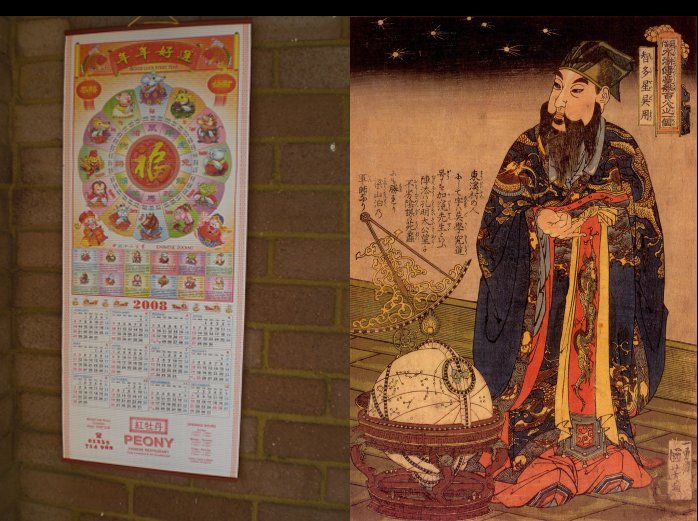
The traditional Chinese calendar is a combination of a solar calendar, based on the “position” of the Sun and the resultant seasonal phenomena, and a lunar calendar that follows the lunar phases.
Like in other ancient cultures, Chinese calendars were used to determine days of festivities or natural events, like solar eclipses, and to prognosticate auspicious or non-auspicious days.
The Chinese calendar cycles through 12 animals: the rat, ox, tiger, rabbit, dragon, snake, horse, sheep, monkey, rooster, dog, and pig. There is also an element associated with each year of the Chinese calendar. These elements are wood, fire, earth, metal, and water.
According to the new calendar, a year had 365.2502 days and a month 29.53086 days. The Tai Chu calendar started the New Year in January rather than October. Besides, the new calendar adopted the 24 solar terms, which were useful for the farming season. Based on the results from celestial measurement and records by court astronomers, the Tai Chu Calendar also worked out the cycle of solar eclipse - 135 months.
The first relatively complete calendar in China, the Tai Chu Calendar was also the most advanced of its kind in the world at its time and was used for a period of 189 years after its inception.
Written by Conny Waters – AncientPages.com Staff Writer
Copyright © AncientPages.com All rights reserved. This material may not be published, broadcast, rewritten or redistributed in whole or part without the express written permission of AncientPages.com
More From Ancient Pages
-
 DNA Study Of Remains At Delaware Site Find Kinship Among European Settlers, African Slaves
-
 2,500-year-old Saka settlement found in Lake Issyk-Kul: could this be where St Matthew is buried?
-
 Rare Intact Etruscan Tomb With Remains Of Four Individuals Resting On Carved Stone Beds
-
 Archaeologists Search For The Tomb Of Biblical Joshua At Khirbet Tibnah
-
 Kallikantzaroi: Naughty Nocturnal Goblins Emerge From Underground Only During Twelve Days Of Christmas
-
 4000-Year-Old Egyptian Leather Manuscript Forgotten For More Than 70 Years – Found
-
 The Untold Story Of The Great Sphinx – Puzzling Discoveries – Part 2
-
 Mystery Of The Ancient Giant Wish Stone At Hattusa
-
 Ancient Mesopotamian Discovery Changes Our Understanding Of Early Agriculture Practices
-
 Rare 2,800-Year-Old Assyrian Scarab Amulet Found In Lower Galilee
-
 Monumental Fortification That Protected The Kings Of Jerusalem Unearthed In The City Of David
-
 Native American Sun Dance: Important Ceremony Of The Plains Indians Of North America
-
 Artifacts And Remnants Of 3,000-Year-Old City Unearthed Near Great Zab River In Iraqi Kurdistan
-
 Unexplained Phenomenon In East Anglia – Time Portal And Strange Glimpses From The Past – Part 1
-
 Ancient Circular Mound Villages Hidden In The Amazon Jungle Represent Native American Cosmos – New LIDAR Discovery
-
 On This Day In History: Ramesses II Became Pharaoh Of Ancient Egypt – On May 31, 1279 BC
-
 Rare Discovery: Giant Stone Artifacts Found On Ice Age Site In Kent
-
 Mysterious Rongorongo Script Remains Undeciphered – Does It Contain A Prophetic Warning?
-
 Orang Bunian: Mysterious Invisible Whistle People Living In Forests In Malay Folklore
-
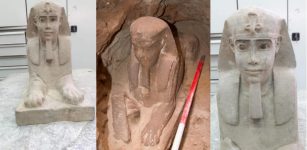 Sandstone Statue Of A Sphinx Discovered In Kom Ombo Temple

