Hogmanay: Scotland’s New Year Celebration Inherited From The Vikings
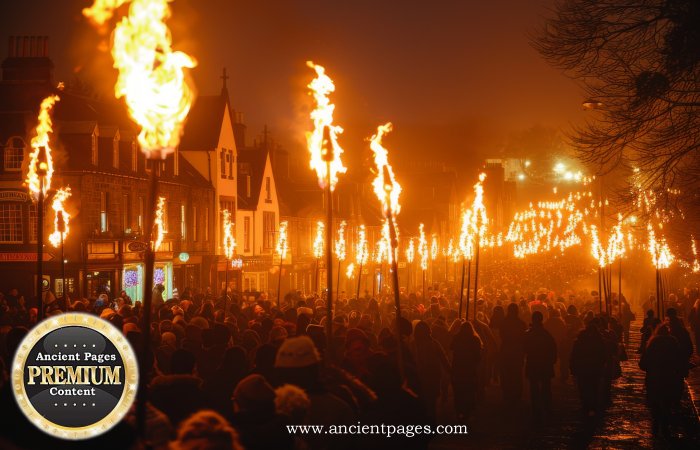
Ellen Lloyd - AncientPages.com - On December 31, Scotland celebrates Hogmanay. It’s a very old tradition, and the celebrations continue into the first couple of days of January. Many local areas have their own customs for celebrating Hogmanay, which are all spectacular!
Traditional Hogmanay celebrations were originally brought to Scotland by the invading Vikings in the early 8th and 9th centuries.
The New Year is still called Yule, derived from the Scandinavian word for the midwinter festival. The long history of Viking and Norse settlement in Scotland is the reason why these two nations share many ancient traditions.
Where Did The Word Hogmanay Come From?
The origin of the word "Hogmanay" is unknown. Many theories have been put forward, and opinions differ as to whether the word originated from the Gaelic oge maidne ("New Morning"), Anglo-Saxon Haleg Monath ("Holy Month"), or the Norman French word hoguinané, which was derived from the Old French anguillanneuf ("gift at New Year")
It has also been suggested that it came from the French au gui mener ("lead to the mistletoe") or a Flemish combo hoog ("high" or "great"), min ("love" or "affection") and dag ("day").
Hogmanay consists of several ancient traditions that are still practiced today.

This is a preview of our premium article available only to members of Ancient Pages.
Become a member to read more - Click here
If you are already a member and have logged in to your account, you can access the article here

More From Ancient Pages
-
King Geirrod Betrayed His Brother Agnar And Sent Him To Die But Justice Finally Prevailed
Featured Stories | Feb 14, 2024 -
Does A Renaissance Painting Offer Proof Of Unknown Advanced Technology?
Ancient Mysteries | Aug 7, 2018 -
Curious Pre-Columbian Clay Figurines With Smiling Faces From Veracruz
Ancient Mysteries | Jan 29, 2018 -
Mysterious Death Of Amy Robsart – Murder, Accident Or Suicide?
Featured Stories | Jun 20, 2024 -
Viking Age Burial With An Unusual Individual Discovered By Cambridge Students
Archaeology | Feb 19, 2026 -
Mysterious Biblical Celestial City And Its Connection To The North Star – The Arrival – Part 2
Biblical Mysteries | Feb 26, 2021 -
Rare 1,000-Year-Old Viking Wooden Bowl Found By Young Boy
Archaeology | Oct 24, 2022 -
Troublesome Ancient History Of Forks That Were Long A Shocking Sensation
Featured Stories | Nov 20, 2023 -
Ancient Knowledge About The Cycle Of Renewal And The Next Human Phase – Gods And Guardians Of The Earth
Ancient Mysteries | Feb 16, 2020 -
Ancient Greek Goddesses Aphrodite And Artemis – Rivalry And Conflict Over Prestige Illustrated In Hippolytus By Euripides
Featured Stories | Jun 13, 2018 -
Camazotz: ‘Death Bat’ Vampire God In Ancient Maya Beliefs
Featured Stories | Jun 8, 2017 -
Viking House The Size Of Two Tennis Courts Discovered In Norway
Archaeology | Jul 20, 2023 -
Mystery Of The Lost Continent Destroyed By An Ancient Cataclysm – Wars Between The ‘Yellow Men And Black’ Men – Part 1
Ancient Mysteries | Aug 10, 2021 -
Day Of The Dead: From Aztec Goddess Worship To Modern Mexican Celebration
Ancient Traditions And Customs | Oct 30, 2019 -
Mystery Of Egyptian Tomb 10A And The Mummy’s Head – A 4,000-Year-Old Crime
Ancient Mysteries | Apr 27, 2022 -
Fragarach: Supernatural Sword That Controlled Winds, Cut Through Wood, Metal And Bricks In Irish Myths And Legends
Featured Stories | Apr 30, 2025 -
Biblical Mystery Of Urim And Thummim: God’s Puzzling Communication Devices
Ancient Mysteries | Jun 18, 2017 -
Sacred Artifact With Mystical Powers – The Legend – Part 1
Ancient Mysteries | Apr 24, 2019 -
Have Archaeologists Found Evidence Of A Universal Ancient Civilization That Gave Birth To All Other Cultures Across The World?
Featured Stories | Mar 13, 2025 -
Lejre Viking Hall And Beowulf – What Is The Connection?
Featured Stories | Jun 3, 2024