
Why Were Ba And Ka Powerful Elements Of Soul In Ancient Egyptian Beliefs?
A. Sutherland - AncientPages.com - In Egyptian beliefs, the soul had three parts: the Ka, the Ba, and the Akh. These three spiritual elements found refuge in the body. Therefore, it was vital to keep the body intact after death and to equip it with the necessary items for life.
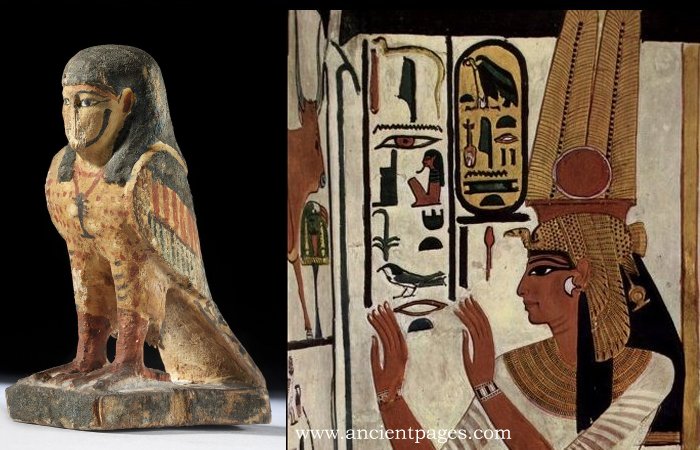
The Ba was a spiritual aspect of an individual, usually depicted as a bird with a human head, and, in this form, the Ba of a deceased person could move through the underworld and revisit the earth by day.
So, the Ba-bird represented the ancient Egyptian concept of the soul. The Ba was power, and just as the gods had power (which they could multiply at will), the people also had their Ba.
In the beginning, during the Old Kingdom (c. 2613-2181 BC), the Ba was only attributed to the god-king. It was expressed with the sign of the 'jabiru-bird.' The situation changed during the First Intermediate period (2181-2040 BC) and the Middle Kingdom.

This is a preview of our premium article available only to members of Ancient Pages.
Become a member to read more - Click here
If you are already a member and have logged in to your account, you can access the article here

See also:
Aaru – Field Of Reeds: Kingdom Of Osiris Was The Ancient Egyptian Paradise
Never-Ending Battles Between God Ra And Indestructible Apophis In Ancient Egyptian Beliefs
Pyramid Texts Of Ancient Egypt That Charted Journey Of Pharaohs Into Afterlife
More From Ancient Pages
-
 Mystery Of The Faceless Creature – Ancient And Modern Sightings
-
 Curious Historical Observation Of A Bronze Age Warrior Who Shouldn’t Exist
-
 Unknown Holographic Technology Hidden In Old Monastery Reveals A Surprising Secret
-
 Bizarre And Rare Finds In Viking Houses – What Was Behind This Mysterious Practice?
-
 Edfu Texts Reveal Secrets Of Predynastic Egypt And Zep Tepi
-
 Ancient Knowledge Of Levitation And Antigravity
-
 Askeladden – Little Trickster That Succeeds Where All Others Fail
-
 Was The Tree Of Knowledge Perhaps The Hall Of Records? – A Mysterious Ancient Library Containing Forbidden Knowledge
-
 The Punishment Of A Troll Woman Whose Curse Turned Against Her
-
 Mystery Of Lady Of Elche – Puzzling Artifact Of An Unknown Queen Or Priestess
-
 Norse Legend Of Hero Sigmund And The Magical Sword In The Branstock Tree
-
 Secret Hidden Freemasonic Messages Concealed In Ancient Egyptian Artifacts And Roman Works – Curious Stellar Symbol – Part 2
-
 Basajaun: Giant Blacksmith, ‘Lord Of The Woods’ Was Reluctant To Share Knowledge With Humans
-
 The Faery Grail Of Hospitality And Accord- The Forgotten Story – Part 1
-
 Old Age Isn’t A Modern Phenomenon: Many People Lived Long Enough To Grow Old In The Olden Days, Too
-
 Ancient Egyptian Knowledge Of The Cosmic Engine And Unseen God Of The Universe
-
 Gruvrået: The ‘Mistress of Mines’ Who Watched Over Mines And Precious Ore Quarries – Was She Always So Innocent?
-
 What Happened To The Ancient Tribe That Entered A Secret Underground World And Never Came Back?
-
 Evidence Reveals Ancient Saudi Arabia Had A Complex, Thriving Society, Contradicting Notions Of A Struggling Population In Barren Lands
-
 Qilin – One Of Four Noble Animals In Chinese Myths And Legends

