
City Of Ephesus And Celsus Library With More Than 12,000 Scrolls
A. Sutherland - AncientPages.com - This library - built in 117 AD - is one of the most beautiful structures in Ephesus.
It was a monumental tomb for Gaius Julius Celsus Polemaeanus - the governor of the province of Asia and a great lover of books.
The construction of the building began in 110 AD. The library was donated by his son - Julius Aquila Polemaeanus, who spent 25 000 denars for this purpose. The construction was latere finished by his descendants in 135 AD.
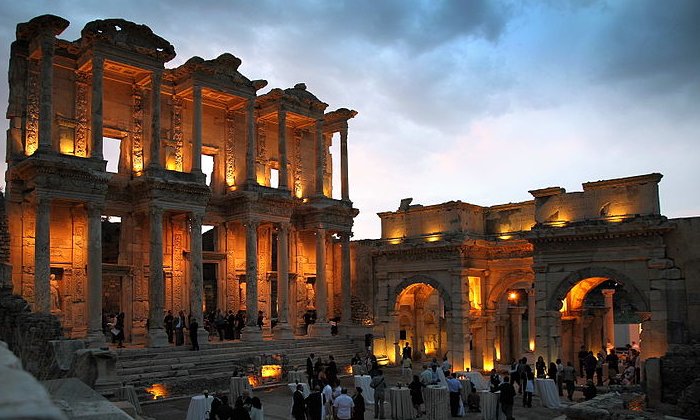 Image credit: Austrian Archaeological Institute - CC BY-SA 3.0
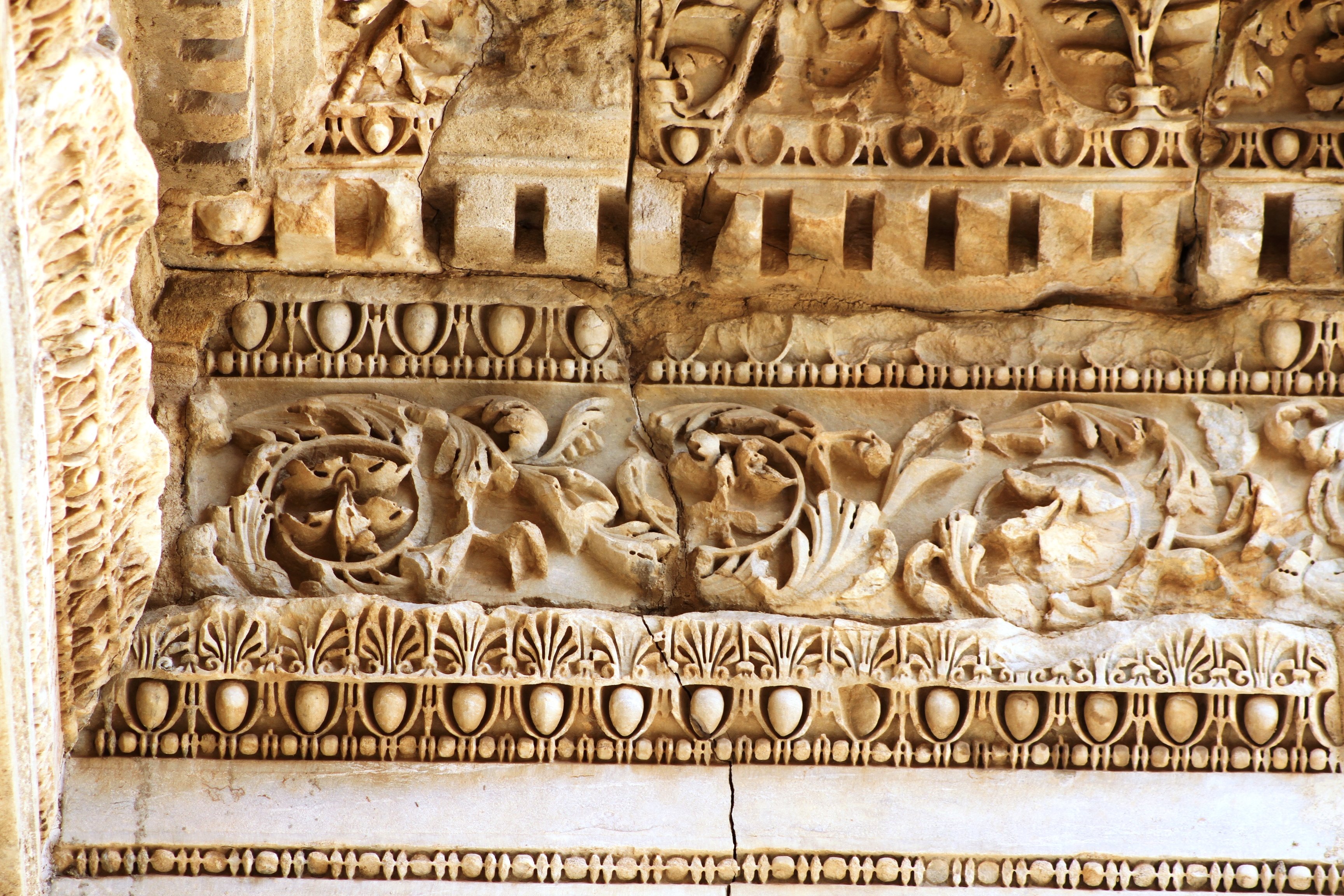
Resting on a nine-stepped podium 21m in length, the impressive surviving facade is richly decorated with relief carvings and has two stories - each with three pairs of columns capped with Corinthian capitals.
Celsus himself was entombed beneath the ground floor of the library in a lead coffin encased in a decorated marble sarcophagus. Across the entrance, there was a statue of Athena, the goddess of wisdom. The library stored more than 12,000 scrolls and it was the third richest library in ancient times after the Alexandra and Pergamum.
The library was a fascinating place with countless valuable literary works, and so was Ephesus, which is dated back to 2000 years BC. The city's long history includes the capture of Ephesus by the Kimmers (Cimmerians) in the 7th century BC, by the Lydians in 560, and later in 546 BC by the Persians, and their domination until Alexander the Great defeated the Persians in 334 BC.
The ruins of Ephesus, located near Selçuk town at 70 kilometers (44 miles) south of Izmir, is now an archaeological site with many ancient ruins including the Temple of Isis is situated at the center of the city's Agora, the fountain of Sextilius Pollio built in the year 93 AD, the Temple of Domitian (81-93 AD), the Gate of Heracles (Hercules), the fountain of Trajan built in the years 102-114, and the Temple of Hadrian appears dated to 117-138 AD,
 Celsus Library in Ephesus. Photo credits: Jose Luiz/Wikimedia
In the Celsus Library, the scrolls of the manuscripts were kept in cupboards in niches on the walls. There were double walls behind the bookcases to prevent them from the extremes of temperature and humidity.
The facade of the library has two stories, with Corinthian-style columns on the ground floor and three entrances to the building, flanked by four statues set back in niches.
The builders used an optical trick in that the columns at the sides of the facade are shorter than those at the center, giving the illusion of the building being greater in size.
Today the statues in the niches of the columns are copies of the originals. The interior of the library and all its books were destroyed by fire in the devastating earthquake that struck the city in 262. Only the facade survived. About 400 AD, the library was used for other purposes. The facade was completely destroyed by a later earthquake, probably in the late Byzantine period.
The statues symbolize wisdom (Sophia), knowledge (Episteme), intelligence (Ennoia), and valor (Arete) - the virtues of Celsus. The library was restored with the aid of the Austrian Archaeological Institute and the originals of the statues were taken to Ephesus Museum in Vienna in 1910.
Written by – A. Sutherland - AncientPages.com Senior Staff Writer
Copyright © AncientPages.com All rights reserved. This material may not be published, broadcast, rewritten or redistributed in whole or part without the express written permission of AncientPages.com
More From Ancient Pages
-
!["That most enduring of romantic images, Aristotle tutoring the future conqueror Alexander".[147] Illustration by Charles Laplante [fr], 1866](https://www.ancientpages.com/wp-content/uploads/2017/06/aristotleraslexanderlyceum-307x150.jpg) Aristotle: First Book Collector Who Assembled The First Great Library Of Antiquity
Aristotle: First Book Collector Who Assembled The First Great Library Of Antiquity
-
 What Was Inti Raymi And Why Was It Celebrated By Inca?
-
 Newly Described Species Of Dome-Headed Dinosaur May Have Sported Bristly Headgear
-
 Ancient Roman Coffin Found In Leeds Revealed To The Public For The First Time
-
 History Of Middle Ages Altarpieces Has Been Re-Written
-
 Bizarre And Rare Finds In Viking Houses – What Was Behind This Mysterious Practice?
-
 Is The Legendary Tsuchinoko Real?
-
 Bronze Age DNA Shows Direct Genetic Link To Current Inhabitants Of Southern Poland
-
 Gorgo – Queen Of Sparta And Wife Of King Leonidas Broke A Secret Code And Stopped An Invasion
-
 Stunning CGI Reconstruction Of Saint Thomas Becket’s Shrine
-
 Ancient Manuscript In Museum Reveals Discovery Of Objects Unknown To Modern Science – Inside The Chamber – Part 1
-
 Mysterious And Unexplained Encounter With Unusual Tiny Beings In Italy – The Thing – Part 1
-
 Famous Bayeux Tapestry May Solve The Planet Nine Mystery
-
 Fossil Of Prehistoric Saber-Toothed Cat Found In Texas
-
 Why Was This Eerie Castle With Frightening Underground Secrets Really Constructed?
-
 Ancient History Of The Samurai Armor
-
 Abu Erteila’s Lost Temple And The Meroitic Empire: New Discoveries Shed Light On Nubian Civilization
-
 Amazing Tomb Of Yuya And Tjuyu Filled With Ancient Treasures In The Valley Of The Kings
-
 Spectacular Giant Bronze Age Hall Found Near Berlin, Germany May Be Connected To Legendary King Hinz
-
 Pre-Pharaonic Petroglyphs Used To Study Egyptian Cult Of The Gods

