
Troublemaker Eris: Greek Deity That Ignited Hatred Among All And Caused The War By Wreaking Destruction
A. Sutherland- AncientPages.com - The Greek goddess Eris means everything wrong: envy, jealousy, hatred among human beings, chaos, confusion, tragedies, and conflict. Her attribute, the golden apple (Apple of Discord), was related to a great disaster.
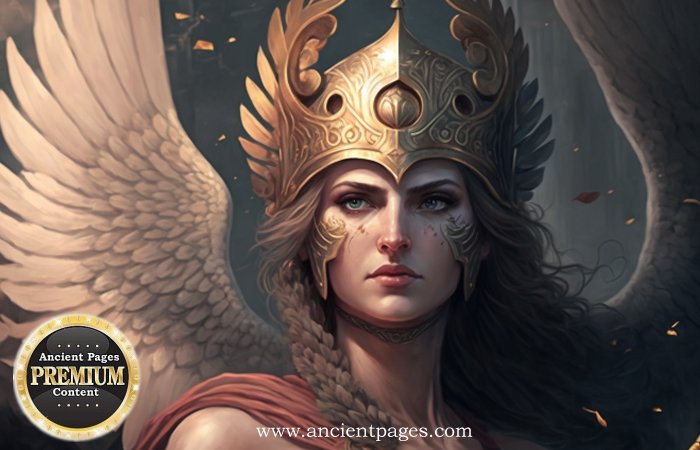
Eris (her Roman counterpart was Discordia) had two faces and two characters: one was destructive, as she liked to destroy everything she met along the way, and the other was creative when she was stimulated into action; she could represent a spirit of healthy competition among people.
Generally portrayed as a beautiful female spirit (or, in some versions, ugly), Eris had large wings and dark, straight hair. Otherwise, she was a negative figure and not a crowd favorite due to her problematic behavior. She caused chaos and stirred up trouble wherever she set foot.

This is a preview of our premium article available only to members of Ancient Pages.
Become a member to read more - Click here
If you are already a member and have logged in to your account, you can access the article here

See also:
Wonderful Long-Lived Nymphs In Greek And Roman Mythologies
Troublesome Momus: Deity Of Irony, Ridicule, Sarcasm And Harmful Jokes In Greek And Roman Mythology
More From Ancient Pages
-
 Ancient Greeks Regret Inventing The Theater – But Why?
-
 Advanced Ancient Civilization’s Encounter With Primitive People Led To Something Extraordinary – Thought-Provoking Theory Suggests
-
 Obscure History Of Skara Brae – Older Than Stonehenge And Great Pyramids Of Giza Was Home To The Little People
-
 Mystery Of Biblical Noah’s Strange Connection With Red-Skinned Giants And The Watchers – Not-Of-This-World Emergence – Part 1
-
 Unexplained Visions Of Airmen – Strange Presence And Disturbances – Part 1
-
 Did Etruscans Solve The Mystery Of Synchronicity And The Secret Language Of The Stars?
-
 Strange Ancient Artifacts And Foreigners Who Were Not Meant To Be In North America
-
 Reconstructed Roman Gateway Tells The Story Of Britain’s Invasion
-
 They Spoke The Language Of The Gods – Secret Symbols, Unknown Books And Manuscripts – Part 2
-
 Madagascar Cave Art Hints At Ancient Connections Between Africa And Asia
-
 Svarog: God Of Cosmic Fire And Ruler Of The Sky In Pre-Christian Slavic Pantheon
-
 Strange Encounter With A Supernatural Being In The 1790s
-
 Playful Master Of Harmless Mischief Puck (Robin Goodfellow) And Shakespeare’s Visit To The Magic Valley In The Midsummer Dream
-
 Four Magical Treasures Of Tuatha De Danann
-
 Danger Lurking In The Woods – Mysterious Vanishings, Deaths And Unusual Behavior – Part 3
-
 Evidence Scots And Irish Settled Iceland A Century Before The Vikings?
-
 Great And Never Explained Mysteries Of Nevada’s History
-
 What They Never Told Us About Lullabies When We Were Children (Or Adults)
-
 God Odin Was Exiled From Asgard But He Had No Regrets About Breaking Norse Society’s Norms
-
 Bizarre And Unexplained Phenomenon That Defied The Laws Of Nature

