
Vikings’ Legacy Is Still Alive In Ireland – DNA, Ancient Ruins And Modern Cites Reveal
Jan Bartek - AncientPages.com - Vikings left an everlasting legacy in Ireland. While you are in Ireland, you can visit archaeological places where battles between Vikings and the Irish were fought. Many ancient ruins in Ireland tell a lot about the country's Viking heritage.

Skeletons of Norse warriors and their artifacts are still unearthed in Ireland. DNA studies have revealed the Irish are much more genetically diverse than previously believed and have Viking and Norman ancestry. A comprehensive DNA studied showed 20 % of the Irish population can trace their origin to the Norsemen!
Add to this the fact the Norsemen founded many of the island Nation’s towns and cities, including its capital, Dublin, and the picture becomes clear. The Vikings’ legacy is still alive in Ireland.
Ireland’s Population Was in Decline Before The Arrival Of The Vikings
The first historical record of Vikings in Ireland occurred in 795 when the Norse warriors invaded the country. During the Viking raid, Rathlin Monastery was destroyed. This was the beginning of the Viking Age in Ireland, which lasted a little more than 200 years. From a historical perspective, it is a brief period, but those years were enough to leave a Viking legacy that still lasts.
Vikings did plunder a lot in Ireland. Monasteries were the main target because it was believed valuable treasures were stored there. However, the Norsemen also contributed to the creation and expansion of settlement, trade, and urbanization.
According to scientists from the Queen’s University Belfast, the population of Ireland was in serious decline for almost 200 years before the Vikings settled.
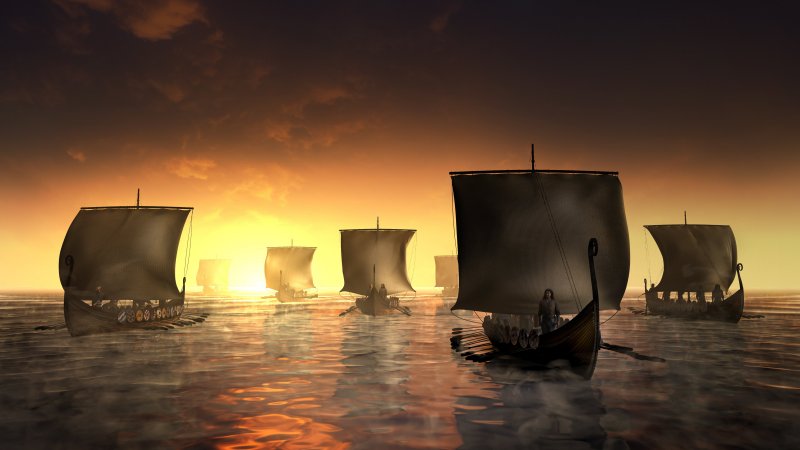
When the Vikings reached Ireland much changed. Credit: Adobe Stock - Vlastimil Šesták
“Around the year 700, this population in Ireland mysteriously entered a decline, perhaps because of war, famine, plague or political unrest. However, there was no single cause or one-off event, as the decline was a gradual process.”
The Vikings settled in Ireland in the tenth century, during the phase of decline and despite being few in number, they were more successful than the ‘natives’ in expanding their population. Today, genetic evidence suggests many Irish people have some Viking blood.” 1
Vikings Founded Many Cities And Towns In Ireland – Including Dublin
In the 9th century, the Vikings invaded the region around Dublin and established the Norse Kingdom of Dublin. “To the Vikings, the area around Dublin was in many ways an ideal place. It offered access to the deep waters and shelter from the often stormy Northern seas. The Irish climate was relatively mild, and there was access to vast forests- a valuable resource to repair their sturdy ships. The Kingdom of Dublin was established in 839, and Viking Chief Turgesius was its first king.
The new town of Dublin was fortified with a ditch and an earth rampart with a wooden palisade on top. Dublin became the earliest, largest, and most enduring Norse kingdom in all of Europe. The huge number of Viking artifacts and burials discovered in Dublin attest to this.
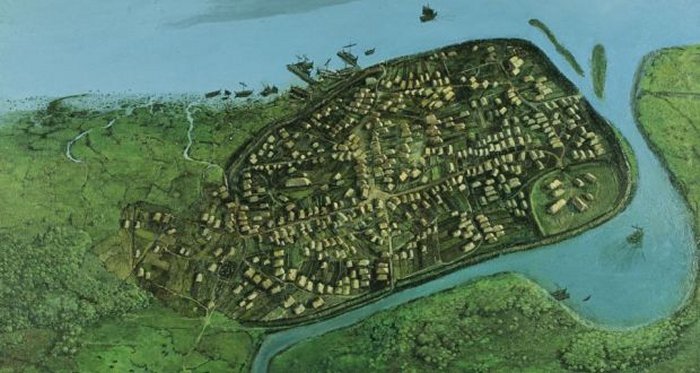
1014: Dublin 1,000 years ago, based on research by Dr. Patrick Wallace
In the late 11th stone walls were built around Dublin. The Vikings also erected an artificial hill where the men of Dublin met to make laws and discuss policy.” 2
Vikings also established other bases, including Waterford, Limerick, Cork, and Wexford. During excavations in Cork, archaeologists discovered a Viking settlement that is almost 1,000-year-old. All these Viking settlements became eventually “Ireland's first towns during the 10th century – a revolutionary development that helped transform Irish society.” 3
Viking DNA In Ireland
Norse Vikings' impact on the modern Irish genome has previously been largely unknown, but now there is more meaningful information on this subject. Some years ago, a massive Irish DNA Atlas project released the results of a comprehensive study. Researchers announced that 20% of the Irish populations are descendants of the Norsemen. In addition, scientists also discovered a strong Irish presence in Norway, about 6%.
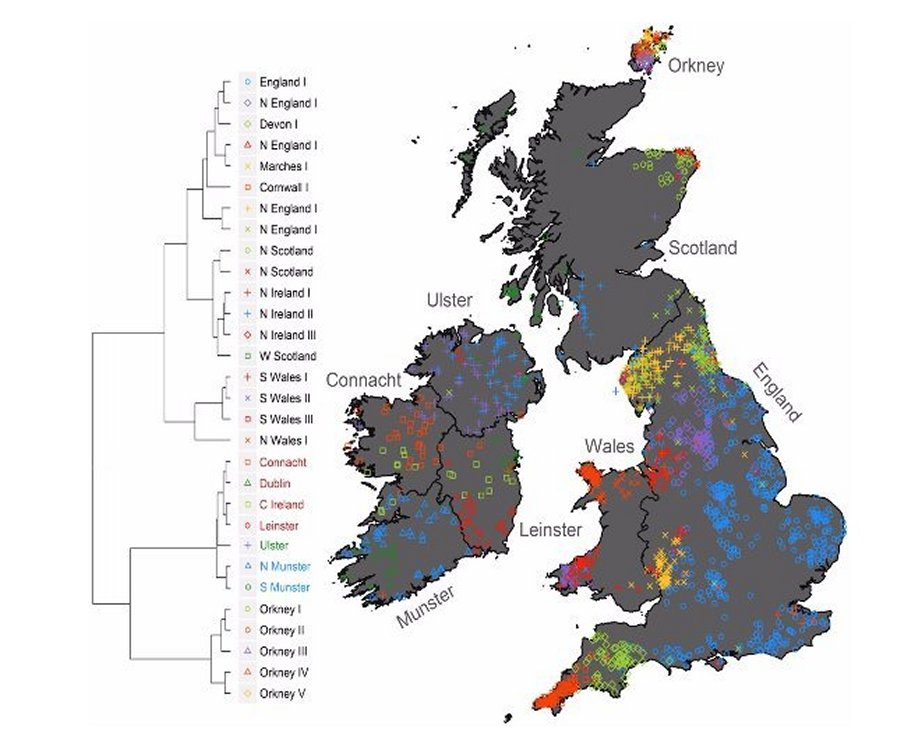
The clustering of individuals with Irish and British ancestry based solely on genetics. Shown are 30 clusters identified by fine structure from 2,103 Irish and British individuals. Credits: RCSI (Royal College of Surgeons in Ireland) and the Genealogical Society of Ireland
According to scientists, there was a “surprising amount of Norwegian-like ancestry in our Irish clusters. We also detected high levels of Norwegian ancestry in Orcadian and Scottish clusters and relatively low Norwegian ancestry in English and Welsh clusters. The Norwegian clusters that contribute significant ancestry to any Irish or British clusters predominantly consist of individuals from counties on the north or western coasts of Norway These areas are noted to be regions where Norse Viking activity originated from.” 4
Vikings were present in Ireland until the famous Irish hero Brian Boru forced the Norse warriors to leave his country. The battle took place on 23 April 1014 at Clontarf, near Dublin and it was a deceive moment in the history of Ireland. Just like many other freedom fighters, Brian Boru paid the highest price for the nation’s liberty. The Norse warriors killed him in a surprising attack.
Vikings left Ireland, but as you have just seen, their legacy is still alive, and it will be for a long, long time.
Written by Jan Bartek - AncientPages.com Staff Writer
Copyright © AncientPages.com All rights reserved. This material may not be published, broadcast, rewritten or redistributed in whole or part without the express written permission of AncientPages.com
Expand for references- Conny Waters - Ireland’s Population Was In Decline When Vikings Arrived To Settle, AncientPages.com
- Ellen Lloyd - Norse Kingdom Of Dublin Was Founded By The Vikings In 839 A.D., AncientPages.com
- National Museum Of Ireland - The Viking Age In Ireland
- Gilbert, E., O’Reilly, S., Merrigan, M. et al.The Irish DNA Atlas: Revealing Fine-Scale Population Structure and History within Ireland. Sci Rep 7, 17199 (2017). https://doi.org/10.1038/s41598-017-17124-4
More From Ancient Pages
-
 Mystery Of The Lost Continent Destroyed By An Ancient Cataclysm – Mysterious Islands – Part 2
-
 Dismantled Ancient Stone Circle In West Wales Was Used To Rebuilt As Stonehenge
-
 Unexpected Neanderthal Behavior In Spain’s Southern Pyrenees – Revealed
-
 Pre-Columbian Casarabe People In The Amazon Developed A Unique Drainage And Irrigation System
-
 Pompeii Region IX: Roman Advanced Construction Techniques In New Light
-
 Ancient Maya People Used Volcanic Ash To Build Pyramids When Huge Eruption Occurred
-
 Neanderthals Changed Ecosystems 125,000 Years Ago
-
 Halloween: Facts And History About All Hallows’ Eve And Its Connection With Samhain – An Ancient Celtic Festival
-
 Djémila – Lost City Of The Ancient Kingdom Of Numidia
-
 How Early Farmers In Scandinavia Overcame Climate Change
-
 Sophisticated Lenses Of Minoans Discovered In The Sacred Idaion (Ideon) Cave
-
 Oldest Living Culture: Research Reveals Indigenous Ritual Spanning 500 Generations
-
 Ancient Civilizations Invented Alcohol 10,000 Years Ago
-
 Ancient Ziggurat Of Aqar Quf Dedicated To God Enlil
-
 Fragments Of 6,500-Year-Old Figurine Of ‘Venus of Egerszeg’ – Unearthed
-
 Oldest Preserved Remains Of Bed Bug Found In Paisley Caves, Oregon
-
 On This Day In History: Anders Celsius, Swedish Astronomer And Mathematician Was Born – On Nov 27, 1701
-
 Remains Of 3,400-Year-Old Canaanite Citadel Unearthed In Nahariya, Western Galilee
-
 Controversial Tartaria Tablets: The First Writing System In The World?
-
 Wasabi Plant Can Save Ancient Bio-Deteriorated Papyrus

