
What Did A Day In Pharaoh’ s Life Look Like?
A. Sutherland - AncientPages.com - Ancient Egyptians believed that the great gods had created the universe and maintained order; they were also involved in people's everyday lives and survival.
One of the gods was also sent in a mortal form into the Nile Valley to rule as the king who would protect them from warlike and dangerous peoples of the Mediterranean world and look after their well-being.
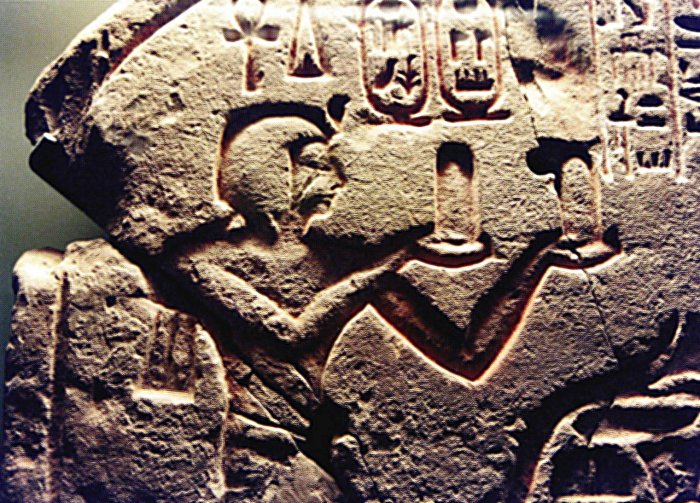 Pharaoh Ramses I making an offering before Osiris, Allard Pierson Museum. source
For more than 3,000 years, the pharaoh was the principal of everyday life, and he was seen as the gods' representative on Earth and one of the gods. He played a crucial role in the Egyptian cult. As a god and the personification of Egypt, he possessed more power than any other monarch recorded in human history.
However, he was not only a strong ruler but also a high priest, a lawmaker, and a battle commander. The pharaoh was both a political and a religious leader.
Why Did The Egyptians Believe That Pharaoh Was A God?
There were many reasons why the ancient Egyptians treated their ruler as a god. The Nile Valley people lived in a pre-scientific world and knew nothing about natural causes of lightning, thunder, good or bad crops, birth and death, storms, or drought. As it was believed, these 'phenomena' were caused by all-mighty and invisible gods, who were angry, fearsome, occasionally kind, cruel, or seeking vengeance.
The Egyptians believed their pharaoh was a mediator, an essential link between the gods and the people. His role was to sustain the gods to maintain order in the universe, which in Egyptian beliefs was centered on Ma’at (Maat).
Life Before Pharaoh Ascended The Throne And Became A God-Like Ruler
As a boy, his daily life was relatively carefree, and he could play with his companions, then, he was taught horse riding, swimming, and archery.
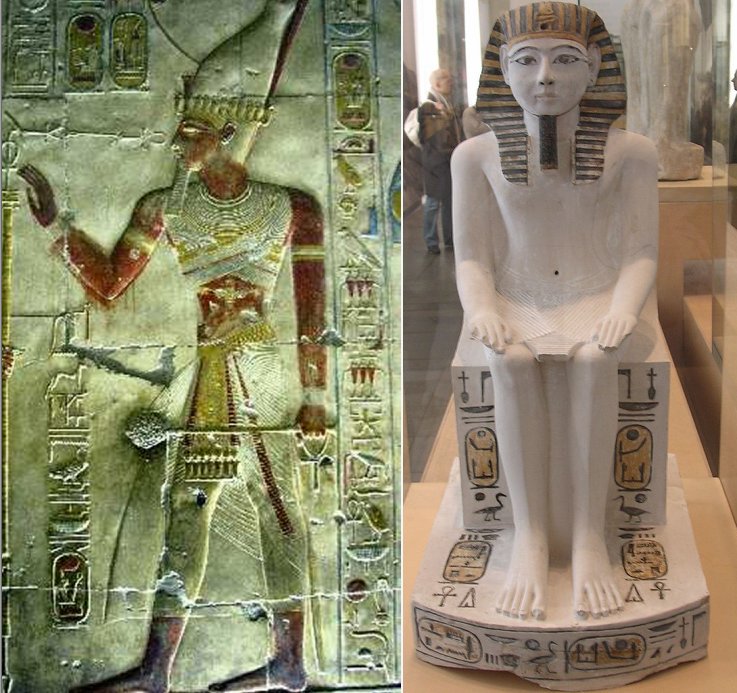 Left: Image of Seti I from his temple in Abydos. source; Right: Pharaoh Amenhotep I of the 18th dynasty of Egypt. source
As soon as he was old enough, he entered the army to serve military training. Being the son of the current Pharaoh, he would one day inherit the title and confront the obligations to the Land of the Pharaohs as a good leader.
Pharaoh's Day Starts
In his book "Everyday Life in Ancient Egypt," the Welsh American author, Jon Manchip White explains:
“Every morning at dawn, the pharaoh would go into the House of the Morning, one of his private chapels. There he would perform a ritual laving of his limbs. In the way that the sun-god Ra bathed each morning in the primordial ocean of heaven, so pharaoh bathed his body in order to restore the vital force that flowed therefrom upon the Two Lands.

Credit: Adobe Stock - NorLife
Then he was anointed, robed, and invested with the royal insignia by priests wearing the masks of Horus and the ibis-headed god of wisdom, Thoth. Next, he proceeded to the temple, where he officiated at a further ceremony. Its aims were to implant spirituality into the ceremonies that would soon be celebrated in all the other temples throughout the land…”
If the pharaoh did not do so, the empire could lose its divine order - Ma’at (Maat).
Responsibilities And Daily Routines Of The Pharaoh
Pharaoh was the high priest and supreme judge and the only source of law. He pursued foreign policy and decided on war and peace. He headed the army and often personally commanded in battle. Pharaoh's authority was religious, and its undermining was not only a violation of the state order and law but also a misuse of the divine order.
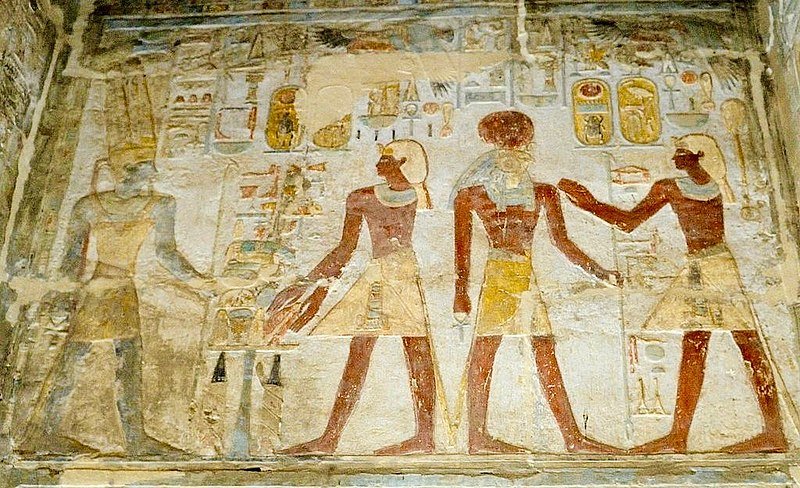 Colored relief of the kings Thutmose III and Amenhotep II before the gods at Amada Temple in Nubia. source
His daily routines included a great variety of responsibilities and indispensable rituals in accordance with his status as the ruler.
All of these duties were considered essential to both the running of the empire and its spiritual development. Theoretically, the pharaoh was the focus of ritual life and performed all the sacred rituals in the temple, practically, high priests played this role in the ruler's name. However, many depictions show the pharaoh performing the duties.
Daily Meetings, Inspections And Feasts
The next task would be to hold his regular meetings with various officials and guests, including military commanders, ambassadors of foreign countries, and various courtiers. All these individuals usually had much to say, and depending on their ranks, they could speak before the ruler. Then, they could learn his thoughts on the matter.
After lunch, the pharaoh traveled around the city in his chariot. He visited construction sites to monitor progress, as he was personally responsible for approving these building sites.
Occasionally, he had time to relax, for example, by participating in hunting, archery, walking through the royal gardens, or merely spending time with his family.
Towards the end of the day, he had to attend a large feast, in which participated his family members and numerous guests.
Updated on November 3, 2023
Written by – A. Sutherland - AncientPages.com Senior Staff Writer
Copyright © AncientPages.com All rights reserved. This material may not be published, broadcast, rewritten or redistributed in whole or part without the express written permission of AncientPages.com
Expand for referencesReferences:
Silverman David P. Ancient Egypt
Casson L. Life in Ancient Egypt
More From Ancient Pages
-
 Scientists Search For North America’s ‘Atlantis’ – Submerged Landscapes In The Gulf Of Mexico Studied
-
 Long-Lost Anglo-Saxon Monastery Ruled By Queen Cynethryth Of Mercia Discovered By Archaeologists
-
 Susanoo-no-Mikoto – Shinto God Of The Sea And Storms Was Banished From Heaven
-
 Ramanathaswamy Temple Has Spectacular Corridors With Over 4000 Pillars
-
 Mysterious Greyfriars Kirkyard: A Cemetery In Edinburgh With Dark And Spooky History
-
 Scientists Reveal What Egyptian Faience Have To Do With Gold
-
 3,000-Year-Old History Of Tea: World’s Second Most-Consumed Drink After Clean Water
-
 Ancient Secrets Of Sacred Lismore – Is There A ‘Second’ Iona In Scotland?
-
 The Strange Story Of The Grave Of Copernicus
-
 Namoratunga: ‘People Of Stone’ And Ancient Astronomical Observatory
-
 Strange Case Of The ‘Impossible’ Glove Remains Unexplained – The Investigation – Part 2
-
 Secrets Of Lake Huron – Mysterious Disappearance Of Long-Lost Steamship Solved
-
 Mysterious Ancient Red Princess Of The Silk Road With Cinnabar Dyed Teeth
-
 Roman Woman Depicted On Ancient Marble Sculpture Found In Crimea Identified
-
 Mythical Biringan City – Invisible Portal To Another World Where Dangerous Engkantos Reside
-
 Unexplained Phenomena In Arkansas – Old Mysteries Still Puzzling The Modern World
-
 Luxor’s Heritage In Focus: Southern Chapels Of The Akh Menu Temple – Restored
-
 Last Of The Giant Camels And Archaic Humans Lived Together In Mongolia Until 27,000 Years Ago
-
 Mediterranean Migration Was Low Over 8,000 Years – New Study
-
 Hundreds Of Rock Paintings Found In Tanzania By Polish Archaeologist

