
The Oseberg Tapestry And Other Artifacts Show Intense Colors Were A Viking Symbol Of Status And Wealth
Ellen Lloyd - AncientPages.com - If you were a Viking warrior, you didn't paint your shield with just any color. Picking the right color was not a matter of taste. It was a decision based on careful selection because the stain revealed a Viking's status and wealth.
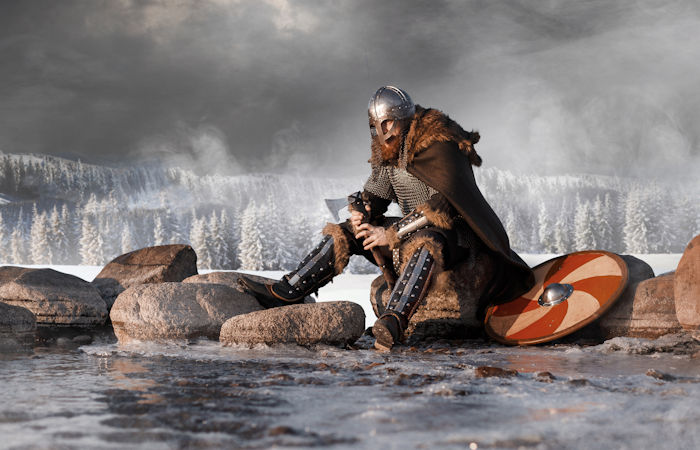
Credit: Adobe Stock: Fotokvadrat
Rich Vikings liked showing off using particular colors to symbolize their high societal status. Based on old paint remnants, a Danish chemist and a conservator have managed to recreate a palette of 17 magnificent colors used by the Vikings to emphasize their high status.
Intense colors were popular because they were rare and symbolized status.
Chemist Mads Christian Christensen and conservator Line Bregnhøi from the National Museum in Copenhagen examined a piece of wood from a church built in Hørning in Denmark around 1060. After so many years, the colors were not visible to the naked eye, so chemical analyses were required to recreate them.
Red And Yellow Were A Viking Symbol Of Status And Wealth
The red and yellow shades are derived from minerals not found in Denmark but in Spain and Turkey, among others.
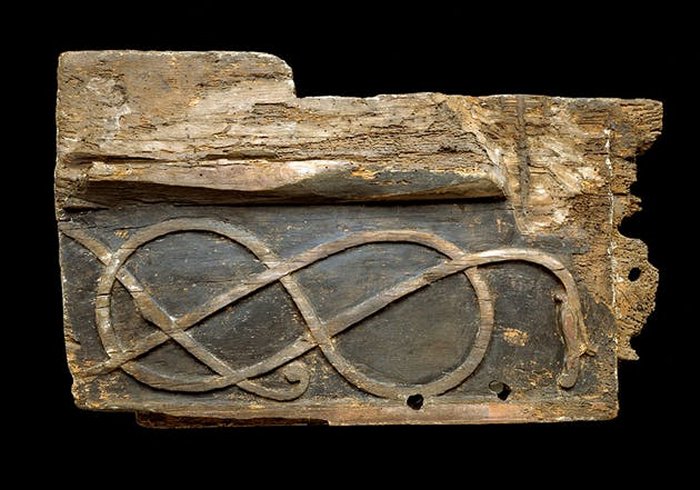
Hørningplankan, a piece of wood examine to discover the importance of Viking colors. Credit: National Museum of Copenhagen
The mineral arsenic sulfide is used to produce yellow colors and can be obtained in countries like Germany and Turkey. The red color is made from cinnabar, which comes from Spain. Researchers think such minerals must have been expensive because they had to be transported to Scandinavia. Colors like red and yellow were only used by rich people who could afford them. The importation of expensive minerals must have been a lucrative business.
Because of the cost, it's unlikely more than minor details were highlighted with these colors.

The seventeen colors from the Viking era. Credit: National Museum Of Copenhagen
Researchers have so far identified 17 colors used by Vikings, and they hope they can discover more shortly. It's an important discovery because it gives us a better understanding of the Viking society.
Scientists have also learned plenty about the importance of colors from artifacts discovered in Oseberg's burial in Norway.
"The magnificent Oseberg ship was used as a burial ship for two Viking women who died in 834. A burial chamber was dug right behind the ship's mast. The walls were decorated with fantastic woven tapestries, and the dead woman lay on a raised bed.
The women had several burial gifts with them. These included clothes, shoes and combs, ship equipment, kitchen equipment, farm equipment, three ornate sleds, five carved animal heads, five beds, and two tents. There were fifteen horses, six dogs, and two small cows. A remarkable collection of wooden and textile artifacts was left behind, and the colors were striking.
The Oseberg tapestry is poorly preserved, but it is clear that it was a long, narrow (20–23 centimeters wide) strip that probably was meant to hang on a wall. It is made from wool dyed in different colors, mainly red, yellow, and black.
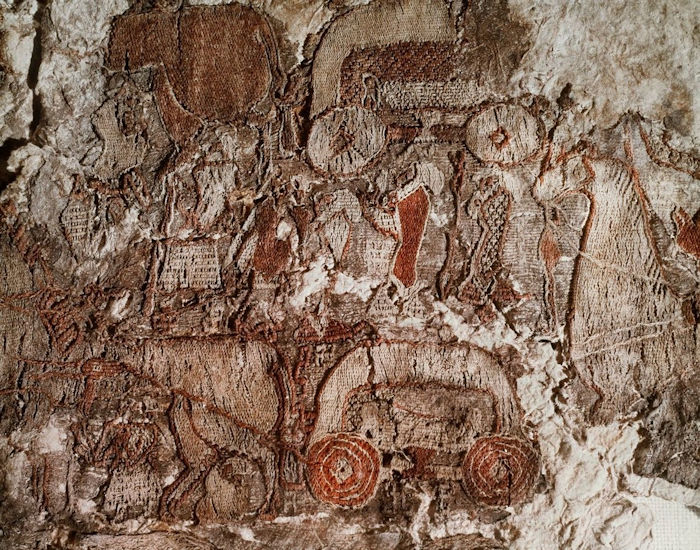
A fragment of a tapestry from the Oseberg grave in Vestfold, Norway. Credit: Erik I. Johnsen/Kulturhistorisk museum - CC BY-SA 2.0
The Oseberg tapestry portrays a procession of two rows of horses with knotted tails. Three of the horses pull carts, one containing two people, apparently women. Scholars have speculated whether they represent the two women buried in the Oseberg burial (with a cart among their grave goods) and whether the tapestry was specially made to portray the burial procession. The procession in the tapestry also features a large number of men and women walking.
The women wear long dresses with trains and cloaks, and some carry spears like many men. Their hair appears to be stuffed into bulging headdresses.
In their attire, the women on the Oseberg tapestry are reminiscent of the valkyries welcoming slain warriors to Valhalla, as portrayed on the Gotland picture stones. On these stones, many women do not have their hair hidden by headdresses but have let it down, as Ermengard is reported to have done when Earl Ragnvald visited her in Narbonne.
The valkyries of the picture stones serve food and drink to the dead warriors, and they let their hair down, which may suggest sexual availability. Some women portrayed on picture stones hold drinking horns in their hands, as does a small silver figure of a woman found in Birka; they have been interpreted as valkyries serving drink to dead warriors arriving at Valhalla. The warriors typically arrive by horse. Sometimes, they ride a horse with eight legs, suggesting they are so important that the ruler of Valhalla, Odin, has sent his eight-legged horse, Sleipner, to pick them up. Such picture stones often depict ships." 1
These discoveries and studies are valuable as they give us a better idea of how Vikings decorated their objects and perceived different colors.
Written by - Ellen Lloyd – AncientPages.com
Updated on December 4, 2023
Copyright © AncientPages.com All rights reserved. This material may not be published, broadcast, rewritten or redistributed in whole or part without the express written permission of AncientPages.com
Expand for referencesMore From Ancient Pages
-
 Londinium: Ancient Roman Outpost That Became Powerful City Of London
-
 Fragment Of A Royal Memorial Inscription Attributed To Sargon II – Unearthed
-
 Strange Mythical Creature Resembling A Sphinx Discovered In A Medieval Bathroom
-
 Study: Grinding Tools Were Once Used In Plant, Pigment And Bone Processing At Jebel Oraf Site, Saudi Arabia
-
 Mystery Of Unique 2,100-Year-Old Human Clay Head With A Ram’s Skull Inside
-
 Teotihuacán: Enigmatic Birthplace Of The Gods And Its Obscure History
-
 Mysterious Runic Inscription Found In Mighty Viking Ship Burial Surprises Archaeologists
-
 Cursed Dwarf Fafnir Turned Into A Fearsome Norse Dragon And Guarded The Stolen Magical Ring Andvaranaut
-
 Fate Of The Woman Whose Mysterious Doppelgänger Ruined Her Life
-
 Ancient Secret Tunnel Discovered Beneath The Pyramid Of The Moon In Mexico’s Teotihuacan
-
 Moses’ Secret Knowledge Of Superior And Forbidden Technology – Hundreds Of Chariots Hovering Over Sinai – Part 1
-
 Incredible Technology In Mysterious Huashan Caves, China
-
 Ephemeral Evidence Of Mediterranean Mobility – Boats, Migration, And The Central Mediterranean Passage In Focus
-
 Ancient Mystery From The Age Of Taurus And The Murdered Astronomer – Overlooked Secret In The North – Part 1
-
 Rök Stone (Rök Runestone): Longest Runic Inscription Ever Discovered
-
 The Punishment Of A Troll Woman Whose Curse Turned Against Her
-
 Intact 2,600-Year-Old Etruscan Tomb Opened In Vulci- Exceptionally Rare Artifacts Found Inside
-
 What Female Jobs Could Lead To Being Accused Of Witchcraft In Early Modern England?
-
 New Light On The Complex Evolution Of Our Feet
-
 Five Ancient Mirror Frames, Ceramics Factory Found In Intriguing Roman Villa In Pavlikeni, Bulgaria

