
Sacred Regalia Of Japanese Emperor: Sword, Mirror And Jewel In Ancient Japanese Tradition
A. Sutherland - AncientPages.com - Many important symbols can be found in Japanese people's early cultural beliefs, religious tradition and imperial myths.
The country’s most sacred objects are the regalia of the Japanese emperor and symbols of his divine sovereignty. They are also known as the "Three Sacred Treasures of Japan").
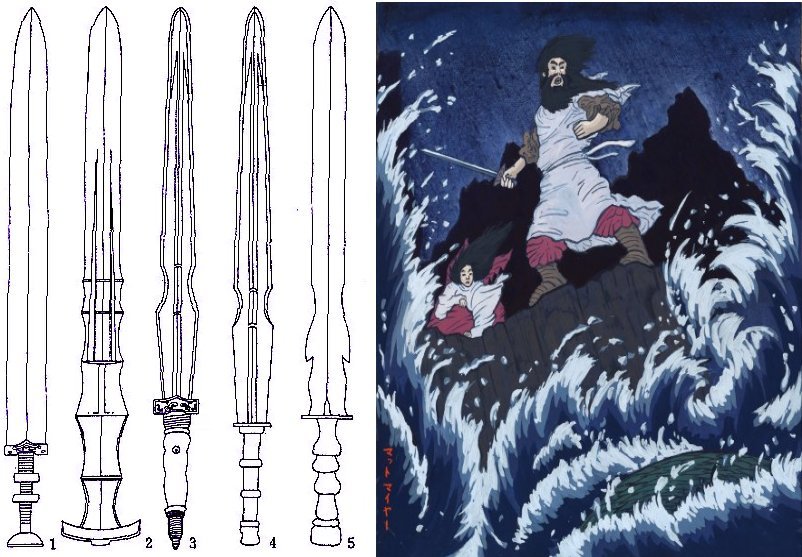
Left: The sword ‘kusanagi ‘ has never actually been seen, however, it could have actually looked like one of these. Right: Susanoo (Susano-O), the god of the seas, storms, and also the ruler of the Yomi, the underworld.
They are the sacred sword (kusanagi), the mirror (yata no kagami), and the comma-shaped jewels (yasakani no magatama), symbolizing the imperial qualities of valor (the sword), wisdom (the mirror), and benevolence (the jewel).
These relics, along with several others were once used in Shinto rituals as offerings to the gods.
Kept as family treasures, they traditionally passed down from one generation to another. As their owners, people believed that the relics grant them power.
See also:
Mystery Of The Kusanagi Treasure: The Legendary Sword
Shinobi No Mono: The Shadow Warriors And Hattori ‘The Demon’ Hanzo Of Ancient Japan
Once in the possession of the emperor, these three treasures acquired a special sanctity and they have never been on display to the general public. Ancient Japanese tradition required that the Shinto priests presented the relics during the ascension of a new Emperor to the throne.
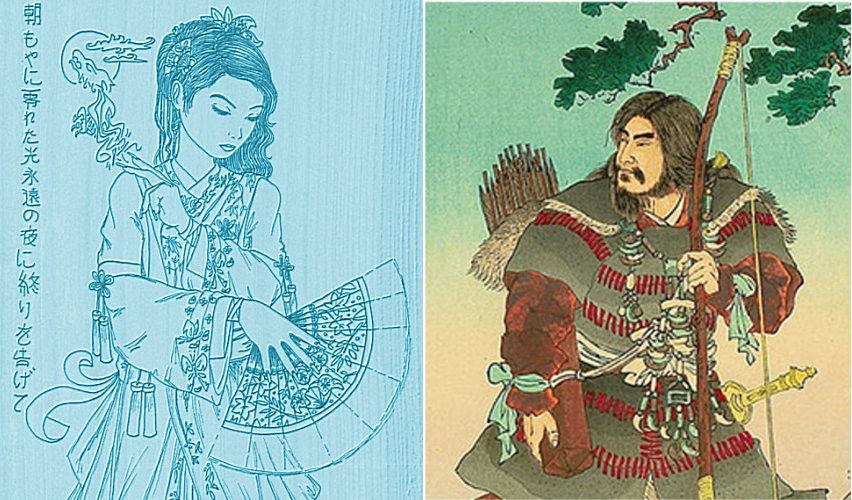
Left: The sun goddess Amaterasu is said to have brought order to Japan after its creation through a cosmic union of male and female great spirits (kami); Right: Emperor Jimmu was the first emperor of Japan and a direct descendant of the sun goddess, Amaterasu
The last time, they were used during the accession and enthronement of Emperor Akihito in 1989 and 1993, but they were shrouded in packages.
It is said there are no known photographs or drawings of them. However, the sword’s replica is believed to be kept at Atsuta Shrine in Nagoya, the jewel at The Imperial Palace in Tokyo, and the mirror in the Grand Shrine of Ise.
Many ancient Shinto myths ascribed divine origins to these relics because they come from the sun goddess Amaterasu.
According to Shinto legend, they served as a sign of their direct connection to the gods, and they were brought to Earth by legendary ancestor of the Japanese imperial line (Ninigi-no-Mikoto), when his grandmother, the sun goddess Amaterasu, sent him to pacify Japan.

Artist's impression of the Imperial Regalia of Japan
The treasures were eventually said to be passed down to Emperor Jimmu, who was the first Emperor of Japan.
The sword was discovered inside the body of a many headed snake, slain by Susano-O, the Shinto god of the sea and storms, a powerful, gigantic humanoid, after a terrible contest.
He presented the sword to his sister, the sun-goddess Amaterasu, an ancestress of the imperial family. The mirror and the jewels were hung on a tree to attract the sun- goddess from her cave. People believe the spirit of Amaterasu is present in the mirror, endowing it with great "kami", spirits or phenomena that are worshipped in the religion of Shinto.
They can be elements of the landscape, powerful forces of nature, as well as beings and the qualities that these beings express.
Written by – A. Sutherland AncientPages.com Staff Writer
Copyright © AncientPages.com All rights reserved. This material may not be published, broadcast, rewritten or redistributed in whole or part without the express written permission of AncientPages.com
More From Ancient Pages
-
 Unique Tomb Of Egyptian Commander Discovered In Abusir Sheds Light On ‘Globalisation’ In Ancient World
-
 On This Day In History: Mary Queen Of Scots Was Forced To Abdicate – On July 24, 1567
-
 Mysterious Underground City In Brazil Could Re-Write Ancient History – Unexplained Artifacts And Skeletons – Part 1
-
 Neanderthal Genes Influence Your Mood And Much More – Study Shows
-
 Haryana Caves In Mangar Bani Hide An Ancient Secret – Are These The Oldest Cave Paintings In India?
-
 Explorers Of Lost City Of The Monkey God Contract Unusual Flesh-Eating Disease
-
 7,000-Year-Old Kilns From Ceramics Workshop Unearthed In Northeast Bulgaria
-
 Puzzling Connection Between Fairies, Ghosts And Ancient Civilizations Revealed
-
 Was 4,000-Year-Old Seahenge In Norfolk Built To Battle Climate Change?
-
 Dargavs: Strange City Of The Dead – Mysterious Village And Ancient Cemetery Shrouded In Myths
-
 Viking Ivar The Boneless Could Be Buried In Repton – Remarkable Viking Burial Holds Clues To Where Ragnar Lodbrok’s Son Died
-
 Enigmatic Green Lady In British Folklore
-
 What Can Archaeology Tells Us About Climate Change?
-
 Ancient Egyptian Blue Powder Makes Fingerprints Glow And Will Be Used By Crime Scene Investigators
-
 A 500-Year-Old Funerary Bundle And Pottery Probably Belonging To Ychsma Culture – Unearthed Near Lima, Peru
-
 ‘The Domesday Book’ Of William I The Conqueror: Detailed Register Of ‘Who Owned What’ In England
-
 Evidence People Lived In Australian Desert 50,000 Years Earlier Than Previously Thought
-
 Leprechaun: One Of The Most Famous And Powerful Creatures Of The Irish Faerie Folk
-
 Sacred Bird Garuda And Stealing Of Amrita Drink Of Immortality From The Gods
-
 Mystery Of The Okefenokee Swamp Deepens: Unexplained Sightings Of Unknown Beings, Puzzling Lights, And Giant Skeletons Reported

