
Archaeologists Will Excavate Unique Ancient Roman Obelisk Near Lesicheri, Bulgaria
AncientPages.com - Archaeologists from the Regional Museum of History in the city of Veliko Tarnovo in Northern Bulgaria are hoping to restart the archaeological excavations of a surviving 14-meter ancient Roman Obelisk near Lesicheri, located in North-Central region of Bulgaria, according to Archaeology in Bulgaria.
The native born call this unique stone pillar "dikilitash" (an upright stone), "stalbo" (stone column) or "Markov kamak" (Marco's stone). The obelisk is located only 4 km away from the Veliko Tarnovo district village of Lessicheri.
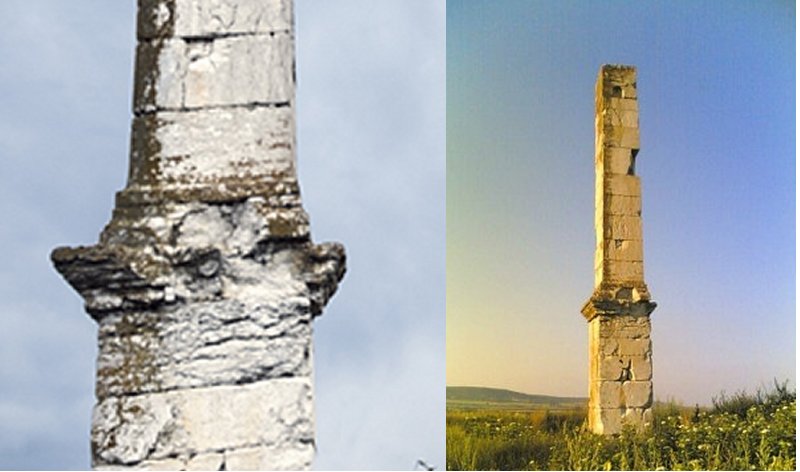
Ancient Roman Obelisk near the town of Lesicheri, Bulgaria
Veliko Tarnovo was the capital of Bulgaria in the 12th- 14th century.
The thousand-year-old history and culture of the region of Tarnovo is traced out there.
Veliko Tarnovo is one of the oldest settlements in Bulgaria, with a history of more than five millennia. The first traces of human presence, dating from the 3rd millennium BC, were discovered on Trapezitsa Hill.
The obelisk, which will be excavated, is one of the country’s tallest surviving ancient archaeological structures, which was part of a Late Antiquity family mausoleum and shrine.

Ancient Roman Obelisk, one of originally two, which was part of a mausoleum-turned-shrine located near Bulgaria’s Lesicheri.
The structure is also part of the memorial tomb of Quintus Julius, a Roman aristocrat from the nearby large city of Nicopolis ad Istrum, who lived in the 2nd century AD, according to an ancient inscription.
Later the mausoleum became a heroon (a shrine dedicated to a deceased Ancient Greek, Thracian, or Roman hero), which existed until the 4th century when the Roman Empire was Christianized, while its provinces in today’s Northern Bulgaria were overrun by barbarian invasions.
Interestingly, the memorial tomb-turned-shrine originally had two obelisks but only one of them has survived; fragments from the other were identified nearby when the site was first explored by geographers and archaeologists in the 19th century.
The native-born call this pillar "dikilitash" (an upright stone), "stalbo" (stone column), or "Markov kamak" (Marco's stone).
A second identical obelisk also existed nearby; its ruins were identified by visiting geographers and archaeologists in the late 19th century.
The archaeologists from the Veliko Tarnovo Office of the Sofia-based National Institute and Museum of Archaeology are to continue their excavations in three sections of the Trapesitsa Hill Fortress, the other citadel of medieval Tarnovgrad alongside Tsarevets.
AncientPages.com
More From Ancient Pages
-
 Hieroglyphs Discovered In Sudan’s Old Dongola – Once Important City Of Nubia
-
 Peculiar Artifact Discovered In Tomb Of The Warrior Queen Fu Hao
-
 Dragon’s Head – One Of The Most Famous Viking Symbols Discovered At Birka Ancient Excavation Site
-
 Old Sword Decorated With Inscription And Related To 1173 Battle Of Fornham – Unearthed
-
 Félag – Ancient Viking Company Organized Trade Finance
-
 Burials Of An Unknown Race Of Unusually Small Humanoids Found In Ohio May Confirm Native American Legend
-
 Unusual Find – Headless Skeletons Discovered In A 7000-Year-Old Mass Grave In Slovakia
-
 World’s Oldest Needles Discovered In Tibet
-
 Is The Legendary Tsuchinoko Real?
-
 Sirius Mystery – Scientific Evidence Of Alien Contact 5,000 Years Ago – Book Review
-
 Evidence Of Advanced Military Robots In The Ancient World – Unknown High-Tech Examined
-
 Unexpected Discovery Reveals People Arrived In North America 20,000 Years Earlier Than Previously Thought
-
 Spectacular Giant Bronze Age Hall Found Near Berlin, Germany May Be Connected To Legendary King Hinz
-
 On This Day In History: HMS Challenger Begins Scientific Exploration Of Oceans – On Dec 21, 1872
-
 On This Day In History: Pakal Ascends The Throne Of Palenque At Age Of 12 – On July 29, 615
-
 Old Cannon Found At Construction Site
-
 Secrets Of The Lost Ancient Sahara Civilization
-
 Rome’s Most Wanted Enemy – Poison King Mithradates Murdered 80,000 Roman Civilians
-
 Mysterious Ancient African Sky Fathers
-
 On This Day In History: Francis Baily First Observed ‘Baily’s Beads’ – On May 15, 1836

