
Epi-Olmec: Undeciphered Isthmian Script Of Mesoamerica
A. Sutherland - AncientPages.com - There are still many un-deciphered ancient scripts scientists try to learn more about. Among them is the mysterious Isthmian script, also been referred to as "epi-Olmec", based on the belief that it encodes a language descended from that of the Olmec civilization.
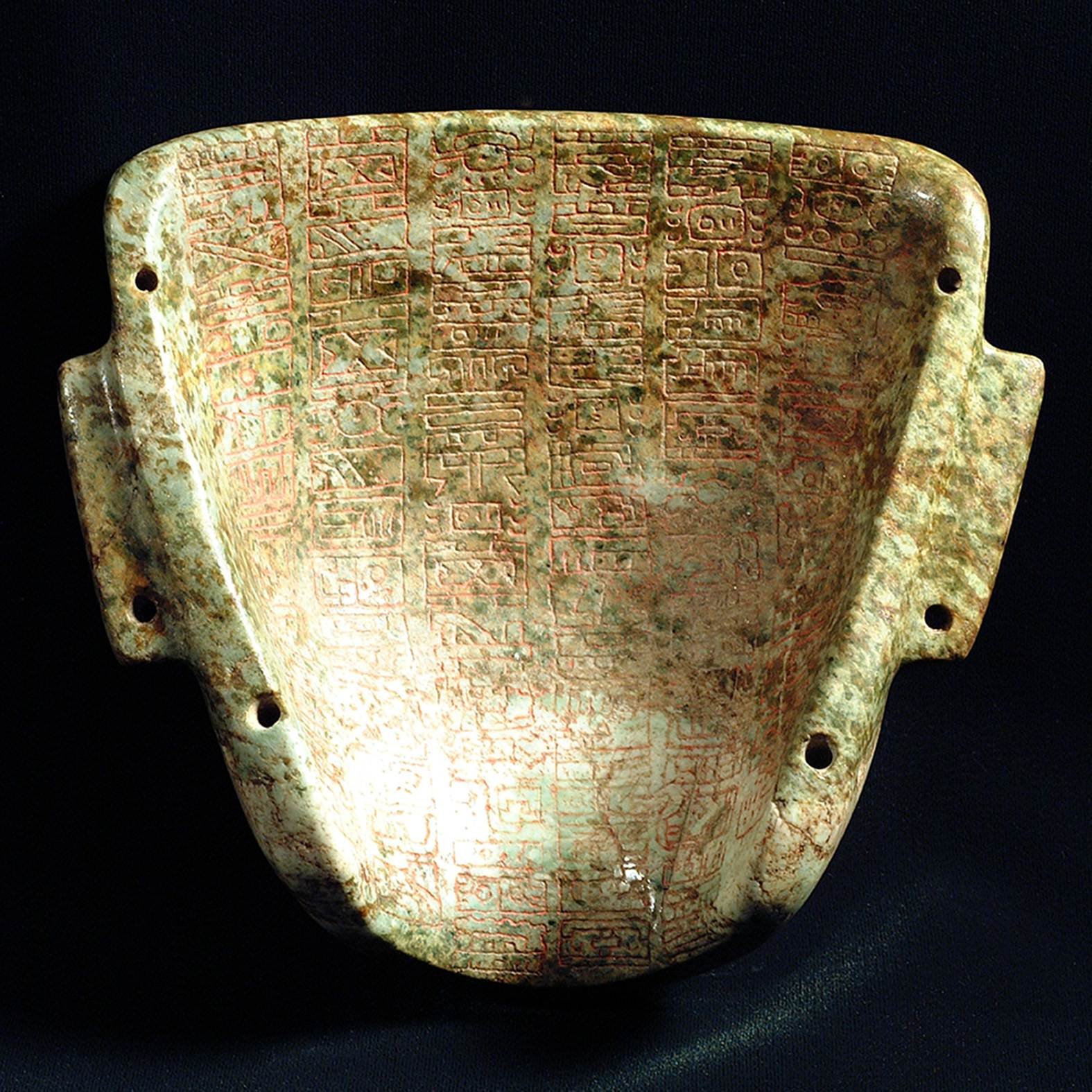
Teotihuacan mask. Image credit: Michael Coe
Some attempts to decode the script have been made and a decipherment has been proposed, but it has not been accepted by scholars. For the time being the Isthmian script remains an unsolved ancient mystery.
The Isthmian script derives its name from the Isthmus of Tehuantepec, the general area from which the known texts originate. The Isthmus of Tehuantepec is an isthmus in Mexico. It represents the shortest distance between the Gulf of Mexico and the Pacific Ocean. Prior to the opening of the Panama Canal, it was a major shipping route known simply as the Tehuantepec Route.
Unfortunately, there are very few surviving examples of the Isthmian script. The best-known Isthmian inscription is carved on a stela recovered from the site of La Mojarra, a site on the Gulf Coast about half-way between the earlier Olmec sites of Tres Zapotes and Cerro de las Mesas. The stela referred to as Stela 1 from La Mojarra was discovered in 1986. It is a Late Preclassic monument with the longest and most complete text of any known Isthmian script.

A Teotihuacan-style mask unearthed from an unknown location in southern Mexico adds some 101 glyphs to the total number currently known for the ancient Isthmian script. Image credit: Michael Coe
Isthmian script is structurally similar to the Maya script, and Maya uses one set of characters to represent logograms (or word units) and a second set to represent syllables. This suggests these two writing systems developed together. Both systems have the Long Count calendrical system fixed with a zero date. This type of Meso-American writing was often used to record specific events and carved on stone stelae that serve as durable memorials to rules and symbols of political and religious legitimacy.
See also:
The Olmecs – Who They Were, Where They Came From Still Remains A Mystery
Unsolved Enigma Of The Inga Stone And Its Mysterious Ancient Undeciphered Signs
Robert J. Sharer, Loa P. Traxler, author of the book, The Ancient Maya writes that “La Mojarra Stela 1 is a prime example of this use of both carved image and text, including several Long Count dates. It is also clear that the origins of both writing systems must be earlier than the fully developed Late Precalssic inscriptions.
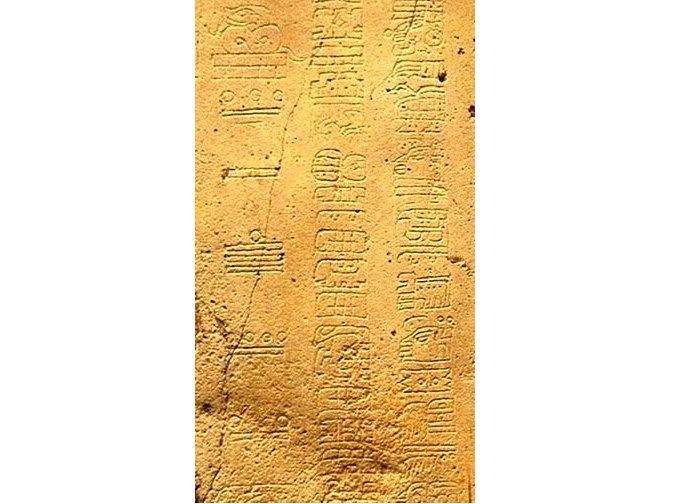
Detail showing three columns of glyphs from La Mojarra Stela 1. The two right columns are Isthmian glyphs. The left column gives a Mesoamerican Long Count calendar date of 8.5.16.9.9, or 156 CE. Image credit: Wikipedia
It is possible that wood was used for the first carved monuments and earlier written records were kept on perishable materials such as bark paper, like those used in later times for Maya codices. Evidence for this lies in the Mayan word for “to write” which is based on the root for “to paint” (with a fine brush).”
The Isthmian script has also been discovered on the Tuxtla Statuette, a small 6.3 inch (16 cm) rounded greenstone figurine, carved to resemble a squat, bullet-shaped human with a duck-like bill and wings. Most researchers believe the statuette represents a shaman wearing a bird mask and bird cloak.

Tuxtla Statuette. Image credit: Wikipedia
Tres Zapotes Stela C, discovered in 1939 by archaeologist Matthew Stirling is also engraved with the mysterious Isthmian script.
A Teotihuacan-style mask unearthed from an unknown location in southern Mexico adds some 101 glyphs to the total number currently known for the ancient Isthmian script. Of these, twenty-five is unique additions to the Isthmian corpus, according to Brigham Young University archeologist Stephen Houston and Yale University professor emeritus Michael Coe.
Written by – A. Sutherland - AncientPages.com Senior Staff Writer
Copyright © AncientPages.com All rights reserved. This material may not be published, broadcast, rewritten or redistributed in whole or part without the express written permission of AncientPages.com
Expand for referencesMore From Ancient Pages
-
 Examination Of Six 19th-Century Remarkable Dahomean Swords Crafted From Locally Smelted Iron
-
 Fall Equinox Explains Unusual Alignment Of Egypt’s Great Pyramids – Engineer Says
-
 Unique Gungervaa Shrine With Three Tiny Silk Scrolls Examined With X-Ray
-
 Rare 2,500-Year-Old Saw Discovered At The Ancient Hittite City Hattusa
-
 Lost Kingdom Of Cleopatra – Legendary Lost City Of Heracleion
-
 Rare Magic Mirror In Cincinnati Museum Has A Secret Hiding In Plain Sight
-
 Prehistoric Feces At Stonehenge Reveal The Earliest Evidence For Intestinal Parasites In The UK
-
 First Egyptian Middle Kingdom Tomb Unearthed In South Asasif Necropolis In Luxor
-
 Parachute May Have Been Invented By Ancient Chinese – Not Leonardo Da Vinci
-
 A 1,000-Year-Old Bronze Coin Accidentally Discovered By A Little Boy
-
 Mystery Of The Brave Viking Chief Buried On The Gokstad Ship
-
 Prehistoric ‘Cinema’ – Unique Karelian Rock Carvings With Special Light Effects
-
 First Known Depiction Of The Biblical Heroines Deborah And Jael Unearthed On 1,600-Year-Old Mosaics
-
 Giant Spider Yokai Tsuchigumo Confronts Minamoto No Yorimitsu And Something Strange Happens
-
 19th Century Mass Grave With Hundreds Decapitated “Vampires” Discovered In Polish Village
-
 Undeciphered Ancient Code Could Be Evidence Of The World’s Oldest Data Storage System
-
 Irrigation Works And Flood Protection Were Crucial For Defining The Golden Age Of Sumer
-
 Vetala – Vampire With Knowledge Of The Past, Present And Future In Hindu Mythology
-
 Blue Eyed People In Northern Israel 6,500 Years Ago: New DNA Results
-
 Ancient Knowledge Of Other Worlds And An ‘Impossible’ Being That Shouldn’t Exist

