
Suomenlinna Fortress: Impressive ‘Castle Of Finland’ Has Rich History
Ellen Lloyd - AncientPages.com - The Suomenlinna fortress is just as impressive as rich in history. Built in 1747 by Sweden on a group of islands located at the entrance of Helsinki's harbor, the fortress's original name of the fortress was Sveaborg.
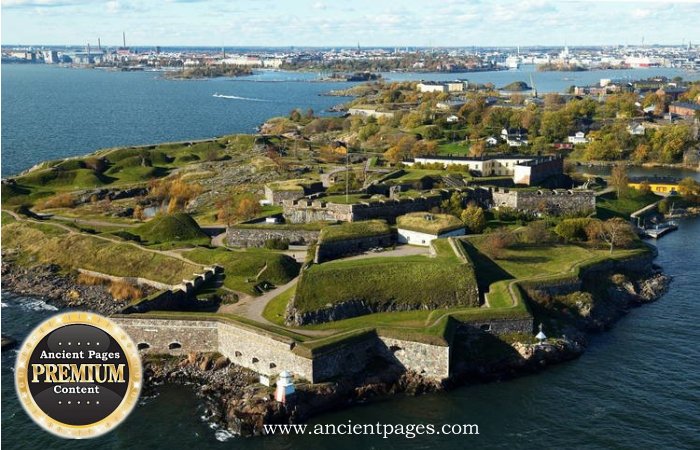
Several historic events have shaped the landscape and the architecture of the fortress. The fortress stretches over six separate islands, covering an area of 210 ha, consisting of 200 buildings and 6 km of defensive walls. The construction of the fortress was supervised by the Swedish Admiral Augustin Eherensvärd (1710-1772).
It has served to defend three different sovereign states over the years: the Kingdom of Sweden, the Russian Empire, and most recently, the Republic of Finland.
Suomenlinna Fortress was also known as Viapori, the Finnish translation, until 1918 when it became Finnish property and its name was changed to the present one.
During the Swedish period, Viapori was considered vital in terms of defence, especially with Sweden’s declining power and in an atmosphere of increased Russian imperialism.
The purpose of the fortress was originally to defend the Kingdom of Sweden against the Russian Empire and to serve as a fortified army base, complete with a dry dock.

This is a preview of our premium article available only to members of Ancient Pages.
Become a member to read more - Click here
If you are already a member and have logged in to your account, you can access the article here

More From Ancient Pages
-
 Raven: Uncommonly Intelligent Bird, Symbol Of Providence, Wisdom And Prophecy
-
 Neanderthals May Have Been Carnivores – New Study
-
 Ajanta Caves: Incredible Accomplishment Of India’s Ancient Stonecutters
-
 Tazza Farnese (Farnese Cup) – Mysterious, Never Explained And Debated Ancient Gemstone
-
 Mysterious Figurine Of Mythical Individual Dates Back To Egypt’s Naqada Culture 4400–3000 BC
-
 Previously Unknown Manuscript Reveals New Insight Into Medieval Christian Beliefs In England
-
 Thousands Of Petroglyphs And Inscriptions In Wadi Rum, Jordan – 12,000 Years Of Human Occupation
-
 What Are The Monumental Uratrian-Era Structures Unearthed At Garibin Tepe In Van?
-
 300 BC Mummy Shroud Fragment In NZ Finds Match In US
-
 Bronze Age Swords Were Used By Skilled Fighters – New Study
-
 Has Yorkshire’s Lost Underwater Town Ravenser Odd Finally Been Found?
-
 1,500-Year-Old Tunnel Tomb With Human Remains And Artifacts Accidentally Unearthed In Japan
-
 Chang’e: Chinese Goddess Of Moon And Immortality
-
 ‘Impossible’ Ancient Knowledge Of The Gods’ Star – First Observations – Part 1
-
 Amanitore – Nubian Warrior Queen And Her Pyramids
-
 Deception And Hidden Truth – Ancient Struggle Of The Eagle And Serpent – Part 2
-
 Why Were American Soldiers Called Yankees And Where Does Yankee Doodle Come From?
-
 Image Of The Day: Chacmool – Famous Ancient Statue Of Pre-Columbian Mesoamerica
-
 Unique Virtual Look At Gamla Uppsala: Sacred Ancient Viking And Pagan Site In Sweden
-
 Mysterious Signs On Teotihuacan Murals Deciphered?

