
Mystery Of The Beautiful Viking Uig Chessmen Found On The Isle Of Lewis, Scotland
Ellen Lloyd - AncientPages.com - On the beautiful Isle of Lewis in Scotland, many mysterious figures that today are known as the Uig Chessmen were discovered over 180 years ago.
The enigmatic Uig Chessmen, also known as Lewis Chessmen, are a legacy of the Vikings who once ruled over Scotland. The figures are unique masterpieces, and they have been described as the "greatest Chessmen of the European Middle Ages".
The true origin of the figures is still shrouded in mystery, but scientists who studied them are convinced they are of Norse origin. Based on the style of carving and dress, the pieces have been dated to the mid to late twelfth century.
The Discovery Of The Viking Chessmen
The Uig Chessmen were discovered in 1831 in a stone cist in the shifting dunes of Uig Bay at Ardroil, by Malcolm "Sprot" Macleod of the village of Pennydonald.
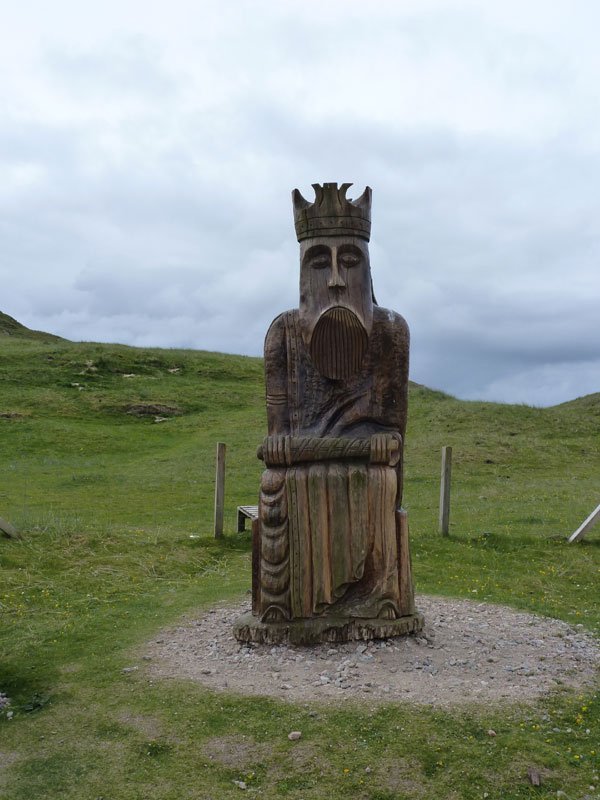
Uig Chessmen on the beach at Uig. Image credit: Isle of Lewis
The historically very important Viking chess set was placed inside a small stone chamber at the beach's edge.
What Are Uig Chessmen?
There were originally 93 gaming pieces known to us today. They include 78 chessmen, 14 tables men, and a buckle to secure a bag. The chess pieces were intricately carved from walrus tusk. They vary between 3.5cm and 10.2cm in height.
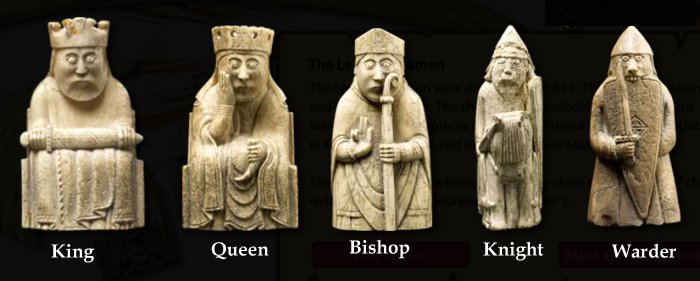
There were eight kings, eight queens, 15 knights, 16 bishops, 12 warders, and 19 pawns, perhaps indicating that there were eight sets. All the pieces are sculptures of human figures, except the pawns, which are geometric shapes and much smaller than the other pieces. Some of the chessmen found in Lewis were stained with red - and some historians say that this could have indicated that the chessboard may have been red and white instead of the black and white that is used nowadays.
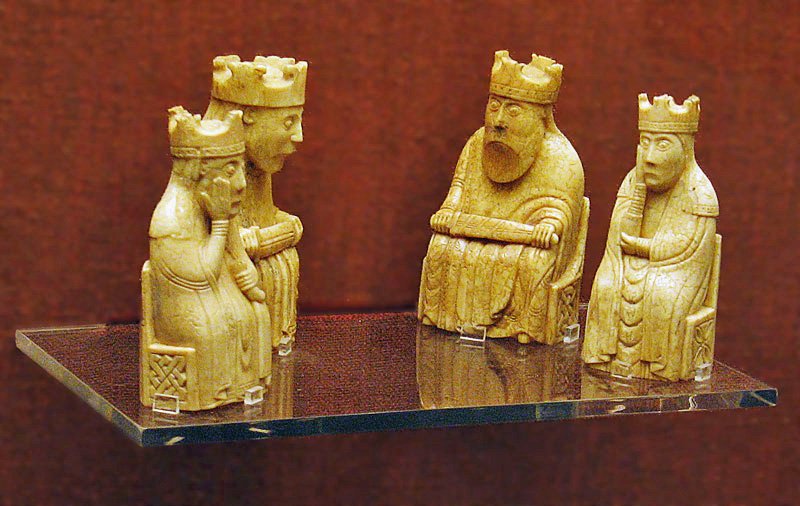
Lewis chessmen in the British Museum.
Eleven chess pieces are in the National Museum of Scotland in Edinburgh, and 82 are in the British Museum in London.
Why Are The Uig Chessmen A Major Archaeological Discovery?
The Chessmen are one of the most significant archaeological discoveries ever made in Scotland, and they are of primary international importance.
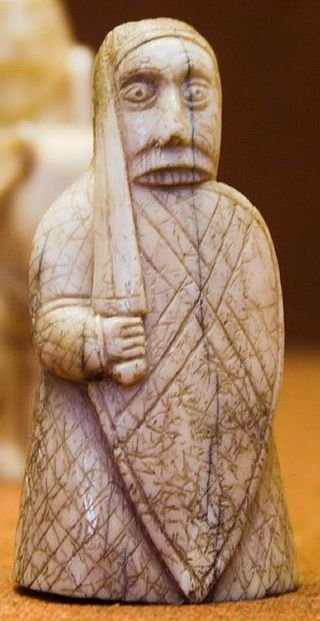
"Berserker" rook, at the British Museum.
The construction of the Lewis Chessmen's began many centuries ago, high up in the Arctic Circle in the freezing waters of the Norwegian Sea. They were most likely made in Trondheim, Norway.
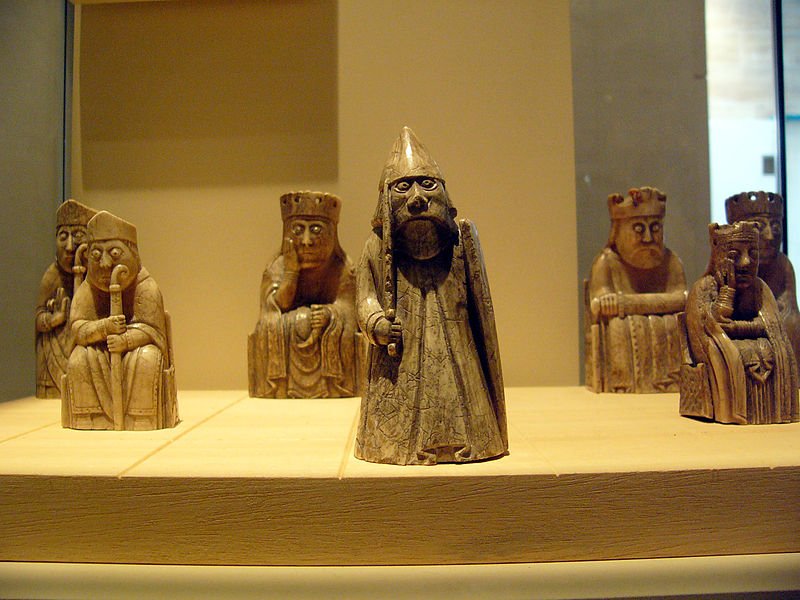
Lewis chessmen in the National Museum of Scotland.
How the chess set ended up in the sandbank on the Isle of Lewis is unknown. Norse occupation of the Western Isles lasted for nearly five centuries, and the chessmen may have been hidden towards the end of our Viking period.
There is one interesting local story being circulated. It tells how the hoard was brought ashore much later by a young shipwrecked sailor, who made the mistake of telling a gillie he met in the hills what he was carrying. The dishonest gillie murdered the boy for the pieces and hid the pieces. He was later hanged for other crimes and allegedly confessed to the murder on the gallows.
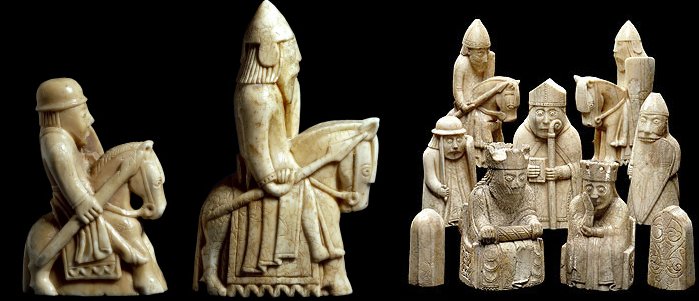
Image credit: British Museum
Years later, Malcolm Macleod came upon the hoard of chessmen by chance. Rev Col AJ Mackenzie and a friend came across the bones of a boy in a cave in the hills and supposed they must have belonged to the young sailor. Whether this story is true remains unknown, but the ancient chessmen are very real.

Uig Chessmen were used in the movie Harry Potter.
Updated on June 8, 2022
Written by Ellen Lloyd - AncientPages.com
Copyright © AncientPages.com All rights reserved. This material may not be published, broadcast, rewritten or redistributed in whole or part without the express written permission of AncientPages.com
More From Ancient Pages
-
 13,000-Year-Old Human Footprints Discovered In Canada
-
 India’s Tradition Of Advanced Metallurgy, Craftsmen And Blacksmiths Is Longer Than Thought
-
 Djémila – Lost City Of The Ancient Kingdom Of Numidia
-
 Unas (Unis): First Pharaoh Who Decorated His Burial Chamber With Pyramid Texts
-
 Mystery Of The Ancient Red Sign Witnessed In The Sky Over Japan
-
 500-Year-Old Transylvanian Diaries Reveal How The Little Ice Age Transformed Life And Death In The Region
-
 Gilded Coffin Of Nedjemankh, Priest Of Ram-God Heryshef Recovered By Egyptian Authorities
-
 Unusual 2,500-Year-Old Face Urns Reveal Garments, Appearance And Jewelry Of Prehistoric People
-
 Castro People: Intriguing Life Of The Female-Dominated Society In Ancient Iberia
-
 On This Day In History: Myth Says Ancient Rome Was Founded By Romulus – On Apr 21, 753 BC
-
 Rare Gothic Boxwood Miniatures – Precious Marvel Of Human Ingenuity
-
 Rare Bes Mugs Reveal Ancient Egyptians Drank Hallucinogenic Cocktails During Rituals
-
 The Untold Story Of Sacsayhuamán – Falcon’s Place Is Not What It Seems
-
 Secret Underground Chambers Of Caynton Caves And The Knights Templar Connection
-
 Cupbearer Was Privy To Conversations And Political Secrets Hidden Behind Closed Doors
-
 Shu: Egyptian God Of Air, Symbol Of Life-Giving Breath And The One Who Separates Heaven From Earth
-
 Binary System Was Used By Ancient Polynesians 1,000 Years Before The Concept Of A Computer Was Introduced
-
 Stunning Well-Preserved Larger Than Life Statue Of Hercules Discovered In Philippi, Greece
-
 New Light On Appearance Of Scythians In Northern Black Sea Region
-
 What Was The Role Of The Priests And Priestesses In Ancient Greece?

