
Secret Passageways And Caves Beneath Nottingham Castle
A. Sutherland - AncientPages.com - Beneath Nottingham Castle, there is a labyrinth of manmade sandstone caves and tunnels; all of them are related to countless secrets of Nottingham, an old town that stands on the soft, sandstone rock.
Nottingham was once known as Tigguo Cobauc meaning "Place of Caves" and was referred to as such by the Bishop of Sherborne Asser in "The Life of King Alfred" (893AD).
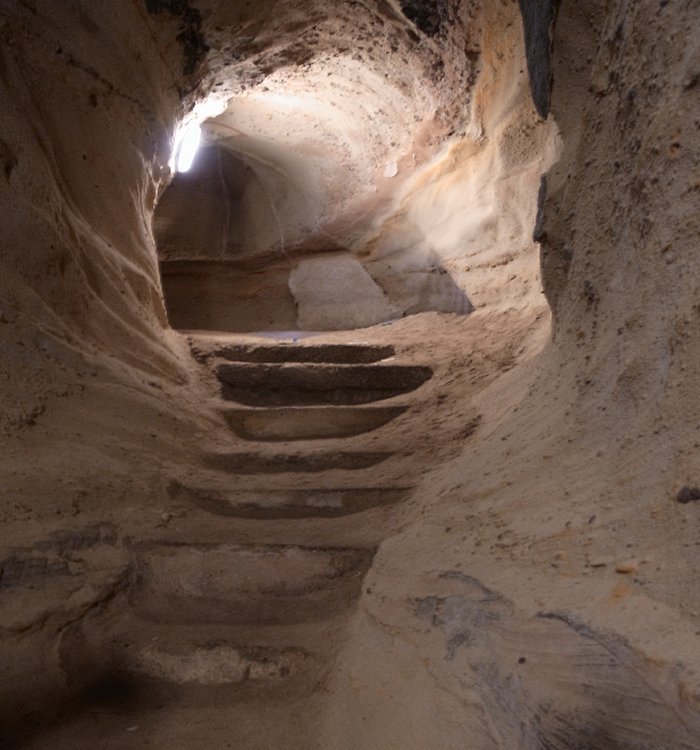
The tunnel that led to Sir Roger’s downfall then became known as ‘Mortimer’s Hole’ and is so to this day. Credits: Nottingham Heritage
Digging of subterranean cave dwellings, underground bowling alleys, painstakingly chiseled tunnels, and jail cells began long ago and served many purposes.
Nottingham Castle’s subterranean caves and tunnels have hundreds of years of dramatic history hidden within their walls. There are more than 300 steep stairs going down to these creepy and cold spaces that can only be accessed on guide tours.
Some of the caves served as wine cellars due to their constant temperature of 14 degrees Celsius and several of the caves date back to medieval times. Sometimes, they served as a chapel, kilns for malt and pottery, or tannery. Frequently, they were used as a secret entrance into Nottingham Castle.

Digging of subterranean cave dwellings, underground bowling alleys, painstakingly chiseled tunnels, and jail cells began long ago and served many purposes. Credits: Nottingham Heritage
The tunnels are strongly related to the famous legends of Robin Hood, who was said to use them to escape the Sherriff of Nottingham.
King David’s legendary dungeon, is a dark, gloomy place with pictures carved into walls. These are believed to have been made by King David of Scotland after the battle of Neville’s Cross.
He and his captors stayed here for 12 days while he recovered from an arrow wound to the face. All that time, he spent sitting in this cold cave.
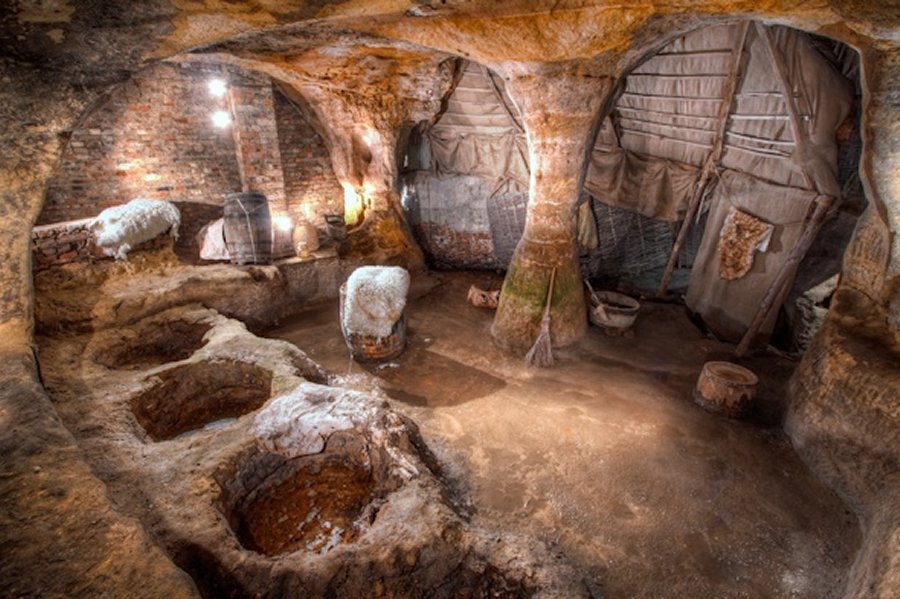
Beneath Nottingham Castle, a labyrinth of manmade caves and tunnels continues to tell the turbulent story of this historic site. Credits: Nottingham Heritage
Another famous place is Mortimer’s Hole. It is an eerie tunnel, indeed. It is also carved into the sandstone outcrop on which the Castle stands.
Roger Mortimer, the Earl of March was the lover of the medieval Queen Isabella. Mortimer and Isabella are said to have plotted the death of her husband and his male lover. By 1330, Mortimer and Isabella were living at the castle in regal splendor.

Nottingham was once known as Tigguo Cobauc meaning "Place of Caves" and was referred to as such by the Bishop of Sherborne Asser in The Life of King Alfred (893AD). Credits: Nottingham Heritage
Her son, the young King Edward III accompanied by a group of nobles entered the castle via the tunnels, burst into his mother’s bedroom, and arrested Mortimer.
The doomed Sir Mortimer was imprisoned in the cave now known as Mortimer’s Hole, before being taken to London and executed as a traitor. He was hung, drawn, and quartered on 29 November 1330 and his wretched remains were skewered on spikes and left to rot on traitors gate at ‘Tyburn’.
The tunnel that led to Sir Roger’s downfall then became known as ‘Mortimer’s Hole’ and is so to this day.
Copyright © AncientPages.com All rights reserved. This material may not be published, broadcast, rewritten or redistributed in whole or part without the express written permission of AncientPages.com
Expand for referencesReferences:
More From Ancient Pages
-
 Is Biblical Mount Sinai Located In Har Karkom Where Mesopotamian Moon God Sin Was Worshipped?
-
 Dracula: Cruel, Ruthless And Bloodthirsty Ruler But Not A Vampire
-
 An Ancient Goldsmith’s Unexplained Encounters With The Unknown
-
 Mystery Of The Blue Blood Gods: Why Did They Have A Different Blood And Skin Color?
-
 Magnificent Virtual 3D Tour Of Famous Temples Of Baalbek – Now Available To Anyone
-
 Lady Fu Hao: Brave Warrior Skilled Strategist And China’s First Female General
-
 600,000-Year-Old Finds Reveal Canterbury Was Home To Britain’s Earliest Humans
-
 Ancient Symbol Hamsa: It’s Meaning And History Explained
-
 Mystery Of Ancient New York Giants – Who Was Really Buried In The Druid Barrow?
-
 Secret Tunnel Leads To Christian Chapel In Ancient Suomela Monastery In Turkey
-
 Evidence Americas’ Oldest Mine In Wyoming Was Used By Paleoindians 13,000 Years Ago Has Been Found!
-
 Unique 17th Century Silk Dress Found At Bottom Of The Wadden Sea Goes On Display
-
 Sobek – Enigmatic Crocodile God Of Ancient Egypt
-
 Power Of Water In Beliefs Of Ancient Cultures
-
 Mysterious Books From The Unknown And ‘Impossible’ Coincidences
-
 Ancient Indian Sages Had Highly Advanced Scientific Knowledge Thousands Of Years Ago
-
 Mag Mell: Irish Tradition Of Otherworldly Paradise That Could Be Reached Through Death And Glory
-
 Was Biblical Adam A Giant Who Emerged From An Underground World?
-
 Vimana Temples – Architectural Marvel Of India
-
 Quatrefoil Symbol Was Used By The Olmecs And Maya Long Before It Appeared On Christians Churches

