
10 Surprising Facts About The Neanderthals Who Were Not As Primitive As Previously Thought
AncientPages.com - Archaeological excavations and examinations of bones, caves, and various ancient artifacts reveal that the Neanderthals were not as primitive as previously thought.
Neanderthals are our closest extinct relatives and modern humans share 99.7% of their DNA. These intriguing beings were widespread across Europe and Western Asia for a long time, about 400,000 years ago, and they died out in Europe about 40,000 years ago.

Many recent discoveries show us the Neanderthals tried to create a complex society based on various traditions, beliefs and we have underestimated their intelligence.
1. Neanderthal DNA Still Influence Modern Human Genes

Everyone living outside of Africa today has a small amount of Neanderthal in them and much of their genome lives and contribute to certain traits in modern humans.
The impact of Neanderthals’ genetic contribution has been uncertain, but scientists have discovered evidence that Neanderthal DNA sequences still influence how genes are turned on or off in modern humans. Neanderthal genes’ effects on gene expression likely contribute to traits such as height and susceptibility to schizophrenia or lupus, the researchers found. Scientists have previously also found correlations between Neanderthal genes and traits such as fat metabolism and depression. Read more
2. Neanderthals Decorated Their Caves With Rocks
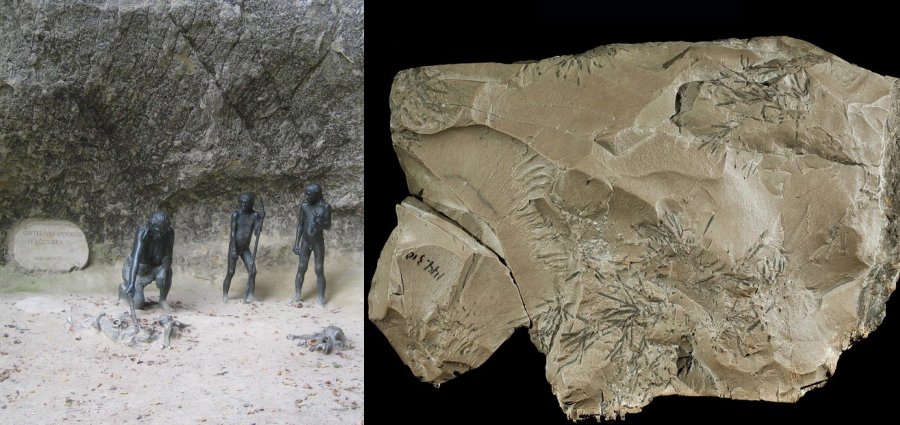
The Neanderthals shared humans’ curiosity for nature and appreciated beauty. Archaeologists have discovered that the Neanderthals collected artifacts they considered valuable. At the Croatian site of Krapina, there is evidence the Neanderthals who lived there 130,000 years ago collected striped limestone rocks and used them to decorate their caves.
These rocks had a symbolic meaning to the Neanderthals and the items were also considered beautiful. Read more
3. Neanderthals Created Jewelry 40,000 Years Ago
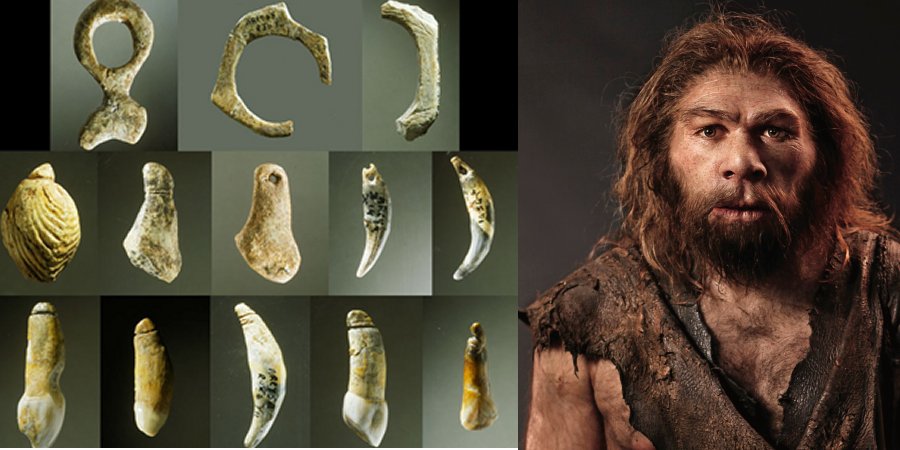
Ancient jewelry has been found in several prehistoric tombs all across the world, but who would have thought Neanderthals enjoyed and created jewelry as far back as 40,000 years ago!
Artifacts discovered at Grotte Du Renne, France reveal a number of bone fragments and ancient artifacts that have now been properly investigated and the results of the analysis are intriguing. Scientists have determined that bone fragments were used to produce Neanderthal jewelry. Read more
4. Neanderthals Used Plant-Based Medicine To Treat Pain And Illness

Scientists have examined ancient DNA found in the dental plaque from four Neanderthals found at the cave sites of Spy in Belgium and El Sidrón in Spain. The study reveals Neanderthals used plant-based medicine to treat pain and illness. Researchers discovered that the Neanderthals who lived in the El Sidrón Cave were vegetarians. They ate pine nuts, moss, mushrooms, and tree bark. The Neanderthals who inhabited the Spy Cave consumed woolly rhinoceros and European wild sheep, supplemented with wild mushrooms.
So, the two groups had different quite different lifestyles, but both were familiar with the benefits of plant medicine. Read more
5. Neanderthals Built Ancient Underground Stone Rings For Unknown Reasons
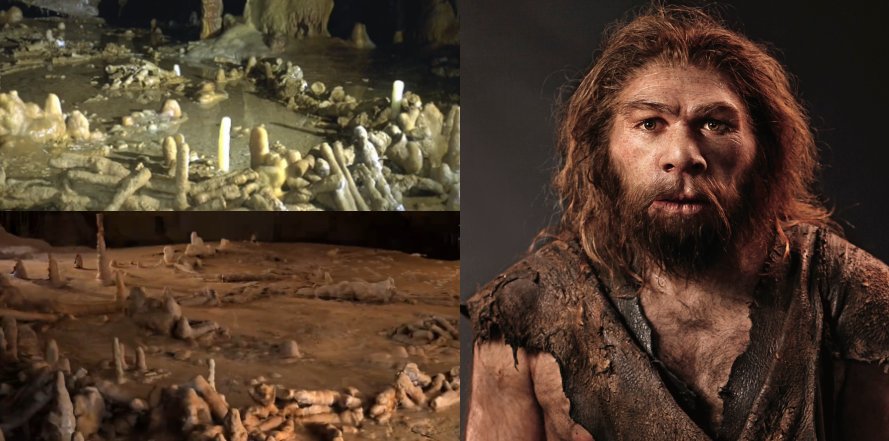
Located deep in a cave in France there are two mysterious ancient stone rings that were made by a group of people that mastered the underground environment.
The builders of these stone rings that are now considered to be one of the world’s oldest constructions have puzzled archaeologists and historians for years, but recent research suggests the structure was constructed by Neanderthals 176,500 years ago, but it remains unknown why the underground stone rings were built. Read more
See also:
10 Fascinating Facts About Pharaohs
12 Ancient Myths, Legends And Biblical Stories Confirmed By Modern Science
10 Most Bizarre Forms Of Ancient Taxes: Surprising And Funny
6. Neanderthals Used Toothpicks Long Before Us
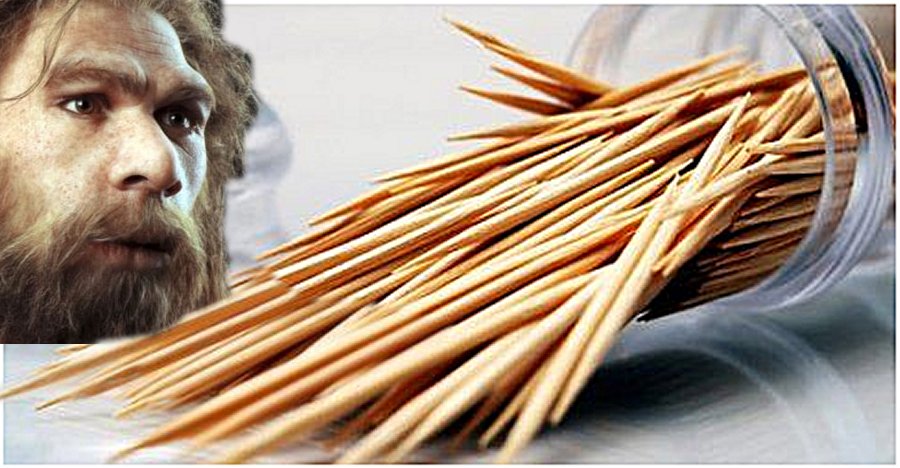
Researchers excavating in northern Spain have confirmed that toothpicks were used long before our times.
Wood fibers were found on a tooth in a 1.2-million-year-old hominin jawbone discovered at the excavation site. The fibers were found in a groove at the bottom of the tooth, suggesting they came from regular tooth picking. Scientists found the oldest known example of this type of dental cleaning while investigating teeth of the 49,000-year-old remains of a Neanderthal at the El Sidron cave in Spain. Read more
7. Neanderthals Visited A Special Cave In Jersey For Over 100,000 Years

Image credit: Jersey Heritage
Archaeologists excavating in Jersey have discovered that despite globally significant changes in climate and landscape Neanderthals kept visiting La Cotte de St Brelade, a coastal cave for over 100,000 years. Why was this particular cave so important to our ancestors?
The first time these ancient people visited the cave was about 180,000 years ago and they kept coming back until 40,000 years ago.
Obviously, the cave was of great importance to the Neanderthals and it was considered a special place. Read more
8. Varggrottan: Mysterious ‘Wolf Cave’ Was Home To Neanderthals 130,000 Years Ago – Oldest Human Dwelling In Scandinavia

In Finland, there are still many unexplored ancient caves that hold many secrets. One of them is called Varggrottan, which means the Wolf Cave in English.
When archaeologists explored the mysterious cave, they found a number of artifacts that suggest this was home to Neanderthals 130,000 years ago.
There is still a debate about these controversial artifacts unearthed in the cave, but if they did belong to the Neanderthals, then there is no doubt that Varggrottan holds a special place in history, making it one of the oldest discovered homes of ancient people in Scandinavia. Read more
9. Neanderthals Buried Their Dead And Developed Spirituals Beliefs

There are still many things we don't know about the Neanderthals. Reconstruction of the child's burial by Neandertals at La Ferrassie. © Emmanuel Roudier
There is evidence that Neanderthals made symbolic or ornamental objects, and deliberately buried their dead. Sometimes they also marked their graves with offerings, such as flowers. No other primates, and no earlier human species, had ever practiced this sophisticated and symbolic behavior.
But were the Neanderthals religious too?
There is evidence from the late Middle Paleolithic period (around 50,000 years ago) which does show an early form of religious or spiritual belief amongst Neanderthals. The evidence is based on their deliberate burials with grave goods. To ritualistically bury dead is a very ancient tradition that goes back for at least tens of thousands of years. There are signs of offerings in graves going back 120,000 years and deliberate burials were ascribed to the Neanderthals. Read more
10. ‘Altamura Man’ – The Oldest Neanderthal DNA Ever Collected
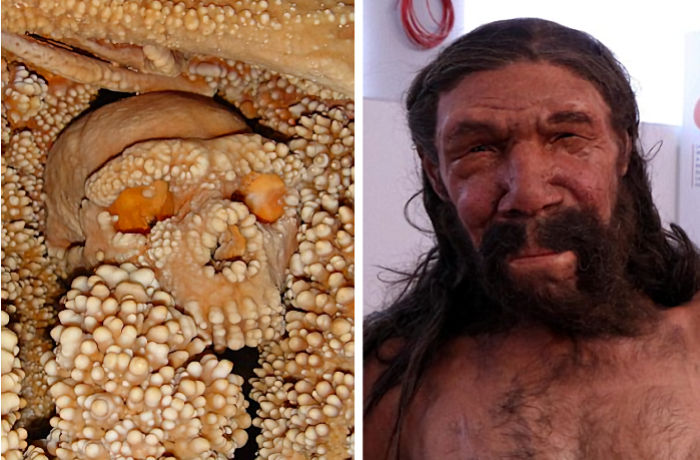
Left image: The Altamura Man. Credit: Redazione Research Italy - Right image: The reconstruction of the Altamura man. Credit: EPA
The fossil skeleton of ‘Altamura Man’ imprisoned in calcite formations and found in a cave in 1993 in Puglia, Italy, belongs to the species Homo neanderthalensis. Analysis of calcium formations on ‘Altamura Man’ – embedded in an Italian cave and coated in a thick layer of calcite – shows that it formed 172,000 to 130,000 years ago during a period when ice sheets were expanding from out of Antarctica and Greenland.
Thus, the skeleton from Altamura represents the most ancient Neanderthal from which endogenous DNA has been extracted. Read more
Copyright © AncientPages.com All rights reserved. This material may not be published, broadcast, rewritten or redistributed in whole or part without the express written permission of AncientPages.com
More From Ancient Pages
-
 Pharaoh Ramses II Comes One Step Closer To The Gods In The Company Of Hathor, Sekhmet and Ptah – Statues Discovered
-
 7,000-Year-Old Underwater Road Discovered In Adriatic Sea Off Korcula Island
-
 Skeletal Remains Of A 1,500-Year-Old Byzantine Ascetic Monk, Chained In Iron Rings – Uncovered Near Jerusalem
-
 11th-Century Pratihara-Era Temple Accidentally Found By A Farmer In Uttar Pradesh, India
-
 New Trove Of Treasures, Funerary Temple, 50 Sarcophagi Unearthed In Saqqara, Cairo
-
 Ullr – Famous Norse Archer – God Of Asgard And Fastest Skier Ever Known Who Taught People The Art
-
 Weapons Left By Barbarian Tribes Discovered In Polish Forest
-
 King Seqenenre Taa II Was Killed By Hyksos Invaders – Mummy Scans Reveal His Wounds
-
 Unique Maya Center Of Copán With History Recorded In 2500 Hieroglyphics
-
 Unique Ancient Human Statue Found Embedded In A Wall At Göbekli Tepe
-
 Leonardo Da Vinci’s Mother Might Have Been A Slave – Here’s What The Discovery Reveals About Renaissance Europe
-
 Uncovering Ancient Secrets Hidden In China’s Dunhuang Caves
-
 The 426-Km-Long Roman Aqueduct Provided Water For Constantinople – New Study
-
 Achilles – Son Of King Peleus And Leader Of The Nereids
-
 How Did The Early Rapa Nui People Put Huge Hats On Giant Statues Of Easter Island?
-
 The Kitchen God In Ancient Vietnamese Tradition Is Still Alive
-
 Ryujin: Benevolent And Righteous Dragon-King And Sea God In Japanese Legends
-
 Magnificent Trumpington Cross And Highly Unusual Anglo-Saxon ‘Bed Burial’ In Cambridge Offer Unique Insight Into English Christianity
-
 Ancient Solar Eclipses That Re-Wrote History And Made Ever-Lasting Impact On Humans
-
 Chang’e: Chinese Goddess Of Moon And Immortality

