Conny Waters - AncientPages.com - The Lublin Provincial Monuments Conservator has announced a 15 iron weapons that probably belonged to Barbarian tribes who fought the Romans have been discovered in a forest near the town of Hrubieszów in eastern Poland.
“We are most likely dealing with weapons used by barbarian tribes during the Roman Empire, perhaps with the Przeworsk culture,” the Hrubieszów Museum said in a statement.
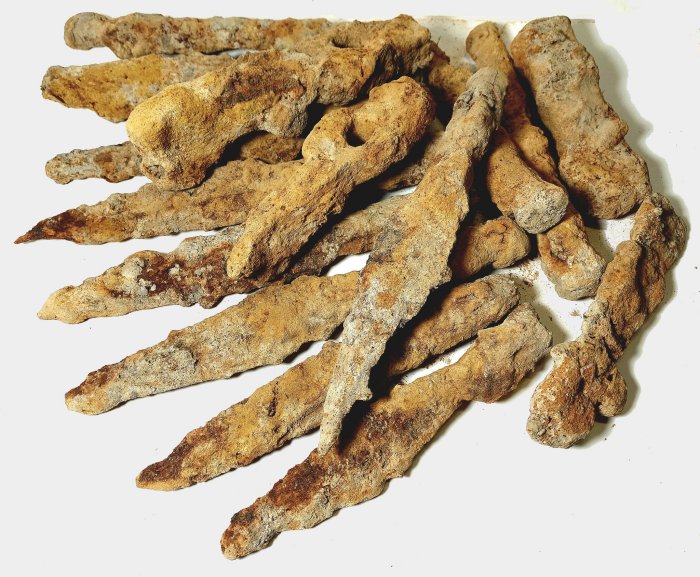
A set of Barbarian weapons discovered by Mateusz Filipowicz in the State Forests in the Hrubieszów region. Credit: Lubelski Wojewódzki Konserwator Zabytków / B. Bartecki
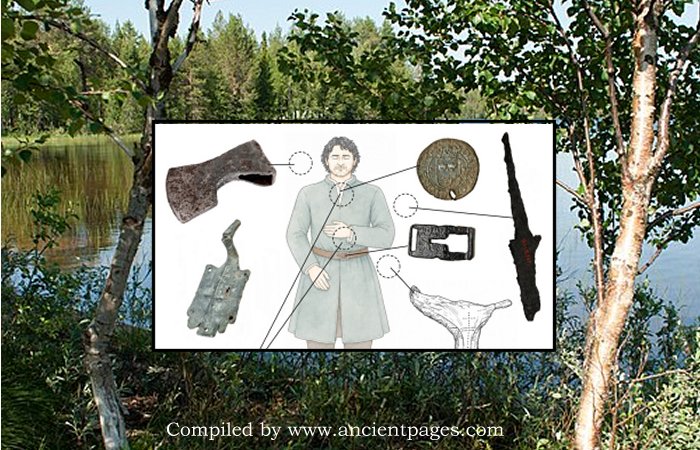
The Barbarian weapons include spearheads, axes, and three objects that currently remain unidentified.
The term Barbarian is often misused today. "In modern times, we often say Barbarians are uncivilized people or evil people.
However, the true meaning of the word has been forgotten. The word originated in ancient Greece and initially referred to people who did not speak Greek." 1

All the weapons were found in one location in the forest. Credit: Adobe Stock - Pawel Michalowski
There were several Barbarian tribes. Among them are, for example, the Celts, Iberians, Scythians, Thracians, Illyrians, Sarmatians, Goths, Franks, Visigoths, Vandals, Lombards, and Ostrogoths.
Romans had disciplined and organized soldiers who often had difficulties fighting against Barbarians who applied entirely different military tactics. Germanic ghost warriors defeated many Roman soldiers. Unlike the Vikings, who confronted their enemy face to face, Germanic ghost warriors took advantage of nature and the element of surprise. It may have been a crude method, but it was certainly a successful military tactic. When ancient Romans entered their territory, they soon learned the Germanic ghost warriors had never bowed down to anyone and had no intentions of ever doing so.
Barbarians were trained in various deadly weapons, which they deliberately used in a chaotic manner, confusing organized soldiers.
The iron artifacts found in the State Forests in the Hrubieszów region provide scientists with more information on which weapons Barbarian tribes used.
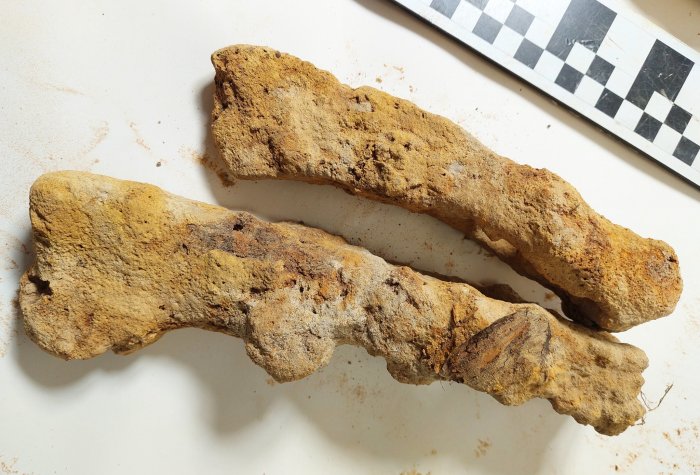
Credit: Lubelski Wojewódzki Konserwator Zabytków / B. Bartecki
Unfortunately, the objects were discovered in a swampy area of the forest, and the metal is heavily corroded, and some of the artifacts are difficult to identify.
"Several kilograms of shapeless muddy corroded iron were safely packed up and taken out of the forest to clean and determine the nature of the find," Dariusz Kopciowski, the local conservative of monuments, told local news outlet Lublin112.
Almost all of the artifacts were found at the same spot, and archaeologists already have a preliminary theory about the origin of the weapons.
"We are most likely dealing with weapons used by Barbarian tribes during the Roman Empire, perhaps with the Przeworsk culture (1st century B.C. - 2nd/3rd century A.D.)," the museum's conservator said.
There are no known archaeological sites in the area of the discovery, which explains why no bones, pottery, or other artifacts were unearthed at the site. It would seem that someone deliberately collected these weapons, packed them in a bag or other organic container, and then threw them into the swamp.
See also: More Archaeology News
For many years, while showing our guests around, we mentioned that somewhere in the Hrubieszów forest, there must have been a place where the Goths used weapons. Let us remember that the Goths did not put iron objects in their graves. These spears, swords, axes, and other military equipment must be somewhere, and it is only a matter of time before we find one of such places," the Hrubieszów museum added in a statement.
The weapons will now be thoroughly analyzed. The study should reveal the age and origin of these objects.
In spring, researchers will re-examine the site where the 15 weapons of the Barbarians were found.
Written by Conny Waters - AncientPages.com Staff Writer
Expand for references