
10 Fascinating Facts About Pharaohs
Ellen Lloyd - AncientPages.com - In ancient Egypt, pharaohs were considered to be both divine deities as well as mortal rulers. The ancient Egyptian empire lasted for thousands of years and over this period of time, there were at least 170 pharaohs in all. According to historical records, Menes was the first pharaoh of Egypt and Cleopatra VII was the last.

In this article, we have put together 10 fascinating facts about pharaohs. Some of the facts are well-known, but there are also a few that are quite surprising.
1. The Term “Pharaoh” Was Not Used Until About 1200 B.C.
The term 'pharaoh' is the Greek form of the Egyptian 'pero' or 'per-a-a', which was the designation for the royal residence and means `Great House'. It was not used until about 1200 B.C. The early monarchs of Egypt were not known as pharaohs but as kings. It was first during the time of the New Kingdom and onwards the word pharaoh it was used to refer to the king himself.
2. Long And Hard Training Was Required To Become A Pharaoh
To become a pharaoh was by no means an easy task. It required a long period of hard training that started were very early in a prince’s life. Young children went through a series of lessons. Many of these lessons focused on building physical strength because the pharaoh often fought at the head of his army. Princes went to the royal stables where they learned how to ride and break wild horses. They also ran long foot races to build endurance and went on hunting and fishing expeditions. In time, a prince hoped to persuade a pharaoh to take him on as his ‘co-regent’. When a pharaoh died, control went to his co-regent.
3. Only A Pharaoh Was Allowed To Make Offerings To The Gods
The pharaohs were also the high priests and made daily offerings to the gods. Only the kings and priests were allowed to enter the temples which were believed to house the gods whose spirits resided in their statues.
It was believed that pharaohs were the only people who were allowed to approach and touch the gods. Pharaohs are the only people shown making offerings to the gods in temple wall paintings.
4. Pharaohs Were Always Depicted With A Beard
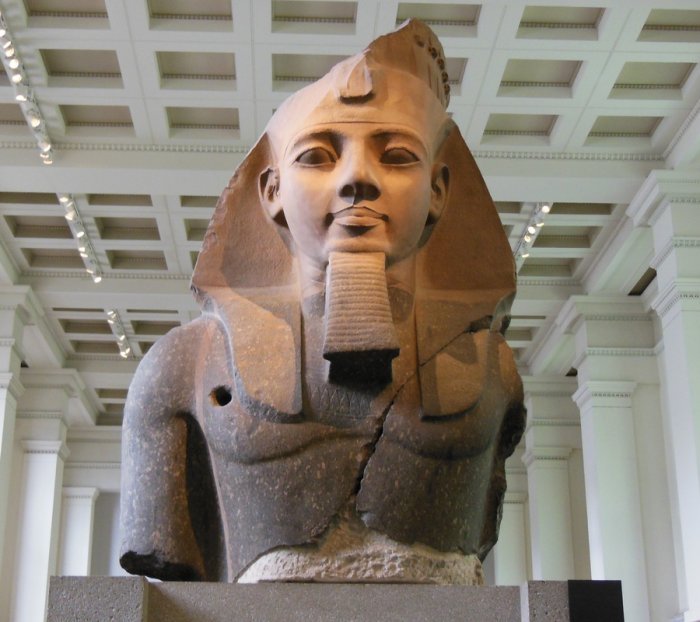
A pharaoh wore a false beard so he could feel closer to the gods.
Pharaohs always had a beard. In most cases, it was a false beard. In real-life, most Egyptian men were clean-shaven, but pharaohs, even the female ones, wore fake beards. Usually, the beards were plaited like a big braid. It was believed that the beard let the pharaoh connect closer to the gods.
See also:
Ancient Egyptian Men Used Eye Makeup For Many Reasons
Ancient Egyptians Played Bowling 5,000 Years Ago
Egyptian Blue: World’s Oldest Artificial Pigment
5. The Pharaoh Had The Greatest Power In Ancient Egypt
No-one was as powerful as the pharaoh in ancient Egypt. The pharaoh was completely in charge of law and order, trade and industry, and the taxation of the temple lands and private estates. The pharaoh was also the head of Egypt’s legal system. If an Egyptian felt he had been wronged, he could appeal directly to the pharaoh for justice.
6. The Pharaoh Wore A Nemes Crown
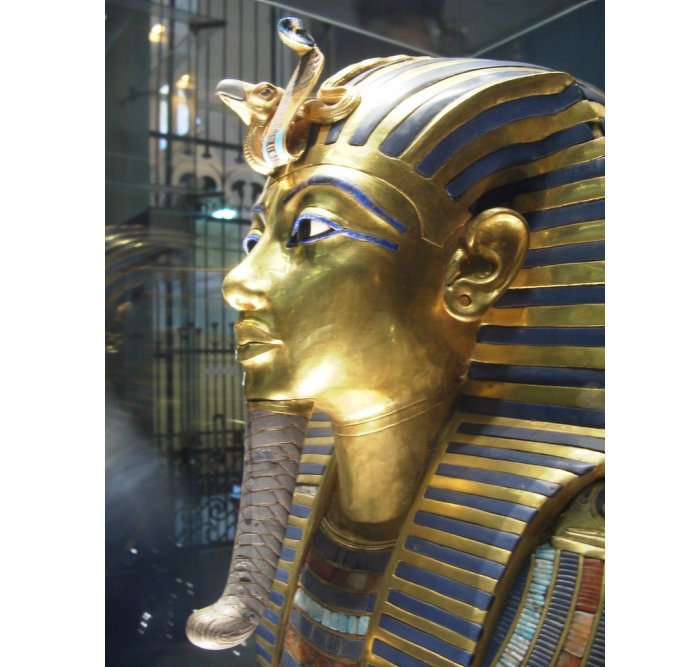
The cobra was a sign that meant the pharaoh was ready to strike at his enemies.
Egyptian pharaohs wore ceremonial clothes and several symbols indicating their power and position in Egyptian society. A Nemes crown was a striped head cloth that covered the entire back of the head and neck. On top of the Nemes crown was uraeus, an upright cobra.
See also: 12 Ancient Egyptian Symbols Explained
The cobra was a sign that meant the pharaoh was ready to strike at his enemies with venom at any time. The uraeus is the symbol of the ancient Egyptian goddess Wadjet. Other important symbols used by the pharaohs were the crook and the flail. The crook shows that the pharaoh leads and protects his people. Moreover, the flail ia a tool that helps to separate grains from their husks so it symbolizes the pharaoh’s role as the provider of food for his people.
7. Pharaohs Were Always Depicted And Young And Handsome Even If They Were Old And Fat
It really didn’t matter if the pharaoh was fat or utterly ugly. He was always depicted as a young handsome man in ancient Egyptian art.
8. Pharaoh Was The Human Form Of Sky God Horus
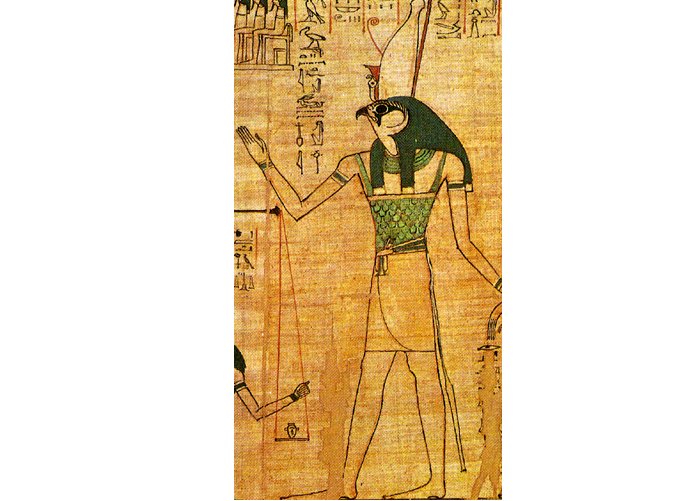
God Horus
Ancient Egyptians believed that the pharaoh was the human form of sky Horus, and then when he died, the dead pharaoh was the human form of Osiris. More generally, Horus was a sky god, the son of the sun god, Ra. He was the god of war and the god of protection against evil. A lot of people carried good luck charms in the shape of the eye of Horus, to watch out for their safety.
9. All Pharaohs Wore Makeup
Both male and female pharaohs wore makeup. They painted the eye area with black kohl from ground ores (metal-bearing mineral), not just for beauty but also to reduce light reflection. Aside from considering beauty as holiness, they needed to be comfortable under the northern Nile Valley’s bright sunshine. They also believed that by lining their eyes with kohl and creating an almond-shape, their eyes would resemble the eyes of the god Horus. As such, the resemblance would enable them to protect themselves against evil spirits and eye diseases. Pharaohs also darkened their eyebrows and eyelashes, and they preferred to apply green or blue eye shadow.
Frescoes discovered in ancient Egyptian temples illustrating daily life reveal men often wore makeup. In fact, it’s almost impossible to find a portrait of an ancient Egyptian whose eyes are not decorated.
During all periods and dynasties, eye makeup was a daily prerequisite for both men and women.
10. Pharaohs Spent Their Reigns Preparing For Their Death

Tomb of a pharaoh
Afterlife was in many ways just as important as real-life to the pharaohs who spent their reigns preparing for their death.
Pharaohs built tombs to be the homes of their dead spirits so they could still live well even in the afterlife. The construction of their tombs or pyramids would begin as soon as they took the throne. Tomb of Pharaoh Seti I is the largest tomb in the Valley of the Kings.
Written by - Ellen Lloyd - AncientPages.com
Copyright © AncientPages.com All rights reserved. This material may not be published, broadcast, rewritten or redistributed in whole or part without the express written permission of AncientPages.com
More From Ancient Pages
-
 How Did The Early Rapa Nui People Put Huge Hats On Giant Statues Of Easter Island?
-
 Ancient Burial Site Flagstones In Dorset Is Older Than Stonehenge
-
 On This Day In History: Treaty Of Picquigny – Negotiations Between England And France – On Aug 29, 1475
-
 Never-Before-Seen Ancient Frescoes Discovered Inside The Dormition Cathedral
-
 Rare Upper Paleolithic Human Remains Discovered In The Iberian Peninsula
-
 Unusual Power Of Seidr: Norse Shamans Used Magic To Alter Destiny And See The Future
-
 Celtiberians: Intriguing Martial Culture And Their Skilled Warrior Infantry
-
 Ancient Genomes Suggest Farming In Africa Was Ignited By Oversea-Migrants From Iberia 7,400 Years Ago
-
 Mystery Of An ‘Impossible’ Event In Georgia Linked To An Unusual Woman
-
 Largest Ever Human Family Tree: 27 Million Ancestors Mapped
-
 Ancient Secrets Of The Amazon Jungle – Dangerous Expeditions And Hidden Treasures – Part 1
-
 Khufu Boat And Unique Boat-Building Technique Of Ancient Egyptians
-
 Well-Preserved Fragments Of Epetion’s Wall Discovered At The Hellenistic Site Of Stobreč, Near Split, Croatia
-
 Hidden 15th-Century Text On Medieval Manuscripts – Discovered By Students
-
 Enigma Of The Missing Pyramid Bodies – Ancient Egyptian Mystery Remains Unsolved
-
 A 1,600-Year-Old Mosaic Accidentally Unearthed In Ancient City Of Yavne, Israel
-
 Enigmatic “Invisible” Tribe: Their “Non-Human” Language And Sounds Disorient People In The Pacific Northwest
-
 Strange Ancient Human Bones And Artifacts Of An Unknown Lost Civilization Found In Nebraska
-
 New Clues Why Neanderthals Visited La Cotte de St Brelade In Jersey 250,000 Years Ago
-
 Ancient Roman Laws Give Us A Window Into A World Of Abuse

