
Cuneiform Tablets: One Of The Earliest Systems Of Writing Invented By The Sumerians
A. Sutherland - AncientPages.com - A Sumerian epic poem entitled "Inanna and Enki" says that the art of writing was among many essential elements of civilization, transferred from Eridu, the City of the Kings, to Uruk. It was dedicated to the people of earth by Enki, God of Wisdom.
According to Mesopotamian beliefs, writing is considered a gift of the gods, and writing means both power and knowledge.
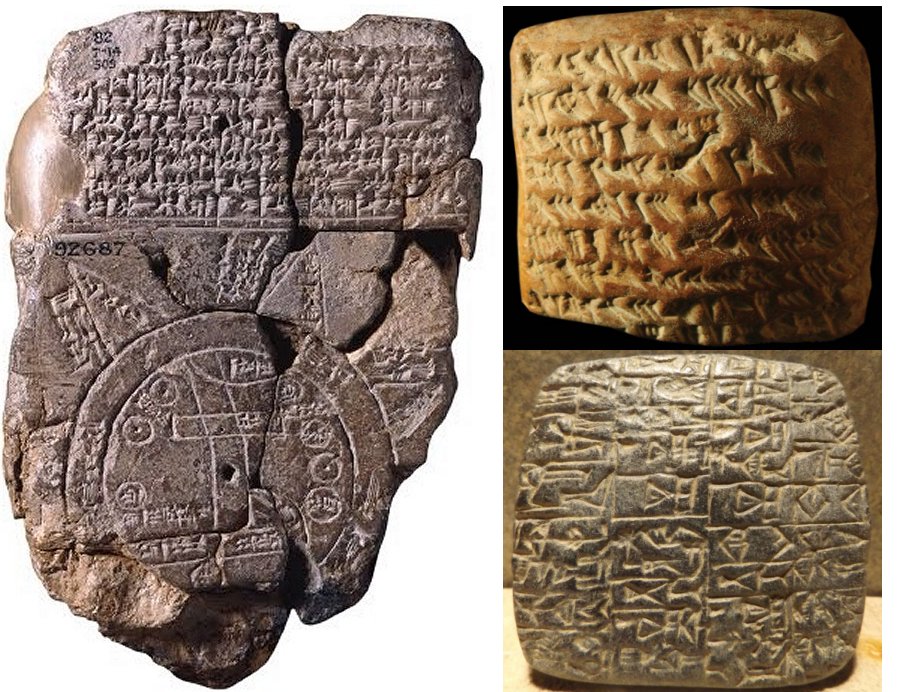
Mesopotamian writing- cuneiform tablets
Archaeological evidence, on the other hand, suggests that the Sumerians have developed this excellent skill for a long time. The invention of writing, dating from 5000 BC to 2000 BC, was used for keeping accounts, describing religious events and scientific achievements, and keeping records of extraordinary happenings, known today as written history.
More than 5,000 years ago, people living in Mesopotamia developed a form of writing to record and communicate different types of information. The early writing was based on pictograms, which helped share basic information about crops and taxes.
Several scientists worldwide examined the inscribed tablets and could date their creation to at least 6,500 years ago. However, many believe that the Tartaria tablets represent the first writing in the world. Their existence suggests that the Danube civilization invented a writing system long before the Sumerians.
Mesopotamian cuneiform writing was made with the help of the stylus to make wedge-shaped marks in the clay. Using this method over thousands of years, Mesopotamian scribes recorded on clay tablets - daily events, trade, and the numbers of sheep, cattle, crops, and laborers in the workforce, because trade and economic necessities were likely the biggest motivators for writing.
Many cuneiform tablets were later covered with astronomy, texts of omen collections, medical texts, and therapeutic, symptom, and disease texts. Later, the Babylonians wrote sophisticated mathematical procedures in cuneiform script on clay tablets.
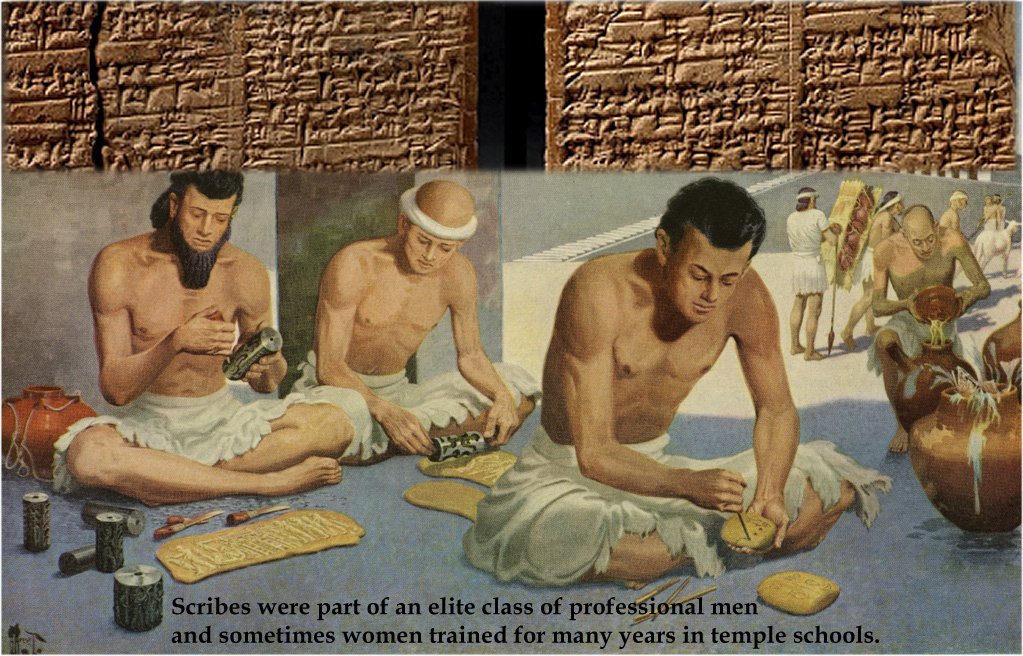
Later, the pictogram signs were replaced with the so-called 'cuneiform script' that dates back to the late fourth millennium BC. The Sumerians are credited with this invention, one of the earliest writing systems.
Also, the earliest known dictionaries in the world developed when people needed to translate words in Sumerian into Eblaite since Ebla was a major educational center. However, literature was not intended for a broad audience but rather for the royal collections and school libraries used for studies and teaching.
The Sumerian script was also adapted for writing the Akkadian, Elamite, Hittite, Luwian, Hattic, Hurrian, and Urartian languages. It became an inspiration for the Ugaritic alphabet and Old Persian cuneiform. The cuneiform writing system was used for over 3000 years, and during at least 2000 years, the system underwent considerable changes.
The primary material on which the records were made was clay, abundant in Mesopotamia. It is worth adding that more Sumerian texts could be preserved compared to the Egyptians. It is because clay tablets had much better durability than the Egyptian writing material – papyrus.
The Phoenician alphabet gradually replaced cuneiform writing during the Neo-Assyrian Empire (911–612 BC). By the second century CE, the script had become extinct. All knowledge of how to read it was lost until the deciphering process began in the 19th century.
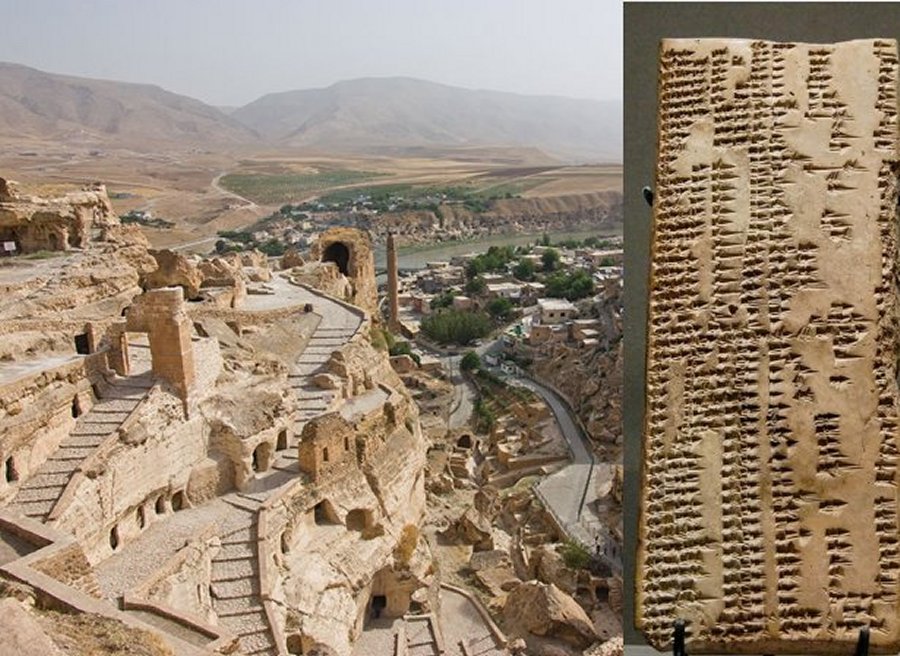 World’s oldest dictionaries come from the Akkadian Empire. The dictionaries, written on cuneiform tablets, are about 4,500-year-old and were discovered in Ebla. The Urra=hubullu glossary, a major Babylonian glossary or encyclopedia from the second millennium BC, preserved in the Louvre Museum in Paris.
When the Sumerian state ceased to exist, the Babylonians and the Assyrians took over the entire cultural heritage. In legacy, the Sumerians left numerous magical and historical texts, mathematical-natural, philological, and astrological-astronomical textbooks.
Many of these texts were copied, and new ones were created, but these works remained anonymous. The first early attempts at deciphering the cuneiform tablets were also largely unsuccessful because it was difficult to determine the origin of many of them.
Archaeologists unearthed many thousands of cuneiform tablets. One example is the discovery of 30,000 clay tablets found in Nineveh, one of the essential sources of knowledge about ancient Mesopotamia.
 Letter sent by the high-priest Lu’enna to the king of Lagash (maybe Urukagina), informing him of his son's death in combat. w: Clay tablet, c. 2400 BC, found in Telloh (ancient Girsu). From the excavations supervised by Gaston Cros, 1904. Photo credit: Jastrow/Louvre Museum - Public Domain
The Sumerian script was also adapted for the writing of the Akkadian, Elamite, Hittite, Luwian, Hattic, Hurrian, and Urartian languages. It became an inspiration for the Ugaritic alphabet and Old Persian cuneiform. The cuneiform writing system was used for more than 3000 years, and during at least 2000 years, the system underwent considerable changes.
The basic material on which the records were made was clay, which was abundant in Mesopotamia. It is worth adding that more Sumerian texts could be preserved compared to the Egyptians. This is due to the fact that clay tablets had much better durability than the Egyptian writing material – papyrus.
The Phoenician alphabet gradually replaced cuneiform writing during the Neo-Assyrian Empire (911–612 BC). By the second century CE, the script had become extinct, and all knowledge of how to read it was lost until it began to be deciphered in the 19th century.
When the Sumerian state ceased to exist, the entire cultural heritage was taken over by the Babylonians and the Assyrians. In legacy, the Sumerians left numerous magical and historical texts, mathematical-natural, philological, and astrological-astronomical textbooks.
Many of these texts were copied, and new ones were created, but these works remained anonymous. The first early attempts at decipherment of the cuneiform tablets were largely unsuccessful also because it was difficult to determine the origin of many works.
By the end of the 1850s, Hincks and Rawlinson had successfully provided a working decipherment of Mesopotamian cuneiform. Their contribution formed the foundation of our knowledge of the Sumer, Akkadian, Babylonian, and Assyrian empires, all native to Mesopotamia.
Written by – A. Sutherland AncientPages.com Staff Writer
Updated on October 3, 2022
Copyright © AncientPages.com All rights reserved. This material may not be published, broadcast, rewritten or redistributed in whole or part without the express written permission of AncientPages.com
Expand for referencesReferences:
Beckett, T. Sumerians: Discover History’s First Civilization
Freeman, H. Sumerians: A History From Beginning to End
King, L. W. A History of Sumer & Akkad
More From Ancient Pages
-
 Well-Known Powerful Yin Yang Symbol Dates Back To Ancient China
-
 Inca Khipus Were Used By Commoners, Not Just The Elite – Previously Unknown Evidence Discovered
-
 Unlocking The Secrets Of Lost Prehistoric Land Hidden Beneath The Sea
-
 Rare Gold Foils Found In Ancient Egyptian Tombs At Tel El-Deir In New Damietta
-
 On This Day In History: Battle of Englefield Was Fought – On Dec 31, 870
-
 Unknown Purpose Of The Mysterious Huge Iron Age Ceramic Sharjah Jar Puzzles Scientists
-
 Ancient City Of Aizanoi: Statue Heads Of Greek Gods Unearthed In Excavations
-
 Unknown Ancient World Discovered Beneath East Antarctic Ice Sheet
-
 Owain Glyndwr: Famous Medieval Welsh Warrior Prince And Symbol Of Independence
-
 On This Day In History: Dramatic Battle Of Öland – On June 1, 1676
-
 Obatala ‘King Of The White Cloth’ And Creation Story Of Yoruba People
-
 Perchta: Evil Witch Of The Alps – An Old Tradition That Still Continues
-
 Biblical Vineyard Of Naboth Existed And Has Been Found
-
 Lost Ancient Mayan Cities Lagunita And Tamchen Hidden In The Jungle Reveal Their Secrets
-
 Ancient Trans-Atlantic Emigration Theory – Not Supported By Genetic Data, Researcher Says
-
 2,700-Year Old Eclipse Mystery Solved With The Help Of Historical Geography
-
 Ancient Mystery Of The Massive, Astronomically Oriented Buildings Worldwide
-
 Ancient Hittite Temple Dedicated To The Goddess Of Night To Be Unearthed
-
 Unknown History Of Gigantic Obelisks Created With Ancient Lost Technology
-
 Rare ‘Forbidden’ Books With Ancient Knowledge Concealed From The World Examined By Experts

