
Lao Tzu: Legendary Thinker And Founder Of Taoism Who Advocated Modesty, Self-Restraint And Balance
A. Sutherland - AncientPages.com - Lao Tzu (Laozi or Lao-tze), known as the Old Master, was an ancient Chinese philosopher, almighty sage, creator of Taoism and author of the ‘Tao Te Ching’ (Daodejing), one of the most important books of Taoism, both religious and philosophical.
‘Tao Te Ching’, is a Chinese classic text traditionally credited to the 6th-century BC; the work of a source of inspiration that inspired many artists including poets, painters, calligraphers, and gardeners.
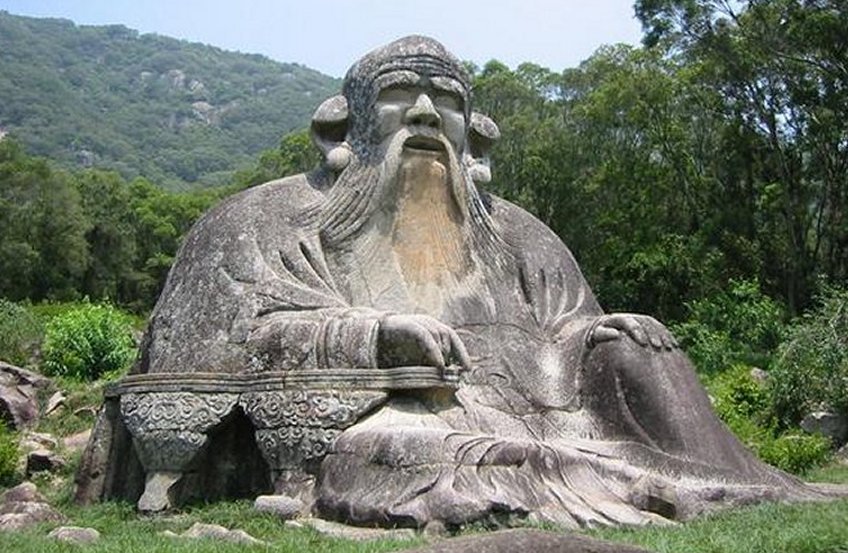
The period of life of this legendary figure is typically dated to the sixth century BC, which means that Lao Tzu was contemporary with Confucius. One legend claims he was an older contemporary of Confucius, who supposedly left an account of meeting Lao Tzu, in which Confucius likened Lao Tzu’s mysterious presence to that of a dragon.
Lao Tzu's greatest legacy given to the Taoists is the knowledge of immortality, the path to the practical achievement of immortality. In folk beliefs, he is considered the patron saint of spellcasters, blacksmiths, jewelers, grinders, and craftsmen.
No doubt, Lao Tzu is a central figure in Chinese culture and many legends are related to this remarkable personality. Along with the creation of Taoism, Lao Tzu was considered a cosmic and divine being.
Legends About Lao Tzu Appeared Much Later
Legends surround this remarkable and highly mysterious figure from the distant past. In his fascinating book “Lost Cities of China, Central Asia and India”, David Hatcher Childress writes that “the great Chinese philosopher, Lao Tzu, often talked of the "Ancient Ones" in his writings, much as Confucius did.
“They were wise and knowledgeable, human beings that were as Gods- powerful, good, loving, and all-knowing…. When he finally left China, at the close of his very long life, he journeyed to the west, to the legendary land of Hsi Wang Mu, which may have been the headquarters of the "Ancient Ones," the Great White Brotherhood…”
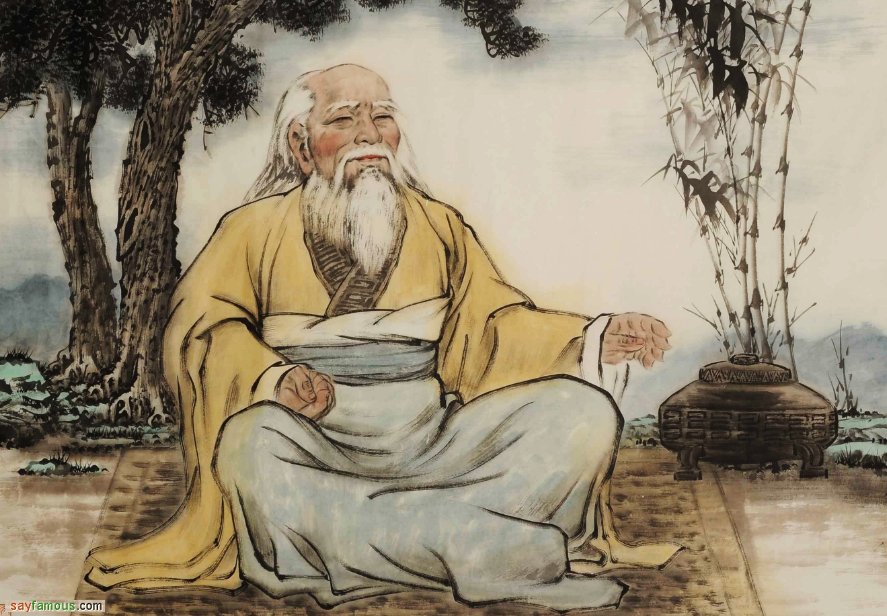
Other legends reveal that Lao Tzu (in some versions after his death), traveled across the Himalayas, came to India, where he became a teacher of Gautama Buddha (or even his father). Such views are not supported by Buddhists, however, and in their historical records, there is no evidence, or even clues, pointing to Lao Tzu as Buddha's teacher.
Later, during the Han Dynasty (206 BC - 220 AD), Lao Tzu began to be seen as a deity. Since then, he has been portrayed as immortal who achieved superhuman powers thanks to appropriate exercises.
Life Of Lao Tzu
There are several fanciful stories about Lao Tzu but there is no definitive evidence that Lao Tzu himself ever existed. Lao Tzu is a mysterious and legendary figure. He is reputed to have said once that "As for the sage, no one will ever know whether he existed or not."
All the information we possess about him is highly inconclusive, so he is lost in the mists of early Chinese history. In one version of his story, he was born on September 14, 604 BC in the kingdom of Ch’u, after being conceived by a falling star, or from solar energy collected in a five-color pearl swallowed by his mother). After spending 62 years in her womb, he finally appeared as a silver-haired sage who began to make philosophical pronouncements.
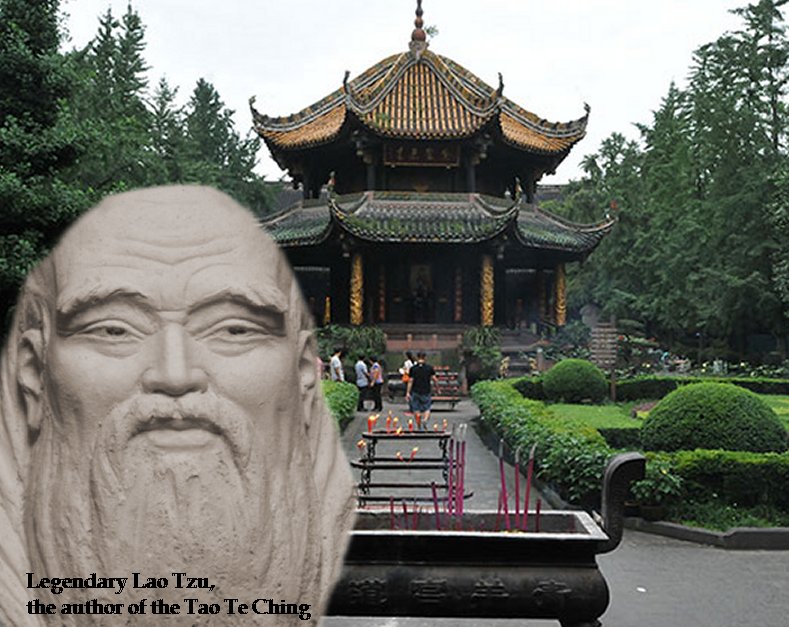
Chengdu Qingyang Gong, a famous Taoist temple in southern China, the birthplace of Taoism, and an important center of Taoist studies. According to legend, this is the place where Lao Tzu, the author of the Tao Te Ching descended from the heavens. Source
In another, he was born to a cultural family living at K'uhsien in 571 BC. He became the keeper of the imperial archives and this occupation allowed him to spend much time developing his philosophical ideas.
Lao Tzu Decided To Leave China
Some time in the middle to his late life, Lao Tzu became deeply disappointed with society and decided to leave. He mounted a water buffalo to ride west toward Tibet, where he would live in solitude. As he was leaving at one of the border posts of China, a gatekeeper tried to talk him out of becoming a hermit in his old age and asked him to turn back to his people. Lao Tzu refused.
The gatekeeper then persuaded him to at least write down his thoughts before he abandoned civilization, and this Lao Tzu agreed to do.
After three days, he returned to the gatekeeper with a small book, the Tao Te Ching (“The Way and Its Power”), containing 81 poems about virtue and the way, originally written in Chinese. The entire text includes between 5227 and 5722 Chinese characters. Thus, Lao Tzu's wisdom was not lost.
Then, the sage was free to pass beyond the gate. He went on to unknown destinies and was never heard from again. Other sources say that the Old Master did not leave China at all, and his grave is in his native village, now called Luyi, where his mother is also buried.
The exact time and place of his death remain unknown.
Lao Tzu Was Not A Preacher
Lao Tzu preached to no one and he did not collect followers in his lifetime. He lived quietly and discreetly almost his entire long life of more than 80 years and ultimately turned his back on society to live a simple life of peace and contemplation.
He avoided fame, lived in isolation. He was modest, gentle and he was not interested in honors and riches.
The whole collective image of Lao Tzu, the Chinese philosopher is filled with symbolism. In Taoist legends, Lao Tzu represents the embodiment of wisdom and contemplative beginnings.
There are memorable places of Lao Tzu, revered by Taoists. For example, Terrace Louguan is the most ancient cult complex where Taoism originated. Another sacred place for Taoists is Mount Laoshan with Taoist ancient temples, located on its slopes. The famous monument of Lao Tzu is located in Fusham, China.
To everyone he met on his way, the sage said exactly the same: Be yourself, do your part. He set natural law above law. He preferred a simple and peaceful life without rules and any restrictions.
Written by – A. Sutherland - AncientPages.com Senior Staff Writer
Copyright © AncientPages.com All rights reserved. This material may not be published, broadcast, rewritten or redistributed in whole or part without the express written permission of AncientPages.com
Expand for referencesMore From Ancient Pages
-
 Legend Of Ancient Princess Thone Pan Hla Who Is Believed To Haunt Pyay In Myanmar
-
 America’s Ancient “Mystery Stone” Remains An Unexplained Puzzle
-
 Coronavirus: Advice From The Middle Ages For How To Cope With Self-Isolation
-
 Strange Radiation Case – Medical Files Secretly Erased?
-
 The Olympics In Ancient And Modern Times – What Has Changed?
-
 Home Of The Gods – The Return Of The Gods – Part 3
-
 World’s Oldest Fairy Tale – The Smith And The Devil Has Survived For Several Millennia
-
 Apkallu – Seven Antediluvian Sages Created By God Enki – Were They The Watchers?
-
 Mictlan – Underworld Realm Of The Dead In Ancient Aztec Beliefs
-
 Tuchulcha: Wicked, Hideously Grotesque Etruscan Demon Identified With Both Male And Female Genders
-
 Mag Mell: Irish Tradition Of Otherworldly Paradise That Could Be Reached Through Death And Glory
-
 Spectacular Olduvai Gorge And Early Hominid Fossils Found In East Africa
-
 Plutonium: Dangerous Pluto’s Gate Was An Ancient Gateway To Hell At Hierapolis That Was Real
-
 Yuezhi Civilization: Ancient Nomadic People Who Once Ruled Bactria
-
 Aglaonice (Aganice): Female Greek Astronomer From Thessaly Was Believed To Be A Witch
-
 Conwy Castle In Snowdonia: Outstanding Medieval Fortification In Europe
-
 Archaeologists Discover Ancient Mayan Board Game – Here’s What It Can Teach Modern Educators
-
 Binary System Was Used By Ancient Polynesians 1,000 Years Before The Concept Of A Computer Was Introduced
-
 Palnatoke – Founder Of The Jomsvikings Brotherhood, Legendary Danish Hero And Enemy Of King Harald Bluetooth
-
 Incredible Ancient Metallurgical Wonders That Defy Explanation And Pose A Real Mystery Even Today

