
Mysterious Object In Asuka – The Place Of ‘Flying Birds’
A. Sutherland - AncientPages.com - Asuka, which means in Ainu, "flying birds" is one of the most historically rich places in Japan.
This remarkable small village, located approximately 20 kilometers south of Nara City, in the Kansai region of Honshu, central Japan, is covered with unusually shaped megaliths, of which many are of titanic dimensions and weights.
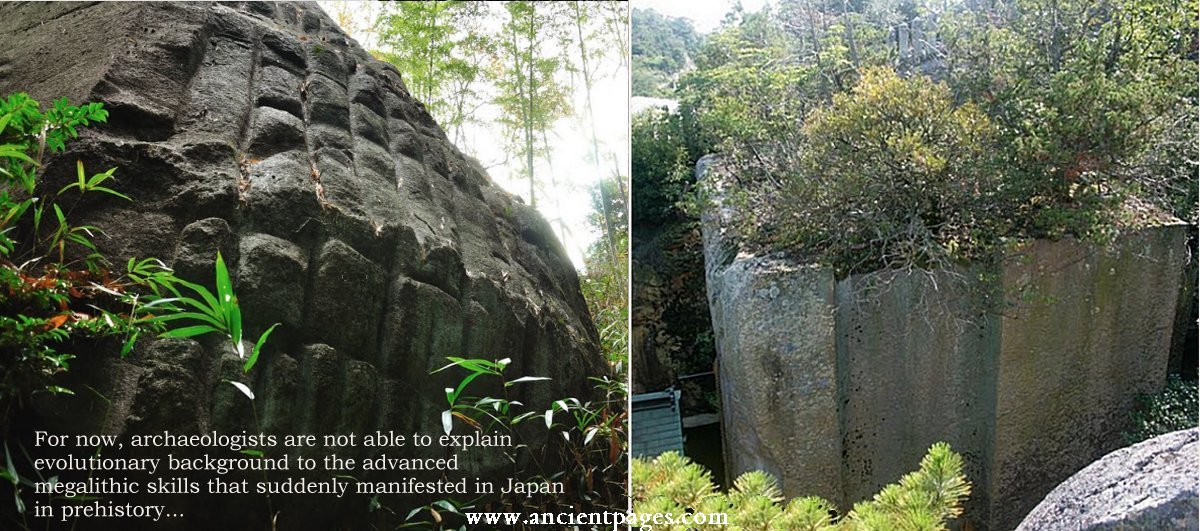
Rock ship of Masuda
So far, no one has been able to shed light on the past of Asuka's stone relics and monuments and their hidden history. They are shrouded in mystery relative to their date of construction and original function.
The most famous of the monuments is ship-like boulder "Masuda no iwafune", located near the top of a hill in the village, in a place Ishi-no-Ho-den".
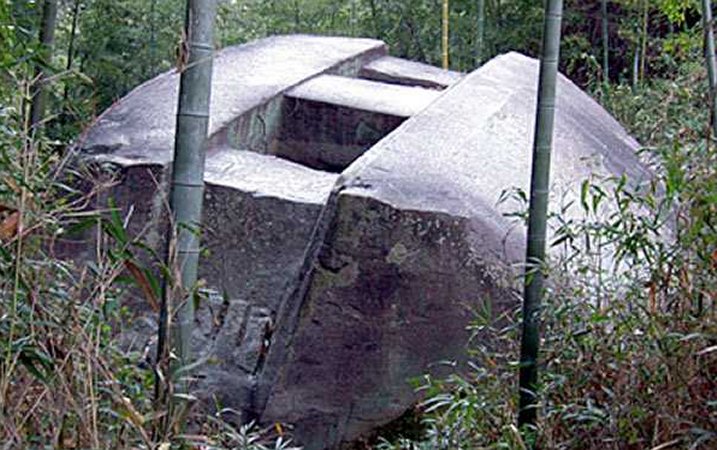
The "boast stone" is one of most strikingly enigmatic of the Asuka megaliths. One puzzling characteristic is that in places it is rough and unfinished, seemingly entirely like a work of nature, and in other places beautifully cut into right-angled planes.."
"Masuda no Iwafune" does not resemble the style or construction of any other Buddhist monument and represents one of the greatest mysteries of Japan.
Masuda was the name of a lake thought to have been near this stone; hence the translation would literally be "Masuda ship rock".
For the first time, this gigantic boulder was mentioned in Japanese literature of the 8th century.
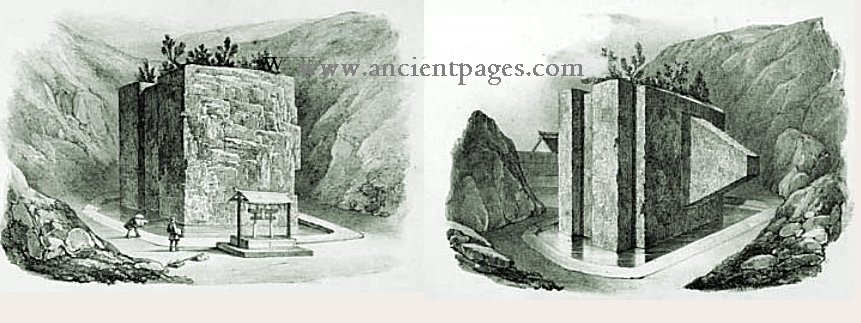
The so-called 'rock ship of Masuda' - Masuda-no-iwafune - drawing from P.F. von Siebold's volume 1 of his books NIPPON" (1832)"
However, it still represents one of the greatest archaeological puzzles of Japan, because no archaeologist is able to state with certainty how old the Masuda-no-wafune really is or what its original function might have been.
In one of our earlier articles, we wrote about some strange sightings recorded in the sacred texts of The Nihongi. For example in 634 A.D. "a long star seen in the south... which the people called a besom-star", and in 637 A.D. a large "star" was floating from East to West causing a thunder-like noise.
On the 7th day of the second month of Spring, 640 A.D. people saw a "star" that entered the Moon. and another "guest star" entered the Moon on the 9th July 642 A.D.
See also:
Probably The Oldest Star Map Discovered In Stone Chamber Of The Kitora Tomb, Asuka Nara, Japan
First Peoples Of Japan: Ainu Civilization And Its Unknown Origin
Was the Masuda-no-iwafune astronomically oriented? Was it a structure constructed for observations of the sky? A number of questions still remain relative to whether or not the stone was actually used for astronomical observation.
In its upper part, the "Masuda ship rock" has two holes, which were long concealed by pine trees.
The monument is 11 meters long, 8 meters wide and 4.7 meters high and weighs approximately 1000 tons. The upper surface is flat, with a shallow trough and two square holes.
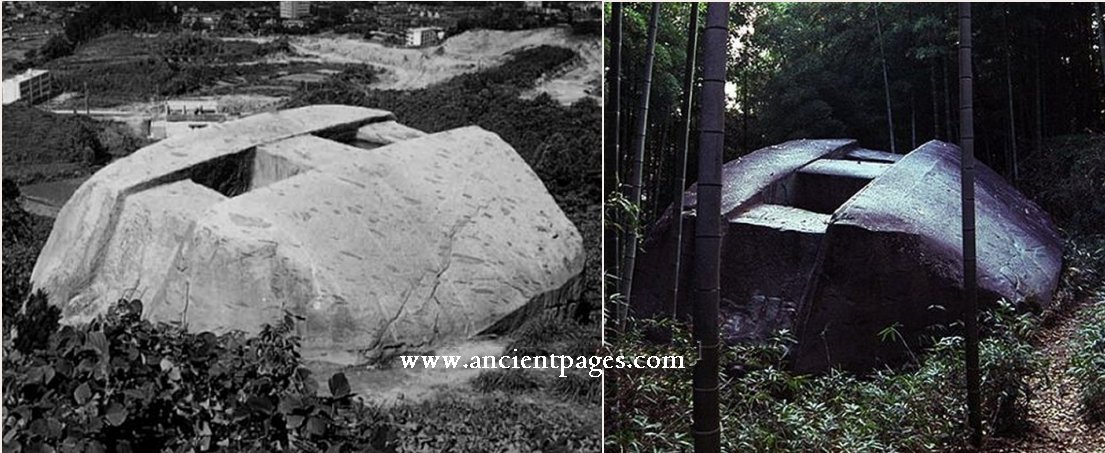
The so-called 'rock ship of Masuda' - Masuda-no-iwafune.
At present, the stone bears lattice-shaped indentations around its base which testify to the process used in flattening the outer surfaces.
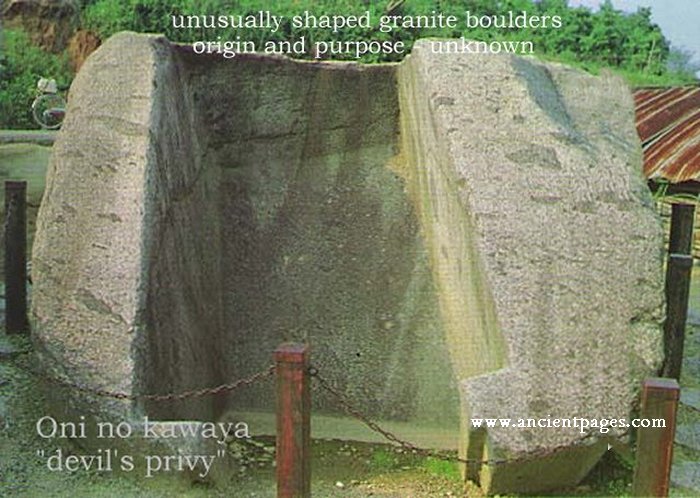
Based on 12th century records, it was believed to be "stone of demonic form".
There have been countless attempts to explain its origin and purpose, but all these attempts have failed. Researchers have already investigated the rock with ultrasound devices and measured the object with laser scanners only to find nothing.
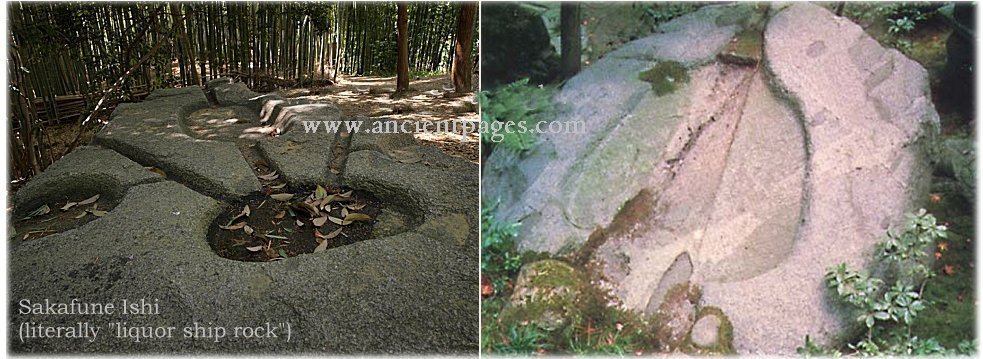
Other carved stones of Asuka
"The actual purpose" of the great megalith remains a mystery, according to the Asuka Historical Museum
Written by – A. Sutherland AncientPages.com Senior Staff Writer
Copyright © AncientPages.com All rights reserved. This material may not be published, broadcast, rewritten or redistributed in whole or part without the express written permission of AncientPages.com
More From Ancient Pages
-
 How Did Sea Level Rise Impact Human Groups During Mesolithic And Neolithic Periods?
-
 Archaic Temple (Part Of God Poseidon’s Sanctuary) At The Kleidi-Samikon Site In Greece – Unearthed
-
 King Tut’s Cosmic Scarab Brooch And Dagger Linked To Meteorite’s Crash 28 Million Years Ago
-
 5,000-Year-Old Perga City And Kommagene Civilization: Most Of Treasures Are Still Underground
-
 African Kingdom Of Axum – Ancient Ruins Of Early Churches Unearthed
-
 Why Were Conch-Shell Trumpets So Important To The Ancient Chacoan Society?
-
 Ancient Mystery Of The Unidentified Strangely Dressed Man Found In Massachusetts And His Connection To Undeciphered Rock Carvings
-
 Mysterious Doorways In King Solomon’s Temple Leading To The Inner Shrine
-
 Grave Of Amazon Warrior Who Lived In The Kingdom Of Urartu Discovered In Armenia
-
 Gonzalo Guerrero – The Renegade Who Joined The Maya Against His Own People
-
 Secrets Of 160,000 Ancient Texts Kept In The Abbey Library Of St. Gall May Soon Be Unlocked By AI
-
 Was Tintagel Castle A Fortress Used By Iconic Hero King Arthur?
-
 A Rare Find In Ancient Timorese Mud May Rewrite The History Of Human Settlement In Australasia
-
 Clay Tablets Reveal Sumerian Doctors Treated Disease With Spells Of Magic And Medicine
-
 Surprising Evidence Of Prehistoric Human Activity In Falkland Islands – Europeans Were Not The First Settlers
-
 Legend Of The Blue Men Of Minch: Were They Mythological Creatures Or Real Men?
-
 Mysterious Deserted Medieval Village And Castle Discovered In The Harz Mountains – 2,000 Artifacts Were Found
-
 Mysterious City Lost In The Sands And Its Hidden Treasures
-
 Italy’s Stunning Secret Temples Of Damanhur – City Of Light
-
 On This Day In History: Battle of Salamis Was Fought – On Sep 22, 480 BC

