
The Inca Empire Was Powerful And Well-Organized – Why Were They So Successful?
A. Sutherland - AncientPages.com - The Inca state and culture were born with a legend.
The children of the god Inti, Manco Capac and his sister Mama Ocllo wandered from Lake Titicaca to the Cuzco Valley. The mission of civilization was given to them by their father, the sun god. After persuading local Indians to worship the sun, they taught them animal husbandry, house building, fieldwork, and various other crafts.
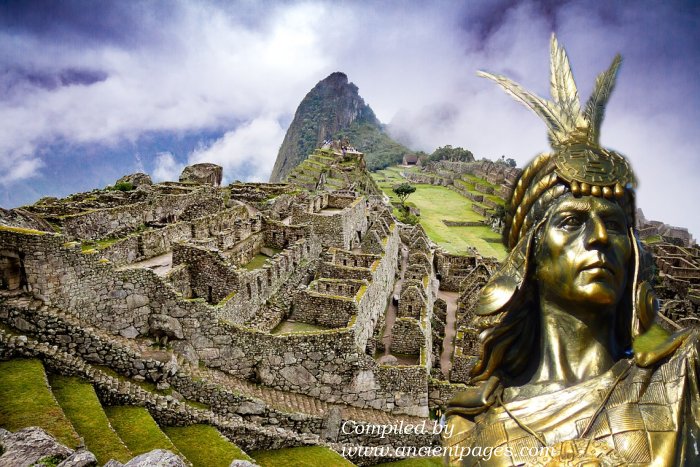
Pachacuti (Pachakutiq Inka Yupanki) established the Inca Empire after defeating the Chanca people, an indigenous group who lived in the Andes from the 10th to 14th centuries.
In 1438, the Chanca were attacking the Inca capital Cuzco and threatened to take it.
Another colorful legend says that at the crucial moment on the battle with the Chanca tribe, the stones in the battlefield turned temporarily into warriors and effectively helped Pachacuti’s forces to destroy the enemy. Later, the rocks were gathered and placed in shrines for future worship.
Pachacuti, the ninth Sapa Inca (1418–1471/1472), defeated the Chanca and made the Inca Empire powerful during his reign.
The year 1438 is considered the birth of the Inca Empire (in Quechua: 'Tawantinsuyu'), and Pachacuti earned him the title 'Transformer of the World' and 'Earthshaker.'
He was a very ambitious man, as can be seen from the areas he conquered. He rebuilt Cuzco and the great temple of the sun in the city after the battle with the Chanca. Cuzco became the political, administrative, and military center of the Inca Empire.
Pachacuti also developed the Inca state, organized the institutions, and introduced systems of tribute and taxation and tribute, which were paid by conquered peoples in the form of goods or labor. The next step was to build an extensive road network to connect towns, villages, and sites of worship. The roadways important for the well-functioning state, but it was not easy to build them in a mountainous country like Peru.

Keshwa Chaca - Suspension Rope Bridge. source
Pachacuti contributed with an effective imperial communication network and extensive warehousing of food and other commodities indispensable for redistribution throughout the Empire.
The Incan massive road system emanated from Cuzco to connect the four regions of the country. These roads were a wonder of engineering and included nearly 40,000 kilometers (25,000 miles) of connected roadways.
Tahuantinsuyu (means "The Four Regions Together”) developed rapidly during the reign of Pachacuti. With the cult of the sun in mind and heart, the Inca troops, loyal to the Cuzco rulers, conquered other tribes from present-day northern Ecuador, central Chile, south-central Bolivia, northwest Argentina, and from the coasts of the Pacific Ocean to the Amazon jungle.
The assimilation of these tribes was not always easy, and from 1438 to 1533, the Incas used many different methods, including conquest and peaceful assimilation, to incorporate the tribes into the Empire.
Assimilated artisans and skilled builders constructed new buildings, suspension bridges, roads, and terraces for agriculture in the conquered areas. In this way, they made a daily contribution to the power of the Inca state. The worship of the ancient Incan sun god, Inti, was imposed by Pachacuti, and Quechua became the unified language for the people who began to believe their rulers to be descendants of the sun god and learned to live under their unquestioned authority.
There was almost no crime in the Inca empire. The Inca laws were severe and punishment was harsh. Any kind of law transgression was considered an action against divinities and for the cursing of gods, people were often executed. If they were caught stealing, they would have their hands cut off.
There was no system of imprisonment and offenders were punished so that the penalty was exemplary to the rest of the population.
Historians often comment on the Inka’s exceptionally organizational skill in their country.
The scholar Lewis Hanke, a preeminent U.S. historian of colonial Latin America, who is best known for his writings on the Spanish conquest of Latin America, wrote that
“In everything from the most important to the most trifling, there was order and methodical arrangement,” wrote ……“ Men had honorable and useful occupations…lands, mines, pastures, hunting lands, woods, and all kinds of employments were so managed that each person knew and held his own state.”

Machu Picchu, Peru - rpbmedia - Adobe Stock
“In each district of the four in which they divided their Empire, the Inka had councils of war, justice, treasury. Each of these councils had their ministries and ministers and subordinates from major to minor...from decurions that handled ten to others who handled hundreds, thousands, and tens of thousands. From grade to grade, these levels gave a count of everything there was in the Empire to the supreme councils…”.
The territory of the Inca Empire was divided into three parts: the Lands of the Inca, the Lands of the Inti and other gods, and the Lands of the local families, all roads across the Empire led to Cusco. The roads ‘go from Quito to Chile, and into the forests of the Andes. Although the Inca did not complete all, suffice it that he made a great part of the roads, which were finished by his sons and grandsons.’ 1
At the height of its power between 1470 and 1532, the Inca Empire was inhabited by ten million people.

Written by – A. Sutherland - AncientPages.com Senior Staff Writer
Copyright © AncientPages.com All rights reserved. This material may not be published, broadcast, rewritten or redistributed in whole or part without the express written permission of AncientPages.com
Expand for referencesReferences:
de Gamboa, Pedro Sarmiento. History of the Incas
Ostler N. Empires of the Word
Ramiro Matos, Jose Barreiro, The Great Inka Road: Engineering an Empire
- Hanke L. History of Latin American Civilization Vol.1
More From Ancient Pages
-
 New Fossil Link In Bird Evolution Discovered
-
 Thousands Of Sacred ‘Images’ With Unknown Signs Hidden In A Monastery Could Be World’s Oldest Alphabet
-
 Ancient Skeletons Reveal Britain Suffered From Parasite Infections Since The Bronze Age
-
 Ancient Indian Text Re-Writes History Of Number Zero And Mathematics
-
 Pharaoh Menkaure – Egyptian Ruler Who Tried To Outsmart Fate
-
 Coricancha – Stunning Golden Garden And Lost Treasures Of The Inca
-
 10 Incredible And Bizarre Ancient Cases Of Mass Hysteria
-
 Lake Mendota’s Submerged Canoes Predate The Egyptian Giza Pyramids – Why Are These Vessels Underwater?
-
 Gilgamesh And Enkidu Undertake A Dangerous Mission To Hunt Forest Giant Humbaba
-
 Struggle To Get Mail On Time Has Lasted More Than 5,000 Years – Part 2
-
 Secrets Of Ancient Ivory Manikins Revealed
-
 New, Unique Wall Paintings Discovered In Old Dongola, Sudan
-
 On This Day In History: Battle Of Megiddo Between Thutmose III And King Of Kadesh’s Coalition – On Apr 16, 1457
-
 More Than 3,000-Year-Old Multicolored Pre-Inca Mural Discovered At Huaca Yolanda, Peru
-
 Ancient Tomb Of William The Conqueror’s Nephew Discovered In Exeter
-
 ‘Impossible’ Ancient Knowledge Of The Gods’ Star – Mysterious Beings – Part 2
-
 Ilmarinen – Divine Blacksmith And Trusted Friend Of Wizard Vainamoinen In Kalevala
-
 Great Flood Myth Told By Klallam People Of Washington’s Olympic Peninsula – Confirmed
-
 Who Were The Sin Eaters?
-
 Ancient Scents Can Be Reconstructed With Help Of Modern Science – Researchers Say

