
Lengyel Culture Of Neolithic Europe Was Amazingly Sophisticated
A. Sutherland - AncientPages.com - The Lengyel culture that developed in southern Europe was initially linked to the site of Lengyel in Tolna county, in the southwestern part of Hungary.
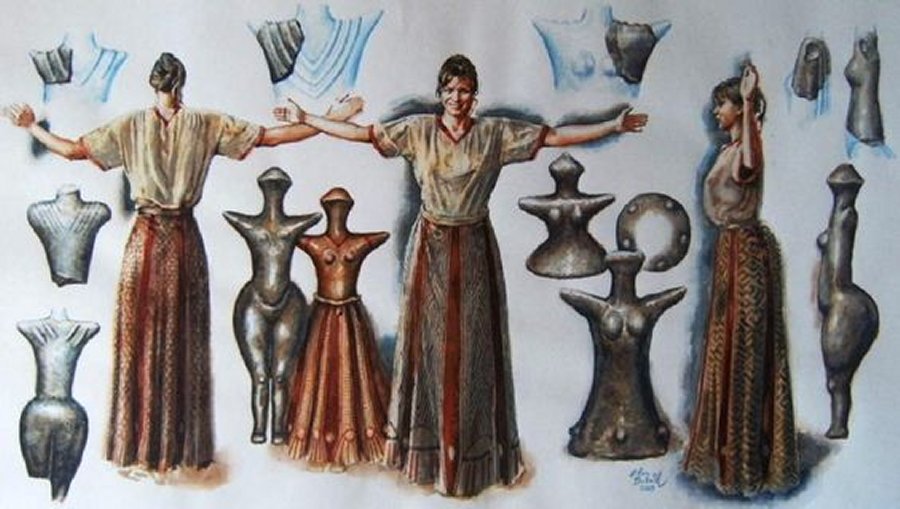 Lengyel culture traditions. source
The Lengyel culture dates to ca. 5000 - 3400 BC, was the eastern successor to the Linear Ware culture. The settlements belonging to them were found in present-day Moravia (Czech Republic), Western Hungary, Western Slovakia, Southern Poland, and adjacent parts of Austria, Slovenia, and Croatia.
Small And Long Houses
People lived in open villages protected by ditches, and their houses were long rectangular or trapezoidal) multi-room buildings carved from clay, later also small rectangular or square pillar houses.
The society was engaged in agriculture, raising of animals like pigs, sheep and goats, hunting and fishing, cultivation of wheat, barley, and leguminous plants like lentils, peas.
Settlements of the Lengyel culture were large, widespread, and built on the river terrace, surrounded by V-shaped ditches and fences of buildings.
 Lengyel culture - A small dwelling model. Source
For their protection, the people constructed defensive fortifications (often only on one side of the settlement).
'Roundels' And Ritual Activities
Early Lengyel culture was associated with circular earthworks of late Neolithic Europe known as (the 'roundels' or 'rondels'), where the ritual activities took place according to ancient traditions of these people.
The roundels (from 35 to 150 m in diameter) were considered their temples.
However, excavations carried out at many different sites of the Lengyel culture exposed the large enclosures that probably served only for ceremonial purposes because they lacked burials and pottery remains.
Not long ago, more than 130 roundels have been located in Europe, a third of them in Austria. The rest are in today's Hungary, Slovakia, Poland, the Czech Republic, and Germany. Currently, there are now ten known roundels, which are considered the oldest examples of monumental architecture in Europe.
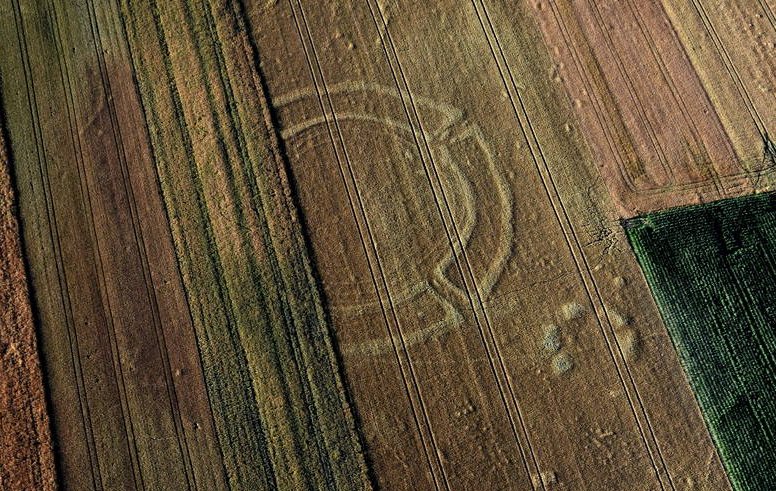 Aerial image of another Neolithic rondel enclosure located at Drzemlikowice, SW Poland. source
"A ditch that had four gates oriented in the cardinal directions formed the outer boundary of the monument; the enclosed area measured 145 by 125 meters. A roundel in the center of the ditch measured about 50 meters in diameter. It consisted of several poles set inside another ditch, and each of them opened to the four directions.
Excavations revealed an abundance of ritual evidence. They uncovered 314 early Lengyel-style figurines, inside the central roundel and the rest either outside of it or in the outer ditch. 1
The findings also included a sculpture of a goddess about forty centimeters tall, and ceramic vases painted in red, yellow, and white colors, and a human skull.
Another pit, on the other hand, contained a skeleton of a young woman buried in a contracted position. Her skull had been removed and buried under the wall of a grain pit. The Lengyel religious traditions are not precisely known; therefore, it is hard to say if the woman was buried in honor after natural death or ritually sacrificed during harvest rites.
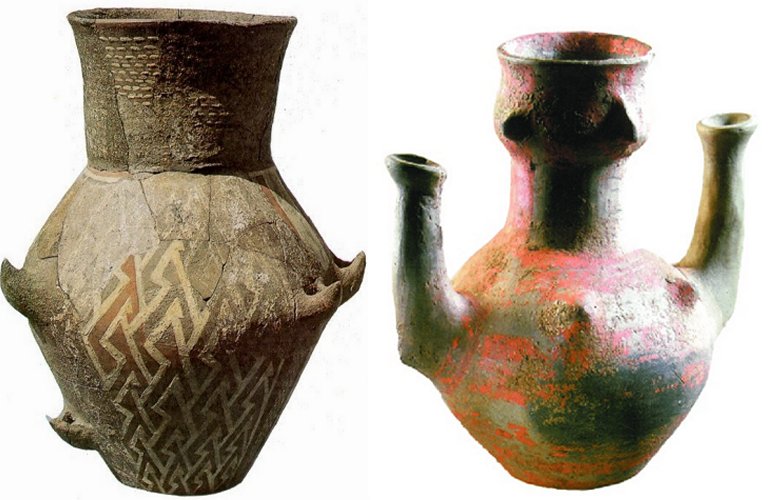
Left: Lengyel culture pottery. source; Right: Anthropomorphic vessel from Svodín, dated to the Lengyel culture (after Nemejcová-Pavúková 1998, 65). source
The Lengyel pottery - found in a great variety of forms - includes bowls, small amphorae, zoomorphic and anthropomorphic vessels, pedestalled bowls, and ceramic figurines.
Early ceramics bear signs of painting with white, red, and yellow paints; otherwise, pottery was decorated with paintings or carved ornaments.
Body Parts Were Sometimes Separated
The deceased were buried in various ways. In the early period, the dead were not buried in the cemetery; this tradition appeared later. Sometimes their body parts (arms, legs, head) were separated and placed next to them, along with a boar or pig's lower jaw or fangs.
Triangular and trapezoidal burial mounds were found in southern Poland.
According to the Lengyel burial tradition, the group graves were located in large cemeteries or within settlements. Their equipment included vessels, stone tools, decorations, products made of bone, horn (horn axes), jewelry (bone beads, and beautiful geometrically decorated bone bracelets) and copper.
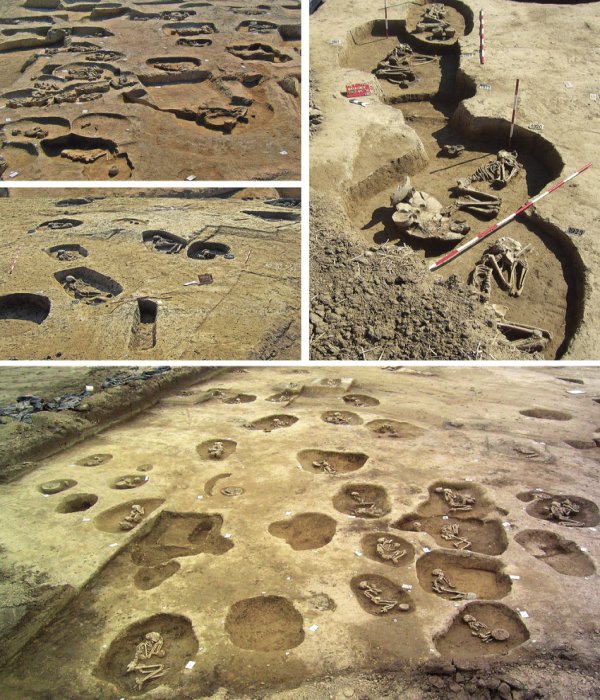 Lengyel culture grave groups. The Neolithic settlement of Alsónyék reached its greatest extent during the Late Neolithic Lengyel period. Nearly 9000 features, including postholes associated with 123 houses, pits and pit complexes, and ca. 2300 burials, could be assigned to it. The traces of Lengyel settlement and burials were found over the entire excavated area. Image credit: Alex Bayliss/ResearchGate
"Men were buried with tools and other artifacts suggesting trades and mining, like stone axes and hammer-axes made from antler and with nodules of flint and obsidian. The latter were mined in the nearby Carpathian Mountains.
Artifacts found with women also show their occupations. Some women's graves contained stone tools for hand-grinding and baking.
See also:
Lemko People – European Minority That Lost Their Homeland And Still Live In Exile
Who Were The Goths And Where Did They Come From?
"Tool kits for decorating pottery were found in several graves. But the types of artifacts found in male graves versus female graves are not subject to a strict division of labor." 1
In some cemeteries, archaeologists found quern stones, axes, chisels, or copper and shell jewelry in both male and female graves.
Women played an important role at home and in the religious traditions of the society. Many luxurious grave goods were unearthed in women's and young girl's tombs.
The Lengyel culture was not a complex society. Yet, they possessed an understanding of geometry, which can be seen in the culture's pottery remains, geometrically decorated bracelets, and the way they built their roundels and ditches as well.
Written by – A. Sutherland - AncientPages.com Senior Staff Writer
Copyright © AncientPages.com All rights reserved. This material may not be published, broadcast, rewritten or redistributed in whole or part without the express written permission of AncientPages.com
Expand for referencesJ. P. Mallory, Douglas Q. Adams, Encyclopedia of Indo-European Culture
- Marija Gimbutas. The Living Goddesses
More From Ancient Pages
-
 Time Capsule: Sunken Ancient City Of Baiae
-
 CT Scanning And 3D-Modelling Used To ‘Unfold’ Ancient Silver Plate Found In Jerash
-
 Ancient King Who Built A Mysterious Underground City Illuminated By Artificial Lights As Hiding Place
-
 On This Day In History: Battle of Devil’s Hole Was Fought – On Sep 14, 1763
-
 Winged Hussars: Facts And History About The Polish Warriors, Their Armor And Military Tactics
-
 Texas Revolution – A Courageous Fight For Independence
-
 Groundbreaking Discovery Reveals High Cognitive Abilities In Humans Who Lived 170,000 Years Ago
-
 Wonderful Long-Lived Nymphs In Greek And Roman Mythologies
-
 Norse Legend Of Hero Sigmund And The Magical Sword In The Branstock Tree
-
 Secret Behind Ancient Durable Maya Plaster Discovered
-
 Bassetki Cuneiform Tablets Reveal Location Of Lost City Of Mardaman In Northern Mesopotamia
-
 10 Magnificent Ancient Libraries
-
 Did The Biblical Magi Bring Jesus Gifts With Healing Properties?
-
 Humans Got To America 7,000 Years Earlier Than Thought – New Research Confirms
-
 Huge Phitos (Jar) Unearthed In Ancient City Of Prusias ad Hypium, Turkey
-
 Face Of Iron Age Female Druid Reconstructed
-
 Descent Of Orpheus To Underworld Ruled By Hades
-
 Insects Played An Important Role In The Biblical Exodus
-
 Ancient City Was Discovered Underground In Antalya’s Demre District
-
 Ancient High-Technology: Automatons In Greek Mythology

