Conny Waters - AncientPages.com - Large jars (in Greek, called 'pithoi') were vast storage containers, widely used among the civilizations that inhabited the regions of the Mediterranean Sea in the Neolithic, the Bronze Age, and the succeeding Iron Age.
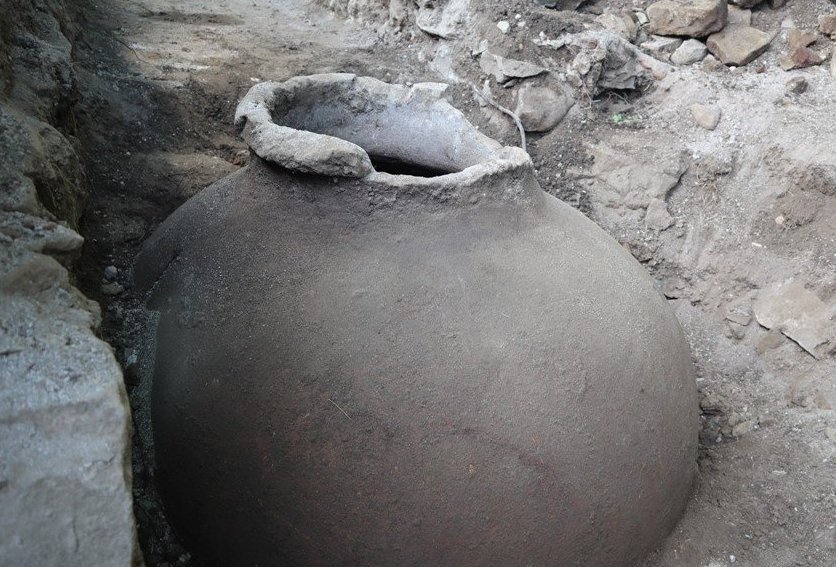
A view of the pithos found in the ancient city of Prusias ad Hypium, Düzce, northwestern Turkey, July 8, 2022. IHA Photo via Daily Sabah.
The ancient city of Prusias ad Hypium, known as the "Ephesus of the Black Sea Region," is considered by many the oldest settlement in this part of Turkey. It is located in northwestern part of Düzce province, Turkey.
For some years, archaeological excavations have revealed many artifacts shedding more light on the culture and life of the region.
One of the last exciting finds in the old Prusias ad Hypium is an asymmetrical, very large pithos (or an earthenware jar) used to store water or grain. Now, the experts continue removing the pithos as soon as possible to determine to which period it belonged.
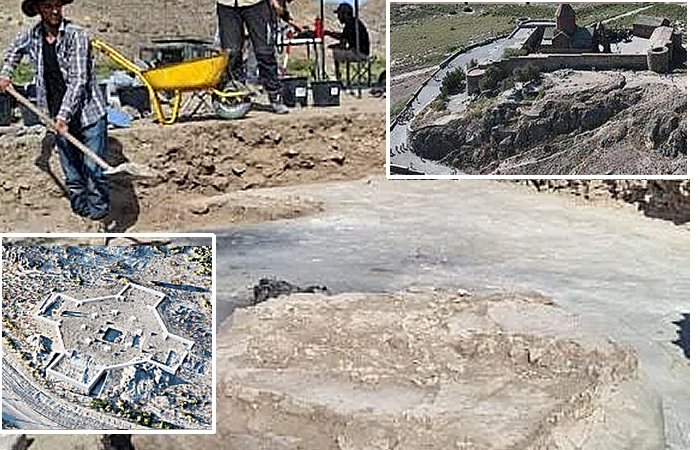
All these valuable diggings helped to begin a study of the theater part of the Prusias ad Hypium, especially the upper part of this theater, which is now widely known as “40 steps.”
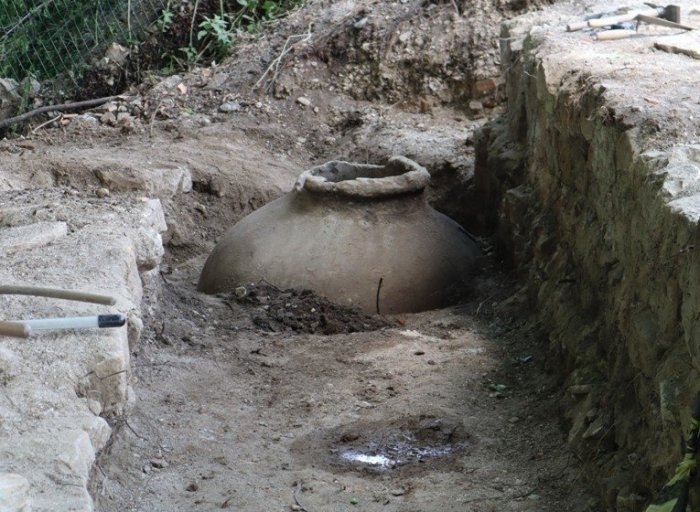
Pithos found in the ancient city of Prusias ad Hypium, Düzce, northwestern Turkey, July 8, 2022. IHA Photo via Daily Sabah.
The theater was used until the end of the 4th century.
“This is actually the only building that shows us the full splendor of the ancient city. The importance of the city comes from here. All kinds of excavations and works carried out here are important in terms of showing us the functions of both the theater and the stage after the use of the theater,” Düzce University Archaeology Department academic associate professor Emre Okan, said.
Okan added that “based on the findings we have obtained after the 4th century, we think of this place as a workshop area, a business area, an industrial site. We have some findings that it was used that way. Excavations will not only be in the theater.”
Archaeologists could announce many other discoveries of great value thanks to the excavations.
See also:
2,000-Year-Old Huge Terracotta Jar Discovered In Turkey
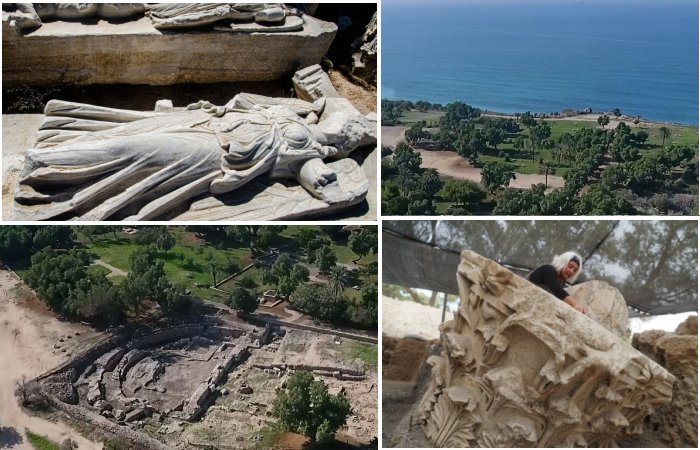
Thanks to the meticulous digging of the archaeological team, it was possible to uncover an orchestra floor of the theater section successfully. This underground structure remained preserved even though several new facilities were built on the archaeological site, dating back to the third century B.C.
It has allowed several structures such as an ancient theater, city walls, stairs with lion paw carvings, archways, aqueducts, and a Roman bridge to be unearthed on the site.
Other valuable items include mask sculptures, statue heads, tombs and grotesque figures believed to be 2,000 years old, and a vault. Additionally, we must not forget the head of Medusa, which according to Greek mythology, was known as the "snake-haired female monster that turns anyone who looks into the eyes into stone." The artifacts are believed to belong to the first or second century B.C, wrote Daily Sabah.
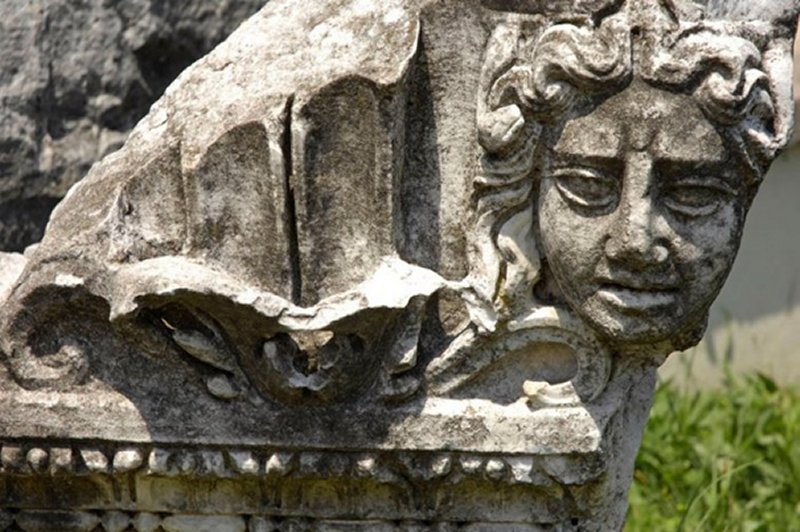
Ancient ruins of the city of Prusias ad Hypium that is believed to be the oldest settlement of the western Black Sea region. Image source: Daily Sabah
A long time ago, the ancient city of Prusias ad Hypium was known as "Hypios." Old records say the city was captured by Prusias I of Bithynia, and the people of Bithynia named the city in honor of their king.
The city spread over a wide area, and the region joined the kingdom during the time of King Prithias of Bithynia in the Hellenistic period. However, Bithynia went bankrupt due to the luxurious lifestyle of its citizens. Finally, the people bequeathed their kingdom to the Romans, so it started the Latin influence on the city, and it was not a negative process.
Already rich in beautiful architecture, the town began to flourish much more under the Romans. It became known as Prusias ad Hypium, which was probably the city's brightest time in the 2nd century B.C. during the Roman Empire's influence.
See also: More Archaeology News
The city then passed into the hands of the Byzantines and Ottomans. Under Ottoman rule, it was handed over to Konuralp Bey, one of the first Turkish commanders who served in the establishment of the empire, by Osman Ghazi, the empire's founder. It is how the region of the city received its current name, Konuralp.
Written by Conny Waters - AncientPages.com Staff Writer