
MUL.APIN Tablets: Babylonian Knowledge Of Astronomy And Astrology Recorded In Cuneiform Writing
A. Sutherland - AncientPages.com - Systematic observations of the sky were carried out by Babylonians living in southern Mesopotamia in the middle of the third millennium BC.
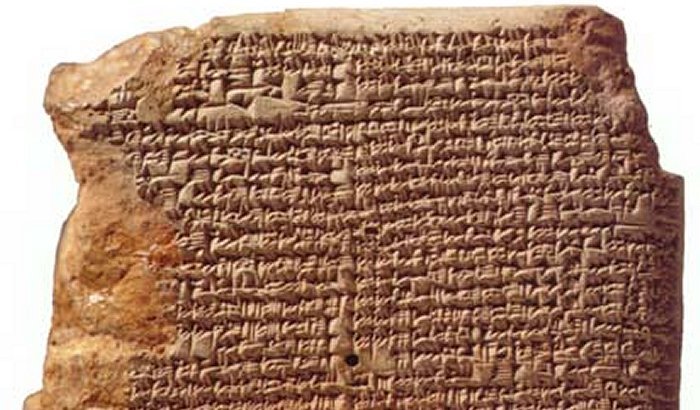 MUL.APIN, a Babylonian compendium that deals with many diverse aspects of Babylonian astronomy and astrology. source
The result of these observations defined the concept of the ecliptic and its division into twelve parts, along which they placed twelve signs of the Zodiac. The MUL.APIN cuneiform tablets - the essential source of Babylonian astronomy - represent a set of ancient astronomical records that are believed to be forerunners of the present-day zodiac.
At the time of their introduction, they coincided with constellations with the same names. The tablets were created in Babylon around 687 BC and contained approximately 200 astronomical observations, including measurements related to several constellations.
Long-Lasting Debate On MUL.APIN Cuneiform Tablets
However, many archaeologists believe they are only transcriptions of much earlier records of astronomical observations made by Assyrian astronomers, who observed their sky about 2,300 BC.
The date of the origin of these observations has been disputed for a longer time.
The earliest copies were recovered from the royal library of the Assyrian King Assurbanipal (667-629 BC) in Nineveh and also from Assur.
Now, the majority of scholars believe that the MULAPIN text was originally compiled around 1000 BC, while the latest copies date back to around 300 BC.
The text on the tablets corresponds to the first constellation of the year, MULAPIN "The Plough," which is identified with the double star in the constellation of Andromeda, about 350 light-years from the Earth, known as Triangulum plus Gamma Andromedae. Today we can quickly locate these bright stars in the sky because they form the Big Dipper.

Further, the text lists the names of 66 stars and constellations and further gives a number of indications, such as rising, setting, and culmination dates, that help to map out the basic structure of the Babylonian star map.
When Bradley Schaefer, an astrophysicist at Louisiana State University in Baton Rouge, studied the MUL.APIN tablets, he calculated that the observations date back to 1,370 BC, give or take a century. The observations include the day each year that certain constellations first appeared in the dawn sky and were recorded in the region of Assur.
However, these dates change over the millennia because of a tiny wobble in the Earth's axis.
Small Tablets Of Great Importance
The text covers two MUL.APIN tablets, and possibly a third additional one, which still remains unrecovered.
The first tablet (8.4 centimeters high incised with miniature cuneiform) is the most important resource for any potential reconstruction of the Babylonian star map as its various sections locate the constellations in relation to each other and to the calendar.
All the major stars and constellations are listed and organized into three broad divisions according to celestial latitude assigning each star to three paths:
The first is the northern path of Enlil, containing 33 stars or constellations; the second is the equatorial path of Anu, containing 23 stars or constellations.
The third one is the southern path of Ea ("Whose House Is Water"), widely known as Enki, the Sumerian god of water, knowledge, mischief, crafts, creation, and one of the Anunnaki. The path of Enki contains 15 stars or constellations.
The heliacal rising dates of 34 stars and constellations are given according to the 360-day 'ideal' calendar year.
In the MUL.APIN tablets, an 'ideal' year composed of 12 'ideal' months, each of which was composed of an 'ideal' 30 days, even though the Babylonians used a lunisolar calendar, indicating both the Moon phase and the time of the solar year.
The second MUL.APIN tablet deals with the Babylonian methods and procedures to regulate the calendar and predict the movements of the sun, moon, and planets.
It is believed that there was also the third tablet (yet undiscovered=), and this one most probably explained celestial (astrological) omens.
Written by - A. Sutherland - AncientPages.com Senior Staff Writer
Copyright © AncientPages.com All rights reserved. This material may not be published, broadcast, rewritten or redistributed in whole or part without the express written permission of AncientPages.com
Expand for referencesReferences:
Hunger H. The Babylonian Astronomical Compendium MUL.APIN
Pannekoek A. A History of Astronomy
Rochberg F. Before Nature: Cuneiform Knowledge and the History of Science
More From Ancient Pages
-
 What Ancient Dung Reveals About Epipaleolithic Animal Tending
-
 Polynesian Stonehenge: Enigmatic Ha’amonga ‘a Maui Trilithon Of Tonga
-
 Fragarach: Supernatural Sword That Controlled Winds, Cut Through Wood, Metal And Bricks In Irish Myths And Legends
-
 Strange Story Of Tecumseh’s Comet, Black Sun Prophecy And New Madrid Earthquakes – The Biggest Earthquakes In American History
-
 The Untold Story Of Mexico’s Ancient Giant Indians – Cunning Plan And The Evil Nation – Part 2
-
 Paracelsus: Physician, Alchemist, Philosopher Well Ahead Of His Time
-
 Lady Fu Hao: Brave Warrior Skilled Strategist And China’s First Female General
-
 Surprising Mask Of A Human Face Found On Cistern Wall In The Ancient City Of Ptolemais
-
 Tricksters: Mischievous Troublemakers Making Attempts To Help And Hinder In Mythologies Of Ancient Cultures
-
 Ancient Mystery Of Peculiar Nail With Six Faces And Six Eyes – Unusual Discovery In Borgholm Castle, Sweden
-
 Ausevik Rock Art: Real And Mythical World Of Stone Age People Of Norway
-
 A Pioneering Study Provides New Insights Into Pregnancy During The Viking Age
-
 Mysterious Unknown Beings Who Walked The Earth With Humans
-
 Ancient Hindu Sheetal Temple Vandalized – Lord Shiva And Elephant God Ganesha Statues Destroyed
-
 Exceptionally Rare 1,300-Year-Old Golden Pommel Found In Blairdrummond, Scotland
-
 Oldest Known Fossil Footprints Discovered On Crete By Polish Researcher Challenge Established Theories Of Human Evolution
-
 Did First Settlers From Asia Reached America By ‘Stepping Stone’ Migration Across Bering Sea?
-
 Scientists Closer To Solving The Mystery Of When Animals Evolved
-
 Unearthing Anatolia’s Ancient City Of Lystra Where History And Faith Converge
-
 Bertrand du Guesclin: ‘Eagle Of Brittany’ Brave, French Commander And His Clash With Sir Thomas Of Canterbury

