
Why Was Louis XIV Called The Sun King?
Conny Waters - AncientPages.com - The famous French king Louis XIV (1638 – 1715) used the Sun as his symbol, and he felt he had a good reason for doing so.
The long reign of Louis XIV, also known as Louis the Great (Louis le Grand) lasted 72 years, and during this time the French king turned his country into a dominating power in Europe.
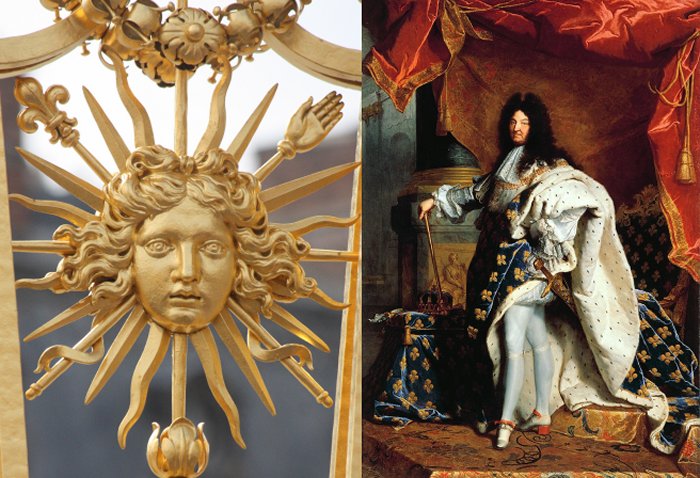
Left: The Sun was chosen as a symbol to represent King Louis XIV. Credit: Pinterest - Right: Portrait of King Louis XIV by Hyacinthe Rigaud, 1701. Credit: Public Domain
Louis XIV was a remarkable king who could be hated or loved. Like many other European royalties such as Catherine de Medici, the Medici family or Caterina Cornaro, the last queen of Cyprus, Louis XIV was also a great supporter of arts.
King Louis XIV did not only spent time centralizing and tightening control of France and its overseas colonies. As a monarch who appreciated art, literature, music, theater and sports, he established various institutes for the arts and sciences.
See also:
Charles VI Of France – The King Who Was Made Of Glass
Why Is The Three Golden Balls Symbol For A Pawn Shop Connected To The Medici Family?
Alexander The Great Was Crowned Pharaoh And Declared Son Of God Amun
He surrounded himself with some of the greatest artistic and intellectual figures of his time. Among his friends were great names like the playwright Molière (1622-1673), the painter Charles Le Brun (1619-1690) and the composer Jean-Baptiste Lully (1632-1687). In addition to this, King Louis XIV appointed himself patron of the Académie Française.
However, King Louis XIV had a very high opinion of himself. He considered himself to be the direct representative of God. He believed this gave him a divine right to wield the absolute power of the monarchy.
To illustrate his status, he deliberately selected the Sun as his emblem and cultivated the image of an omniscient and infallible “Roi-Soleil” (“Sun King”). Louis is often remembered for the bold and infamous statement “L’État, c’est moi” (“I am the State”).
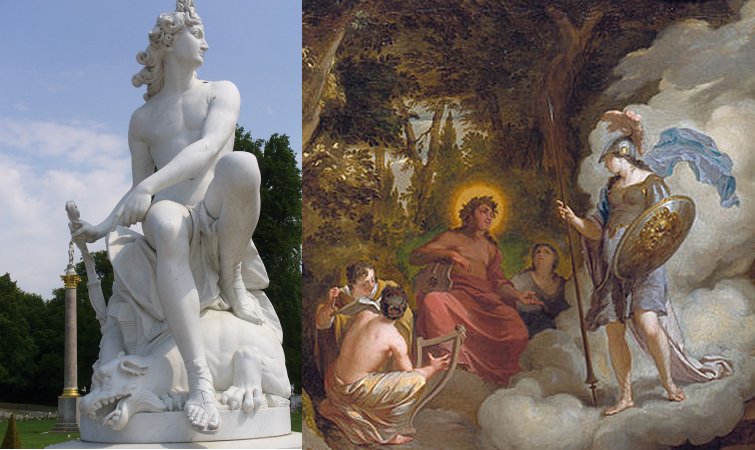
Left: Apollo victorious over the Python, by François Gaspard Adam. Credit: Steffen Heilfort, Wikipedia, CC BY-SA 3.0 Right: Pallas Athene Visiting Apollo on the Parnassus, by Arnold Houbraken. Credit: Public Domain
King Louis XIV identified himself with Apollo, the Greek Sun God who had acquired power over medicine, healing, disease, archery, music, poetry and invented the arts.
Apollo had the ability to ward off all kinds of evils, but if necessary, he could send a plague and then avert it. King Louis XIV felt he was a divine version of the beautiful, feared and loved god Apollo. It often happened that King Louis XIV participated in plays and on those occasions, he used to take the role of the Sun.
Written by Conny Waters – AncientPages.com Staff Writer
Copyright © AncientPages.com All rights reserved. This material may not be published, broadcast, rewritten or redistributed in whole or part without the express written permission of AncientPages.com
More From Ancient Pages
-
 Silver Jewelry Buried In Leather Purse Discovered In Bulgaria
-
 On This Day In History: Edict Of Longjumeau Was Signed And Ended Second War of Religion – On Mar 23, 1568
-
 3,500-Year-Old Cuneiform Clay Tablets With Hittites’ Texts – Soon To Be Accessible Online
-
 Vast Network Of Previously Unknown European Bronze Age Megastructures Discovered
-
 More Than 27,000 Artifacts Illegally Collected By ‘Expert In Archaeology’ – Seized In France
-
 Huge Untouched Vassal King Tomb From The Ming Dynasty Discovered In Xinfu District, China
-
 Arachne – Spider Woman Who Challenged Goddess Athena And Was Punished
-
 Enigmatic Footprints Reveal Humans Were In Spain 200,000 Years Earlier Than Previously Thought
-
 Red Paint On 1,000-Year-Old Gold Mask From Peru Contains Human Blood Proteins
-
 What Is The Giant Neolithic Circular Structure Near Durrington Walls Henge?
-
 Giants Of Monte Prama – Mysterious Ancient Statues With Unearthly Eyes
-
 Mysterious 9,000-Year-Old Shaman Burial In Bad Dürrenberg – One Of Central Europe’s Most Spectacular Archaeological Discoveries
-
 Mystery Of The Ancient Red Sign Witnessed In The Sky Over Japan
-
 One Of The Biggest Gold Treasures Ever Discovered In Denmark Is 1,500-Year-Old
-
 Marvelous Juglet With Four Pure Gold Coins Found In Jerusalem – Someone’s Piggy Bank?
-
 Extremely Rare Roman Cavalry Parade Mask Discovered In Romania
-
 10,000-Year-Old Adorned Female Infant Burial Discovered In European Cave
-
 Battle Of Arsuf – Site Where King Lionheart And The Crusaders Defeated Saladin – Found
-
 First Cemetery Dated To Roman Period Discovered In North Saqqara, Egypt
-
 Skull Of Mysterious, Extinct Cousin Of Neanderthals Recreated From A Fossilized Finger

