
Hermes – Divine Trickster, Psychopomp, Patron Of Merchants And Thieves In Greek Mythology
A. Sutherland - AncientPages.com - In Greek mythology, Hermes (Roman name: Mercury) was the emissary and messenger of the gods, the patron of shepherds and their flocks and wanderers. Hermes guarded the roads as the patron of merchants and thieves, making them safe from dangers for all passing travelers.
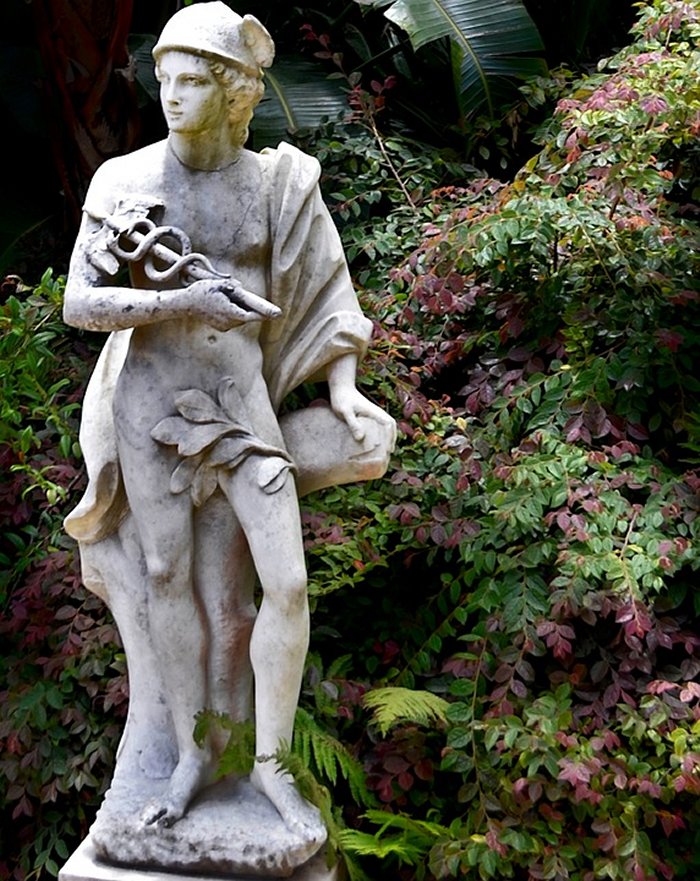
Greek god Hermes. Image credit: aszak - Pixabay
Like the Egyptian god Anubis, he is a psychopomp responsible for escorting newly deceased souls to the afterlife.
As the patron of commerce and merchants, Hermes was supposed to be the promoter of intercourse among nations and a skilled mediator between merchant and customer. With these skills, he was a bringer of wealth in business.
Besides many divine characteristics, Hermes has a weakness that makes him a more human-like figure. For instance, he likes to steal, and this impulse has followed him since infancy. He was the one who could quickly settle disputes thanks to his gift of eloquent speech and moved freely between the worlds of the mortal and divine.
In some myths, he is a trickster god who outsmarts other gods for his satisfaction; it is one of his characteristics that he reminds of Norse God Loki.
Birth And Family Of Hermes
He was born in a cave on Mount Cyllene in Arcadia, southern Greece. His parents were Zeus, the King of the Gods, and Maia, a daughter of the Titan Atlas and one of the Pleiades.

God council in Olympus: Hermes with his mother Maia. Detail of the side B of an Attic red-figure belly-amphora, ca. 500 BC. (Nikoxenos Painter). Image credit: Bibi Saint-Pol/Wikipedia
Hermes did not have a wife, but he had children. According to one account, he was considered the father of Odysseus's grandfather Autolycus, who was conceived when Hermes had intercourse with the virgin Chione. With the goddess Aphrodite, he had a son Hermaphroditos (Hermaphroditus), known as the deity of unions, marriage, sexuality, and fertility.
According to some versions, Hermes and Penelope became closer, and the fruity of this relationship was the god, Pan.
Appearance Of Hermes And His Attributes
Hermes was a young man, wearing traveling clothes, a flat hat known as "petasus," and winged sandals on his feet. Often, he was depicted having wings attached to his shoulders and cap.
He usually held a caduceus, a winged staff with snakes wrapped around it, in his hands so he could gain access everywhere. This staff helped Hermes to charm the gods or to wake up those who the god of sleep tamed.
Later, he was depicted as a very young boy or sometimes an elder, bearded man with the lamb thrown over his back. His other attributes were a broad hat of a wanderer covering the face, a cape, winged sandals on his feet, a palm tree, turtle, rooster, goat, the number four, several kinds of fish, and incense. Sacrifices included honey, pigs, goats, lambs, and cakes.
Hermes, The God's Messenger And Conductor Of Souls
Wearing wings on his sandals, Hermes was the speediest of all Greek gods. He enjoyed his popularity among all the Greek gods and spirits. Because of his speed, Hermes received the role of the messenger and conductor of souls to the Underworld. He was the only Olympian god authorized to visit Heaven, Earth, and the Underworld.

Statue of God Hermes. Credit: Stock photo
As the messenger of the gods, Hermes – "the divine trickster" - was sent to many places; he was, among others, at Troy, at the court of Paris, accompanying three goddesses on Mount Ida in Phrygia.
According to Carl Jung, a Swiss psychiatrist and psychoanalyst who founded analytical psychology, Hermes's role as messenger between realms and as a guide to the Underworld made him the master of the unconscious, the mediator between the conscious and unconscious parts of the mind.
Worship Of Hermes Across The Whole Greece
Originally, Hermes was worshiped in the form of piles of stones, placed along the roads and their intersections to protect travelers from dangers. Hermes was venerated as a god of nature, farmers, and herdmen in remote areas of Greece.
One of Hermes's oldest places of worship was Mount Cyllene in Arcadia, where he was born. The first temple dedicated to him was where the myth says he was born. Tradition says that by the end of the fifth century BC, Hermes had acquired many cult names and activities.
In the Hellenistic era, worship of the Greek god Hermes was combined with the cult of the Egyptian god Thoth, which gave rise to the cult of Hermes Trismegistus ("thrice-greatest Hermes").
As such, Hermes played his role in later esoteric cults.
Updated on August 24, 2022
Written by – A. Sutherland - AncientPages.com Senior Staff Writer
Copyright © AncientPages.com All rights reserved. This material may not be published, broadcast, rewritten or redistributed in whole or part without the express written permission of AncientPages.com
Expand for referencesMore From Ancient Pages
-
 Sanctuary Of Amarysia Artemis, Amarynthos – New Valuable Finds By Greek-Swiss Team
-
 Ancient Roman Wooden Sewn Boat Unearthed In Croatia
-
 Amazing Giant Rock Engravings Discovered In South America May Be The World’s Largest
-
 Ggantija Double Temple On Malta Is Older Than Stonehenge And Great Pyramid Of Giza
-
 Strange Ancient Mechanical Flying Animals – Myths Or Advanced Ancient Technology? – Part 1
-
 Startling Roman-Looking Sandal Discovered Buried Deep Beneath The Snow In Norwegian Mountains
-
 Ancient Mystery Of Peculiar Nail With Six Faces And Six Eyes – Unusual Discovery In Borgholm Castle, Sweden
-
 Mysterious Ancient Star-Shaped ‘Fossil’ Baffles Scientists – What Is It?
-
 LIDAR Advanced Technology Spotted Rare Pre-Columbian Florida Village – Highly-Prized Producer Of Beads
-
 King Solomon’s Magical Shamir Could Cut Through Any Stone – Proof Of Advanced Ancient Technology?
-
 Horrible Ancient Massacre On The Island Of Chios Led To Greek Independence
-
 Scythians Were Not Always Nomadic Warriors Of The Pontic Steppe In Black Sea Region
-
 History Mystery: Gold Tool Found In Jerusalem Cemetery Baffles
-
 Termessos: City Where History And Mythology Marked People’s Daily Lives
-
 2,000-Year-Old Roman Sandal With Nails Found In Germany
-
 Forgotten Notebook Reveals Da Vinci Understood Gravitiy Long Before Newton
-
 Unusual Skeletons And Mysterious Ancient Artifacts Covered With Unknown Characters Discovered In West Virginia By Archaeologists
-
 Ancient Expensive Roman Domus With Beautiful Mosaic Unearthed In Rome
-
 Herostratic Fame Relates To Herostratus Who Burned The Beautiful Temple Of Artemis To Become Famous
-
 A Painted Vault Lid Discovered In Royal Palace Of Ek’ Balam Will Shed Light On History Of The Acropolis Of Ek’

