
Mystery Of The Second Gabriel Stone And The Man Resurrected By Archangel Gabriel
A. Sutherland - AncientPages.com - In the three monotheistic faiths, Gabriel's role - as a messenger to humans from God - was crucial.
The angel Gabriel (“man of God” or “strength of God”) is remembered as the angel who told Mary she would give birth to the Son of God, as the angel of the annunciation. Gabiel is the one who revealed that the Savior was to be called “Jesus” (Luke 1:31) but his first biblical appearance is recorded in Daniel 8:16, when he is told to explain a vision to the prophet.
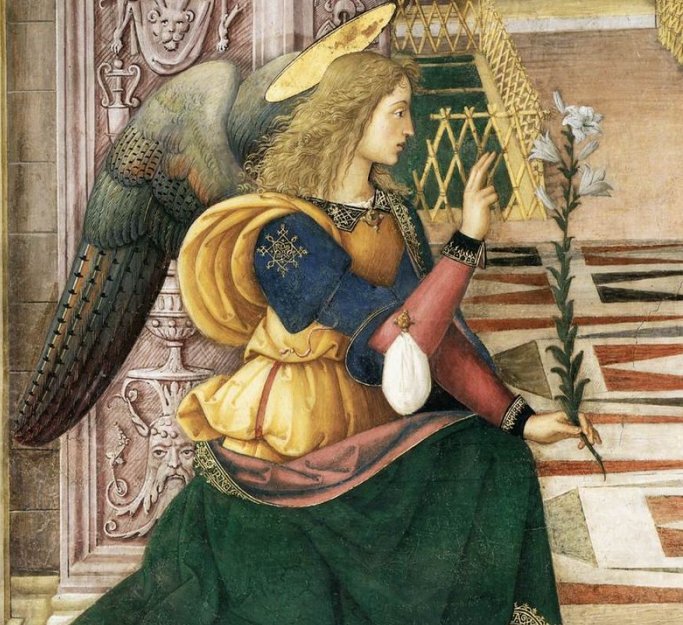
Detail of Gabriel from Pinturicchio's The Annunciation (1501). Image via wikipedia
No doubt, all artifacts that can be related to the angel Gabriel, who was entrusted to deliver many important messages on God’s behalf, have great significance to researchers dealing with biblical archaeology.
Apocalyptic text is inscribed with ink in Hebrew over a large stone. It's the Gabriel Revelation - first published in 2007.
It was discovered around the year 2000 in Jordan near the eastern shore of the Dead Sea.
The so-called Gabriel Stone is authentic and very important for understanding the true roots of Jesus Christ's messianic conception.

However, this ancient tablet with messianic overtones, which according to general beliefs, originates from before the time of Christ, has been debated in archaeological and biblical circles.
While one scholar claims the find could “shake our basic view of Christianity,” a Catholic Professor of Scripture suggests the tablet is actually evidence for the historical probability of Christian belief.
Gabriel Stone remains a priceless and unique 2,000-year-old stone artifact, which traces depictions of the Archangel Gabriel in Jewish, Christian and Islamic sacred writings scriptures. The stone is cut on one side, along which two columns - 16 cm wide and about 75 cm in height - are covered with text.
The columns are separated by a gap approximately 3.5 cm wide.
See also:
Qumran: The Dead Sea Scrolls And Their Connection To Enigmatic Essenes
Baffling Copper Scroll – A Treasure Map Leading To A Secret Lost Temple?
Biblical City Of Gezer: Important Ancient City Mentioned In The Amarna Letters
The inscription is composed of 47 horizontal lines and four vertical lines fixing the columns' borders.
A three-foot-tall tablet contains the text composed of 87 lines of which 44 are in the right-hand column and 43 in the left-hand column. The last two lines of the left-hand column are much shorter than the rest, and their ending is marked by diagonal lines.
It's uncertain if the text begins with the first line of the right-hand column. Was it preceded by text that is now lost? Or was it so that the whole composition was comprised of an additional stone or perhaps even more stones?
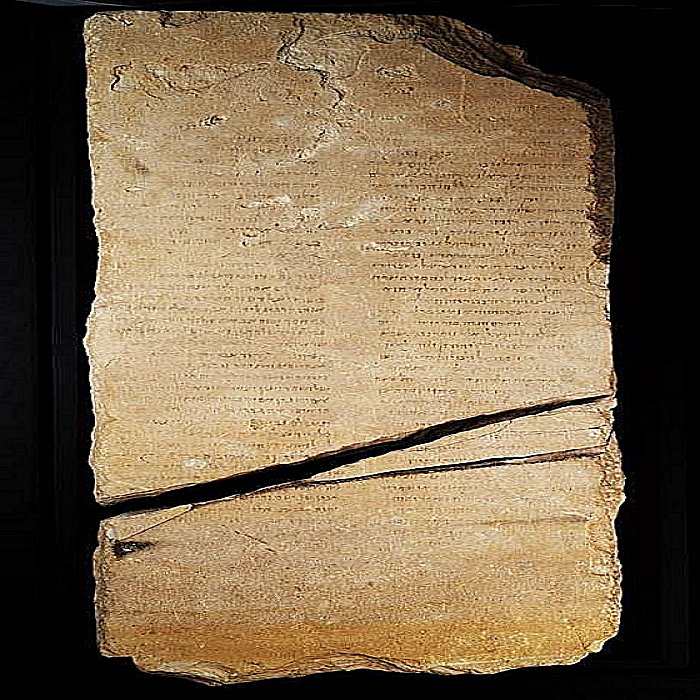
Credits: Israel Museum
However, no traces of binding substance (like for example cement) was discovered by archaeologists on it.
The Hebrew text is written in the first person that identifies himself three times in the first-person: "I am Gabriel". He converses with a human figure – a visionary or prophet – to whom he, Gabriel, is apparently communicating a vision.
The text - very prophetic and apocalyptic - also expresses anxiety over the fate of Jerusalem and reflects the crucial role of angels as intermediaries. It's an attack on Jerusalem and the hope that God will see to the city's deliverance for the sake of his servant David, perhaps referring to the Messiah of Davidic descent.
The Gabriel Revelation stone is believed to be the first example of the angel's name appearing in ink on stone, although earlier mentions of his name are found in the Dead Sea scrolls.
At the same time, museum director James Snyder said that "the Gabriel Revelation stone is, in a way, like a Dead Sea scroll written on stone and it's unique in that respect."
Controversy over the exact nature of the stone's text remains. The second or even several "Gabriel Stone" fragments may still be out there, waiting to be discovered.
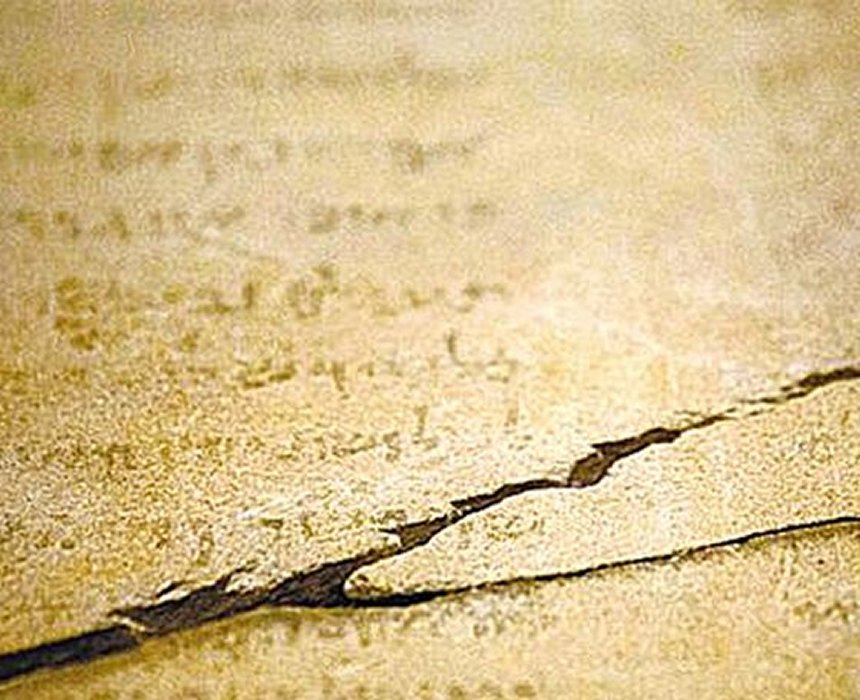
“I Am Gabriel”: A Scroll in Stone from the Time of Herod. Credits: Israel Museum
Based on analysis of linguistic patterns and the shape of the script of The Gabriel Revelation stone, the inscription is a pre-Christian text, written at the end of the first century BC (around the time of Jesus Christ's birth).
The first part of the sacred inscription has the apocalyptic character; it's about the ultimate destiny of mankind and the world; vanquishing of the Antichrist and its forces of evil. The second part focuses on death and resurrection. The text refers to three leaders - shepherds - sent by God to His people, who were killed in battle.
Interesting are the words in the last part of the inscription. These words are the words of the Archangel Gabriel who orders his mysterious and unknown interlocutor - to return to life after three days and says: "By three days, live."
The Gabriel's order written in the 80th line of the inscription, is followed by the further line that states that a leader - a "prince of the princes" - was put to death, and his corpse turned to dung among the rocky crevices.
Researchers have long debated: who is the man resurrected by Archangel Gabriel?
Written by – A. Sutherland AncientPages.com Senior Staff Writer
Copyright © AncientPages.com All rights reserved. This material may not be published, broadcast, rewritten or redistributed in whole or part without the express written permission of AncientPages.com
Expand for referencesMore From Ancient Pages
-
 DNA Sheds New Light On The Mysterious Dead Sea Scrolls
-
 Coin Hoard Paints A Fascinating Picture Of Life Of Highland Clan Chief And His Household
-
 Ars Amatoria – Ancient Roman Flirting Tips – Could They Still Work?
-
 Golden Secrets Of Lake Guatavita And The Muisca People Gave Rise To The El Dorado Myth
-
 Rasputin – Controversial Mystic With Healing Powers – An Evil Or Misunderstood Man?
-
 Unusual Ancient Human Bones Found In A Grave In Derbyshire – Burial Place Of A Legendary Person?
-
 Rare Iron- And Viking-Age Mortuary Houses Discovered In Norway
-
 Shango: Powerful Thunder God And Symbol Of Kingship Among Yoruba People Of West Africa
-
 Peculiar Millennia-Old Genetic Mystery Traced To One Individual From The Black Sea Solved
-
 6,000 Years Ago, Europe’s Oldest Cities Relied On Fertilizer And Plant Protein, Isotope – Analysis Shows
-
 Taranis – Celtic God Of Wheel And Thunder Resembled Roman God Jupiter
-
 Vimana Temples – Architectural Marvel Of India
-
 Strange 1,000-Year-Old Artifact Melted Out Of The Ice Identified With Help Of Photo!
-
 Mansehra Rock Edicts – Last Words Of Emperor Ashoka
-
 Ancient Egyptian Toys And Games In Focus
-
 On This Day In History: Execution Of Saints Crispin And Crispinian – On Oct 25, 286
-
 Unique Ancient Gold Cloth Found In The Necropolis Of Saint-Pierre-l’Estrier Is The Largest Antique Piece Found To Date
-
 Being Anglo-Saxon Was A Matter Of Language And Culture, Not Genetics
-
 Thousands Of Ignored ‘Nummi Minimi’ Coins Found In Ancient Marea, Egypt With Hidden Fascinating History
-
 King Seqenenre Taa II Was Killed By Hyksos Invaders – Mummy Scans Reveal His Wounds

