
Monte d’Accoddi – Mesopotamian Ziggurat In Europe Built By King Of Uruk?
Ellen Lloyd - AncientPage.com - In northern Sardinia, Italy there is an intriguing ancient site known as Monte d’Accoddi. Here, we come across a large ancient structure that reminds of a step pyramid.
As previously mentioned on Ancient Pages, the mystery Of Monte d’Accoddi remains unsolved.
There are many theories, but no-one knows whether the enigmatic structure is a pyramid, altar, ancient temple, or perhaps a mound. The structure’s purpose has been widely debated and some scholars have suggested it is a ziggurat, a massive stone structure built in ancient Mesopotamia. It has the form of a terraced compound of successively receding stories or levels.

Top left: Monte d’Accoddi's stepped pyramid. Credit: Wikipedia. Right left: Ziggurat of Ur. Credit: Wikipedia. Right: Reconstruction of Monte d’Accoddi's stepped pyramid. Credit: Philip Coppens
Who would build a ziggurat in Europe? If the mysterious stone structure is, in fact, a ziggurat, then there must have been a reason for its construction.
Today, Sardinia may seem like an isolated place, that is difficult to reach, but in ancient times this was an important center for many ancient civilizations. Ancient Egyptians, Greeks, Romans, Phoenicians, and people from Mesopotamia visited Sardinia.
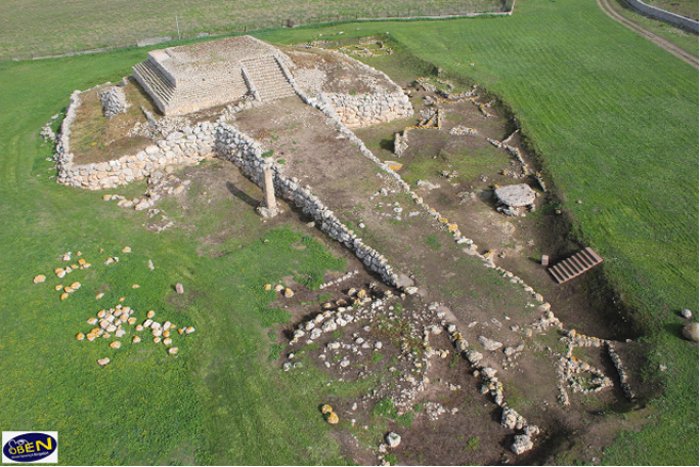
Aerial view of the stepped pyramid at Monte d’Accoddi. Credit: LaPArS - Laboratorio di Preistoria e Archeologia Sperimentale
Still, this doesn't explain why a ziggurat that we associate with Sumerians would be erected on the island. There is however an ancient legend that may perhaps shed some light on the mystery.
According to the legend, the ziggurat was built by a King of Uruk who left his country for unknown reasons and decided to live in Sardinia with all his tribe. The king's name is unfortunately not mentioned. Could this unknown king have been one of the rulers recorded on the Sumerian King List?
The Sumerian King List is a fascinating ancient document that lists kings of Sumer, the cities from which they ruled the lengths of their reigns.
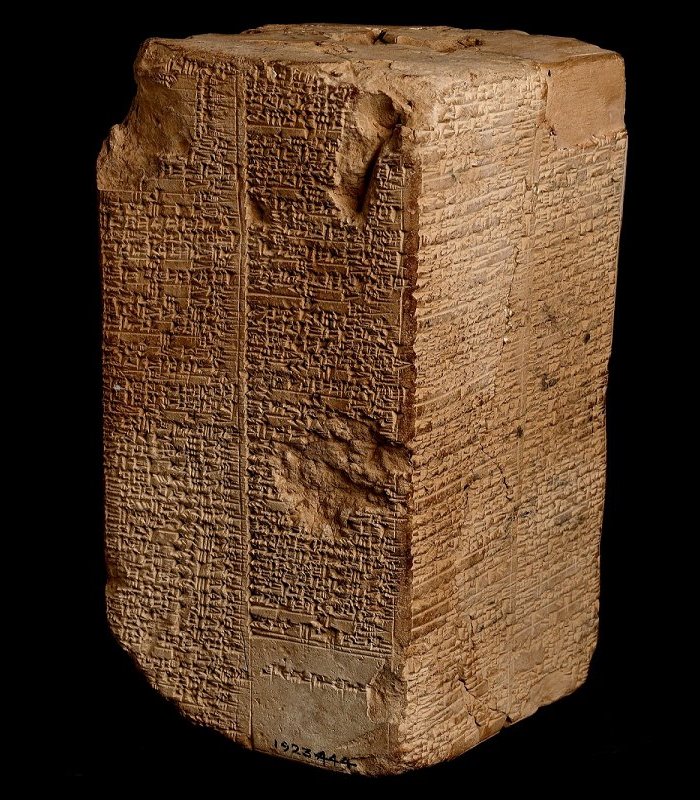
The Sumerian King List describes the beginning of history, the time when ‘kingship descended from heaven and made Eridu the seat of the kingship. Photo: Ashmolean Museum
As the ancient legend tells, after settling down in Sardinia, the Sumerian King wanted to erect a building that reflected his religion. Stones brought from seaside were mixed with the limestone found at the site.
See also:
White Temple Of God Anu In Sacred Precinct Of Kullaba At Uruk
Uruk: The First City Built By King Gilgamesh 4,500 Years Ago
‘Nuraghi’ – Thousands Of Beehive-Like Towers Are Sardinia’s Greatest Mystery
In time, a ziggurat was built but instead of dedicating it to the Sun (the word ziqqurat means temple of the sun), he decided to dedicate it to the Moon. The stairs to the sky were a symbol showing humans that a spiritual lifestyle was the right way to achieve immortality.
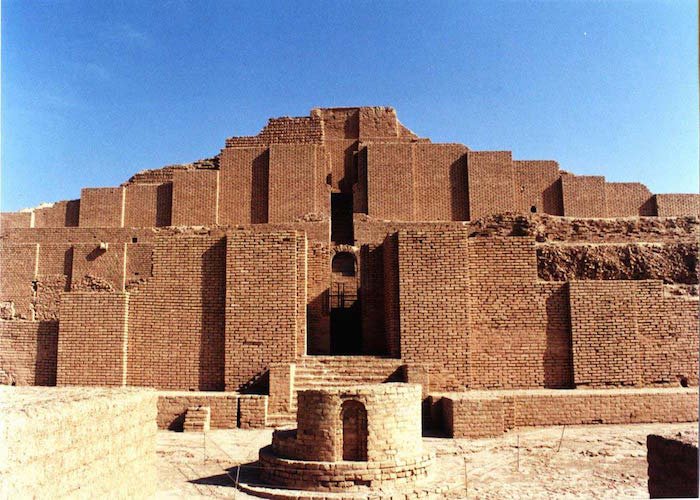
Did you know that Chogha Zanbil is the oldest existing ziggurat in the Near East?
The Sumerian king's ziggurat was later destroyed by natural forces. A violent storm demolished the structure and the King returned to his homeland.
According to the legend, this is why we today only see an “abnormal” hill at the site of Monte d’Accoddi.
Archaeologists have found many mysterious carved stones in the vicinity of the stepped pyramid. Near the south-eastern corner of the monument there is a dolmen, and across the ramp stands a considerable menhir, one of several standing stones found in the vicinity.
This suggests the place was of great importance to people who lived here. Some scholars say Monte d’Accoddi should be considered among the most important architectural manifestations of Mediterranean prehistory.
Written by Ellen Lloyd – AncientPages.com
Copyright © AncientPages.com & Ellen Lloyd All rights reserved. This material may not be published, broadcast, rewritten or redistributed in whole or part without the express written permission of AncientPages.com and Ellen Lloyd
Expand for referencesMore From Ancient Pages
-
 On This Day In History: Island Of St. Helena – Last Residence Of Napoleon Discovered – On May 21, 1502
-
 Mystery Of The Ancient Foggaras: Sahara’s Incredible Masterwork Of Antiquity
-
 Very Rare Ancient Roman Horse Brooch Discovered In UK
-
 Evidence Europeans Used Slash-And-Burn Methods 9,500 Years Ago For Agriculture Purposes
-
 Mysterious Undeciphered Carvings And Script On Stela Of Montoro
-
 Early Humans Were Probably Driven To Extinction By Climate Change- Study Suggests
-
 Magnificent Meteora And ‘Suspended In The Air’ Greek Monasteries
-
 Trung Sisters Of Vietnam: National Heroines That Stood Against Cruel Chinese Occupation Of Their Country
-
 2,000-Year-Old Stringed Instrument Found In Vietnam
-
 Mystery Of The 30,000-Year-Old Venus Of Willendorf Solved?
-
 Hacksilber Hoard Dated To 11th Century BC: Eastern Mediterranean Silver Trade Reconstructed
-
 Ancient Greeks Invented Alarm Clocks
-
 Cave Lion Figurine Made Of Woolly Mammoth Tusk Found At Denisova Cave
-
 On This Day In History: Universal Declaration Of Human Rights Adopted – On Dec 10, 1948
-
 Engraved Trees Are Living Records Capturing The Rich History And Traditions Of The Sámi People
-
 Copper Artifacts Reveal Changing Connections In Prehistoric Europe
-
 Remains Of Ancient Predators Shed Light On How Humans Did Or Didn’t Find Food
-
 Never-Before-Seen Amazon Rock Art Reveal People Lived With Giant Ice Age Animals
-
 Ancient DNA Extracted From A 2,900-Year-Old Clay Brick – Unique Time Capsule Of Plant Life
-
 Huge Ring Of Ancient Shafts Discovered Near Stonehenge

