
European Mythical Creatures Encountered In The Witcher Series
Jan Bartek – AncientPages.com – The Witcher is a great movie if you are a fan of fantasy. The American series takes us on amazing journeys to foreign lands where we meet astonishing monsters, witches, wizards, and incredible people with supernatural powers.
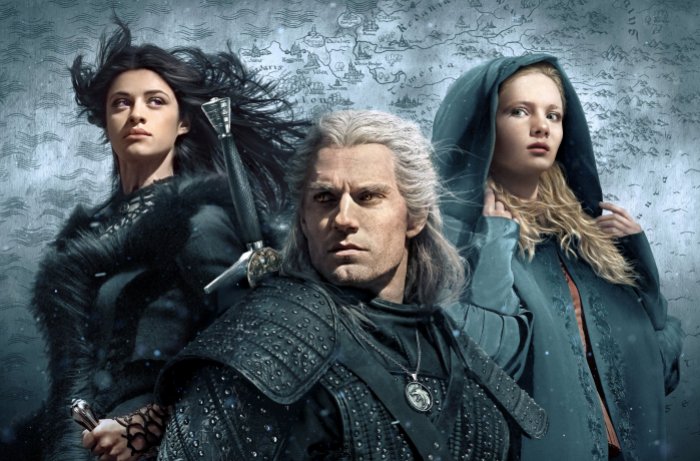
The Witcher. Credit: Netflix
It’s a fantasy epic that offers hours of pleasant entertainment, but did you know many of the creatures we encounter in the Witcher are based on European folklore?
This isn’t really surprising because the Witcher was written by Polish fantasy writer Andrzej Sapkowski who was inspired by many creatures encountered in Slavic mythology. Although the story is fantasy, Sapkowski draw inspiration from European mythology for the monsters Geralt faces.
Geralt's Battle With The Kikimora
In the first episode, Cavill’s Geralt emerges from a blackened swamp, in the middle of a scary battle with a multi-limbed Kikimora.
In Slavic mythology, there are two different kinds of Kikimoras. “One of them that dwells in the forest and is married to the Domovik (Domovoi). The other one comes from the swamp and is married to Leshy.” 1
Kikimoras are best described as female spirits and they usually reside in dark places of the home. They can often be found in homes of dysfunctional, unhappy families where abuse, quarrel, and scream take place daily.
“If the home is well kept, Kikimora is happy with the family. She helps them with housework, guards the family members and protects the chickens. Generally, Kikimora likes skillful and hard-working women that perform their traditional works at home.
“In The Witcher TV show, the kikimora appears as a very large, spider-like monster who tries to drown Geralt and bite his head off with a large maw full of sharp teeth. Not quite the type of monster that would be clattering pots in Slavic homes.” 2
According to some folklore researchers Kikimoras are often connected with Baba Yaga witches who have often been associated with evil things, such as the abduction of souls and death.
Geralt Has To Deal With The Strzyga
In the third episode of the Witcher Geralt has to deal with a monstrous being called a striga (In Polish – Strzyga).
“In the show, the striga is a beast formed when an unborn child stayed alive after its mother dies, gradually growing larger and more demonic. It leaves its mother’s crypt every night, wrecks havoc and then must return before morning.” 2
This malevolent creature appears is described as a winged demon in Slavic mythology. It reminds of a vampire but it’s unusual to encounter the creature in the male form. In Polish folklore, the Strzyga is described as a winged female demon with two souls that usually haunts churches, towers and barns.

Strzyga demon.
“In Slavic beliefs, the Strzyga usually dies at a young age, but when one soul leaves, the other survives to begin hunt. Many of them can turn into owls; they are lonely hunters, do not join others living in clusters and have no other desires than satisfy hunger.
Sometimes, they want revenge for the harm they suffered in their first life.” 3
The Goat-Human Hybrid In The Witcher
Sapkowski didn’t limit himself to mythological Slavic creatures. In the third episode, we meet Sylvan that is half human and half goat. Today goat-human beings are often associated with the Devil, but myths about these creatures go back thousands of years, long before the appearance of Christianity.
One of the most famous goat-human beings was god Pan in Greek mythology. Pan was often depicted “with horns, a man’s torso and face, and the legs and feet of a goat or, in some myths, a horse.” 4
It is said that Pan who was a god of shepherds and flocks, tried to seduce the Moon goddess Selene.
The Dangerous Doppler In The Witcher
In the fifth episode, we make acquaintance with the Doppler, who is very dangerous and feared because the creature can shape and memories of anyone it chooses. The Doppler is based on the mythology Doppelgangers.
“The existence of so-called Doppelgangers and spirit doubles is an ancient and widespread belief.
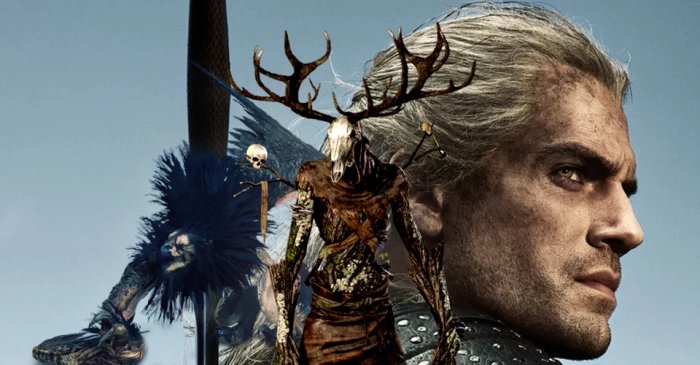
There are many fantastic European mythical creatures in the Witcher. Credit: Screenrant
According to legend, Doppelgangers (German for "double-walker") is a duplicate of a real person. It is someone that looks the exact same as another person, yet is not a twin. Mystics throughout the ages have believed Doppelgangers and spirit doubles are supernatural creatures. They are either spiritual copies of the person or downright demonic twins.
According to legends and folklore, seeing one's own double or "alter ego' is considered a bad omen.” 5
In the Witcher, The Witcher the Doppler is an assassin responsible for the death of everyone it looks like.
The first season of the Witcher, consisting of eight episodes, was released on Netflix in its entirety on December 20, 2019. Those who still prefer reading rather than watching movies can enjoy the Witcher book series.
Written by Jan Bartek - AncientPages.com Staff Writer
Copyright © AncientPages.com All rights reserved. This material may not be published, broadcast, rewritten or redistributed in whole or part without the express written permission of AncientPages.com
Expand for references- 1.A. Sutherland - Kikimora – Nightly Evil Female Spirit And Goddess Of Chickens In Slavic Beliefs, AncientPages.com
- 2.Time - The Witcher Borrows Heavily From European Folklore. Here Are the Myths That Inspired the Netflix Show's Monsters
- Sutherland - Strzyga (Strix): Slavic Malevolent Winged Female Demon With Two Souls That Usually Haunts Churches, Towers, Barns, AncientPages.com
- Kathleen Sears - Mythology 101: From Gods and Goddesses to Monsters and Mortals, Your Guide to Ancient Mythology
- Ellen Lloyd - Mystery Of Doppelgangers And Spirit Doubles – From Ancient To Modern Times, AncientPages.com
More From Ancient Pages
-
 Zyndram’s Hill: Oldest-Known Stone Wall – A Masterpiece Of Architecture Found In Poland
-
 A 200-Year-Old Swedish Mystery Remains Unsolved
-
 Curious Ice Age Figurine Of Unidentified Animal Species Puzzles Scientists
-
 Explorer Discovered A Lost Underground World Beneath Big Sur In North America – But Why Cannot Anyone Else Find It Now?
-
 On This Day In History: Naval Battle Of Porto Bello Begins – On Nov 20, 1739
-
 Sacred Number Six And Its Symbolic Significance In Ancient Cultures
-
 Sonar Images Reveal The Existence Of A 700-Year-Old Shipwreck At The Bottom Of Lake Mjøsa, Norway
-
 Unique Gold Votive Plaque Found At Fort Apsaros Reveals Evidence Of A Mysterious Roman Sect
-
 Rare Kakatiya Dynasty Sculptures Discovered Near A Temple In Telangana, India
-
 World’s Oldest And Largest Maya Structure Revealed By LIDAR
-
 Unique Balchiria Stelae Engraved With A Goat-Like Figure Found On Corsica Is A Puzzle
-
 Modern Banking Concept Started In Ancient Babylonian Temples
-
 Amazing ‘Sigiriya’- ‘Lion Rock’ Fortress In Sri Lanka With Frescoes, Mirror Wall And Miniature Gardens
-
 Mystery Of The Anglo-Saxon Burial At Lowbury Hill May Soon Be Solved
-
 Stonehenge Is Older Than Mankind – Archaeologist Suggests
-
 Puzzling 2,400-Year-Old Hjortspring Boat And The Ancient Baltic Warriors – Rare Discovery Of A Fingerprint
-
 What Female Jobs Could Lead To Being Accused Of Witchcraft In Early Modern England?
-
 Rare Medieval Painting Depicting Judas’ Betrayal Of Christ Saved By Reformation ‘Recycling’
-
 Climate Change Behind Early Human Migration To The Americas At Key Intervals – Scientists Say
-
 Pharaoh Ramesses I Whose Mummy Was Stolen And Displayed As A Freak Of Nature For 130 Years

