
Moirai (The Fates): Greek Incarnations Of Destiny And Personification Of A Single, Unavoidable Fate
Angela Sutherland - AncientPages.com - The first forms of religion appeared in prehistory because humans understood that there are many natural phenomena, such as floods, drought, thunder, and lightning, that no one could stop or control.
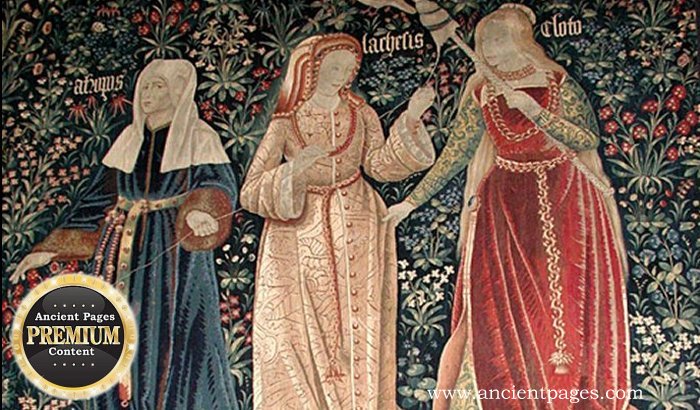
It was believed that everything beyond human capabilities controlled it due to the existence of a "higher power." Thus, the first forms of "gods" emerged in the human mind.
People worshiped impersonal supernatural forces, deprived of personality and even names, or even dead objects believed to have magical power. At one point, deities were worshiped under the animal's figure, symbolizing different forces of nature.
Later, the deities were depicted as people with individual names, appearances, and attributes, including the power to dominate people and the world of nature.
The gods decided about the fate of people and revealed their will and ideas using signs, prophecies, oracles, and fortune-telling. However, above the all-powerful gods, there were Moirae (sometimes one or three of them).
They were the goddesses of fate, destiny, and irrevocable necessity. Ancient Romans identified them with the Parcae. In Norse mythology, the Norns were spinning fate goddesses; in Slavic beliefs, the Sudice were considered the spirits of fate and judgment.

This is a preview of our premium article available only to members of Ancient Pages.
Become a member to read more - Click here
If you are already a member and have logged in to your account, you can access the article here
See also:
Female Demon-Like Spirits That Can Lure Men Into A Deadly Circle Dance
The Curse Fell On King Midas And His Gold Desire Became A Nightmare
More From Ancient Pages
-
 Sodré Astrolabe, Found On Portuguese Armada Shipwreck Is The Oldest In The World
-
 Food And Clothing Of Middle Class Of The Sumerian Society
-
 On This Day In History: Vasco De Gama Departed On First European Voyage To India – On July 8, 1497
-
 Krampus Celebrations Are Becoming Dangerous – Historian Warns
-
 Huge Ancient Hydraulic System Built By The Liangzhu Culture May Be World’s Oldest And Predate Mesopotamian Water Systems
-
 Eye Of Horus – Powerful, Ancient Egyptian Symbol With Deep Meaning
-
 Amazing World’s Largest Mosaic Piece Made By 13 Different Ancient Civilizations At Museum Hotel Antakya
-
 Remarkable 700-Year-Old Ship Found In Estonia Is One Of The Most Important Archaeological Discoveries In Europe – Scientists Say
-
 Mexico’s Comalapa Cave With Toothless Skulls – Investigation By INAH
-
 Extraordinary Find: The Oldest Neanderthal DNA Of Central-Eastern Europe
-
 Mysterious Ancient Shapeshifters Who Guided Humans And The Battle Of The Gods Described In Sacred Texts And Myths
-
 Why Is The Mysterious Menga Dolmen One Of The Greatest Neolithic Engineering Achievements?
-
 Temple Of Lord Vishnu Dated To Hindu Shahi Dynasty Unearthed In Pakistan
-
 The Green Knight – New Movie Based On Arthurian Legend
-
 Dispute Between Russia And Poland Over Discovery Of Czarist Officer’s Corpse In Turkey
-
 Mythical Kingdom Of Prester John – Did It Exist?
-
 Unsolved Enigma Of The Inga Stone And Its Mysterious Ancient Undeciphered Signs
-
 Evidence Scots And Irish Settled Iceland A Century Before The Vikings?
-
 Unique Ornamented Golden Bronze Age Belt Discovered Near Opava, Czech Republic
-
 Tír na nÓg – Mythical Land Where Time Floats Slower Than In Mortal Lands

