
Why Is Rome Called ‘The Eternal City’?
Conny Waters - AncientPages.com - Have you ever wondered why Rome became known as the "Eternal City? The city's nickname can be traced to an ancient myth, ancient historical writings, and the old Romans' beliefs in the greatness of their city.
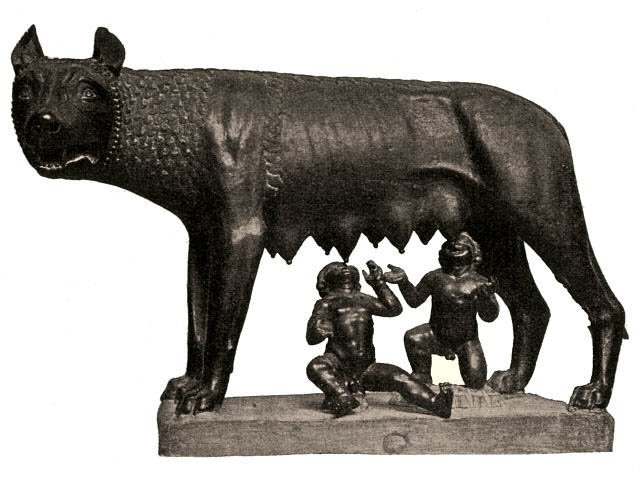
The Capitoline she-wolf with the boys Romulus and Remus. Museo Nuovo in the Palazzo dei Conservatori, Rome. Rome is much older than the myth about Romulus and Remus. Benutzer:Wolpertinger - Public Domain
According to an ancient legend, the city of Rome was founded on April 21, 753 B.C. by Romulus.
Romulus and Remus were twin brothers and sons of the god Mars. Thrown into the river Tiber by a wicked uncle hoping they would drown, the small boys were rescued by a wolf who fed them.
When Romulus and Remus became adults, they decided to establish their city, and each set out to find the best location. They were later discovered and cared for by a shepherd and his wife: Faustulus and Acca Larentia. One day, the two brothers quarreled over where the site should be, and his brother killed Remus.
It left Romulus the sole founder of the new city, and he gave his name to it – Rome. Now, this is just a myth, and the history of Rome goes much further back in time.
According to the legend, Romulus became the first king of Rome in 753 BC. Legends say Numa Pompilius was the second king of Rome, but he was not a warrior king but a statesman and politician.
Nevertheless, archaeologists have discovered artifacts that prove Rome was inhabited much earlier than 753 B.C.
Rome was known as the "Eternal City" because civilizations had lived there for thousands of years. The ancient Roman Empire was mighty, and it had many enemies. Yet, ancient Romans managed to defeat the Carthaginians and Etruscans and extended their empire throughout Europe and Africa. No one underestimated the greatness of the ancient Roman Empire.
Between c. 100 B.C to around 400 A.D, the city of Rome was the largest in the world.
Around 500 A.D., Empire's populace grew to an estimated 50 to 90 million. At the time, this was roughly 20% of the world's population.
Roman writers and poets boasted about their city's greatness. In his epic poem The Aeneid, the poet Virgil wrote the line imperium sine fine – an empire without end.
The first explicit reference to Rome as the Eternal City occurred in the 1st century B.C. Poet Albius Tibullus (55 BC - 19 BC) wrote ‘Romulus aeternae nondum formaverat urbis moenia, consorti non habitanda Remo’ – Tibullus, from Elegies.
In other words, 'not yet had Romulus drawn up the Eternal City's walls, where Remus as co-ruler was fated not to live.
Ancient writers such as Ovid and Livy also took up the expression.
It's no wonder that ancient Romans thought that whatever happened to the rest of the world, Rome would last forever. Rome became known as the "Eternal City."
Rome is called the "Caput Mundi" (Capital of the World). Although the ancient Roman Empire is long gone, we still call it the "Eternal City."
Romulus and Remus were twin brothers and sons of the god Mars. A wicked uncle threw them into the river Tiber, hoping they would drown, but a wolf who fed them rescued them.
They were later discovered and cared for by a shepherd and his wife: Faustulus and Acca Larentia. When Romulus and Remus became adults, they decided to establish their own city, and each set out to find the best location. One day, the two brothers quarreled over where the site should be, and his brother killed Remus.
This left Romulus the sole founder of the new city, and he gave his name to it – Rome. Now, this is just a myth, and the history of Rome goes much further back in time.
According to the legend, Romulus became the first king of Rome in 753 BC. Legends say Numa Pompilius was the second king of Rome, but he was not a warrior king but rather a statesman and politician.
Nevertheless, archaeologists have discovered artifacts showing that Rome was inhabited much earlier than 753 B.C.
Rome was known as the “Eternal City” because civilizations had lived there for thousands of years. The ancient Roman Empire was very powerful and had many enemies. Yet, the ancient Romans managed to defeat the Carthaginians and Etruscans and extend their empire throughout Europe and Africa. No one underestimated the greatness of the ancient Roman Empire.
Between 100 B.C. to around 400 A.D., Rome was the largest city in the world. Around 500 A.D., the Empire's populace grew to an estimated 50 to 90 million inhabitants. At the time, this was roughly 20% of the world's population.
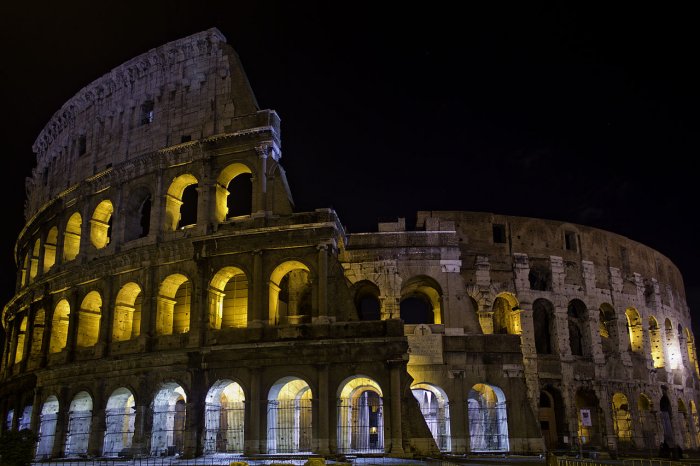
Colosseum at night. Image credit: - CC BY-SA 3.0
Roman writers and poets boasted about their city’s greatness. In his epic poem The Aeneid, the poet Virgil wrote the line imperium sine fine – an empire without end.
The first explicit reference to Rome as the Eternal City occurred in the 1st century B.C. Poet Albius Tibullus (55 BC - 19 BC) wrote ‘Romulus aeternae nondum formaverat urbis moenia, consorti non habitanda Remo’ – Tibullus, from Elegies.
In other words, ‘not yet had Romulus drawn up the Eternal City’s walls, where Remus as co-ruler was fated not to live.’
The expression was also taken up by ancient writers such as Ovid and Livy.
It’s no wonder that ancient Romans thought that whatever happened to the rest of the world, Rome would last forever. Rome became known as the “Eternal City”.
Rome is also called the "Caput Mundi" (Capital of the World). The ancient Roman Empire is long gone, but we still call Rome the “Eternal City.”
First version of this article was published on Ancient Pages on April 4, 2018
Written by Conny Waters – AncientPages.com Staff Writer
Copyright © AncientPages.com All rights reserved. This material may not be published, broadcast, rewritten or redistributed in whole or part without the express written permission of AncientPages.com
More From Ancient Pages
-
 Forgotten Notebook Reveals Da Vinci Understood Gravitiy Long Before Newton
-
 Ancient Mayans Used Saunas For Healing Purposes
-
 Simple 1,000-Year-Old Medieval Medicine Cure Can Treat Modern Infections – Study Shows
-
 Fascinating Discovery Of An Inhabited Underground World In Medieval Wales
-
 Brooklyn Papyrus Reveals Ancient Egypt Had Far More Venomous Snakes Than The Country Today
-
 Drought Encouraged Attila’s Huns To Attack The Roman Empire – New Study
-
 Fate Of The Woman Whose Mysterious Doppelgänger Ruined Her Life
-
 Strange Engraving Made By Knights Templar In French Village – It Doesn’t Make Sense Or Does It? – Part 2
-
 Statue of Goddess Hygieia And Eros Unearthed in Ancient City of Anavarza, Southern Turkey
-
 Descent Of Orpheus To Underworld Ruled By Hades
-
 Amazing Photos Of Ancient Ruins Hidden Under Thessaloniki Metro Revealed By Archaeologists
-
 Unique Medieval Spindle Whorl With Cyrillic Inscription Discovered In Poland
-
 Pena Molexa (Lunar Boat): Megalithic Corner Dedicated To A Magician Woman Who Knows The Secrets Of Earth And Underworld
-
 LIDAR Discovers 18-Kilometer (11-Mile) Maya Road In The Yucatan Jungle
-
 Why Is The Mysterious Menga Dolmen One Of The Greatest Neolithic Engineering Achievements?
-
 Richard The Lionheart: Famous Leader, Warrior And Military Mastermind But Not The Best English King
-
 Bronze Age Human Remains Uncovered In Dorset During Excavation Of Iron Age Settlement
-
 Millennium Old Dice Found In Vadnagar, Gujarat, India
-
 Never-Ending Haunting Of A Dangerous Viking Draugr Who Terrorized A Whole Community – Scary Story From A Norse Saga
-
 Unique Gold Votive Plaque Found At Fort Apsaros Reveals Evidence Of A Mysterious Roman Sect

