
Harem Conspiracy – Plot To Murder Ramesses III, The Last Great Warrior Pharaoh
Ellen Lloyd - AncientPages.com - Earlier prevailing pharaohs did not need to defend themselves against their people, but Ramesses III had no choice. A 3,000-year-old papyrus reveals how a conspiracy to kill him was born in the pharaoh’s harem.
One of the main figures behind the plot was his wife, Queen Tiye, who took advantage of Egypt’s economic crisis to gain supporters for the murder of Pharaoh Ramesses III. This historical event, known as the harem conspiracy, had a tragic outcome for all involved, including the pharaoh.
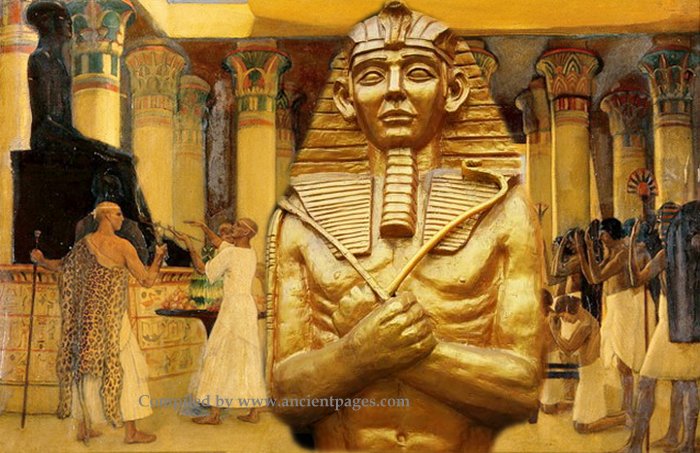
Ramesses III Was The Last Great Warrior Pharaoh Of The New Kingdom
Pharaoh Ramesses III reigned from 1186 B.C. to 1155 B.C. He was the second pharaoh of the Twentieth Dynasty. Keeping Egypt safe from enemies was not easy in those days. His reign was a time of considerable turmoil throughout the Mediterranean. The Trojan War and the fall of the Mycenae kingdom led to a huge number of refugees in the region. Some great empires were toppled, and the entire region faced severe economic and political problems.
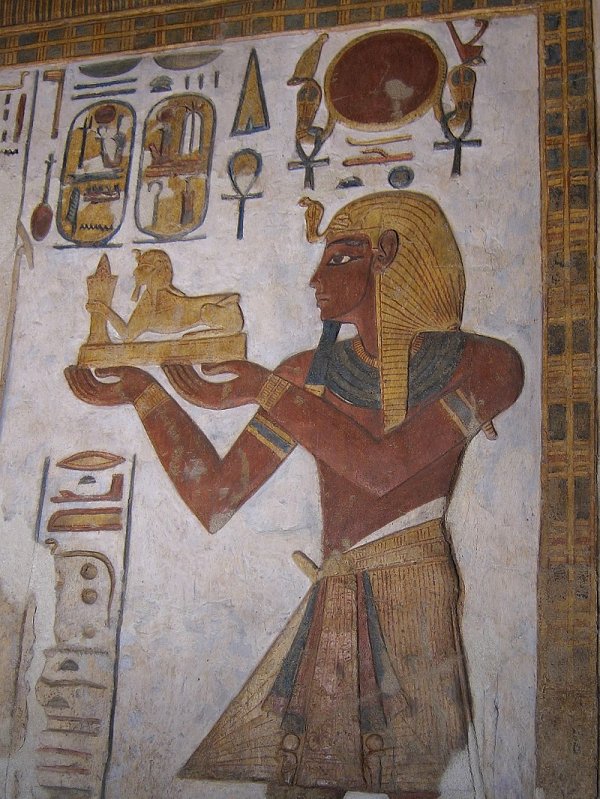
Relief from the sanctuary of the Temple of Khonsu at Karnak depicting Ramesses III. Credit: Asavaa - Public Domain
Ramesses III was a determined and strong warrior pharaoh who defended his country against foreign invasion in three great wars despite the chaos in the region. Ramesses III wanted future generations to know what he had achieved, and he left a complete record of his major military activities on the walls of Medinet Habu. One record tells of his campaign against the Sea People, who attacked the Nile Valley in his 8th year on the throne. The temple walls detail how he prepared a strong fleet and defeated them at sea.
Pharaoh Ramesses III managed to ensure tranquility in Egypt, but at the end of his reign, the economic crisis turned against him.
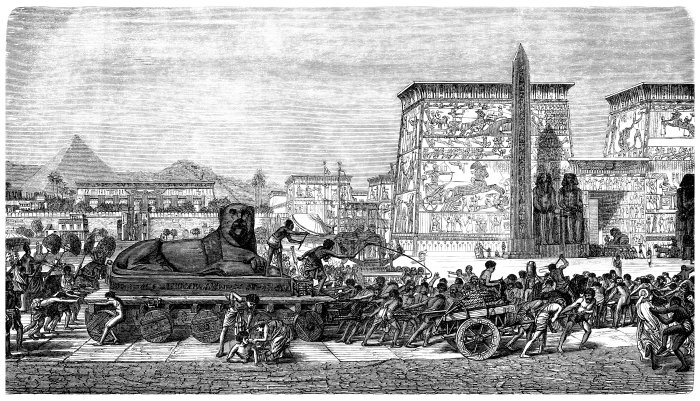
Pharoh’s workers demanded to be paid their food rations. Credit: Adobe Stock - Erica Guilane-Nachez
The world’s first documented labor strike took place under the rule of Pharaoh Ramesses III. The reason for the labor strike was that the workers did not receive their normal rations. The custom was a monthly ration of grain, but implicit in the document is the sense that the ration had frequently been delayed during Ramses III’s reign. His workers had enough and one day, they all lay down their tools and marched out of the necropolis they were building.
Against this background, a plot was created to end the pharaoh’s life.
The Rivalry Of Two Wives - Isis And Tiye
There is not much information about the private life of Pharaoh Ramesses III, but the names of his two wives, Isis and Tiye, are known. Isis, the main royal wife, was the mother of the successor to the throne, the future Ramesses IV. However, the second wife of the ruler, Tiye did not want to accept it. She wanted her son, Pentawere, to take the Egyptian throne.
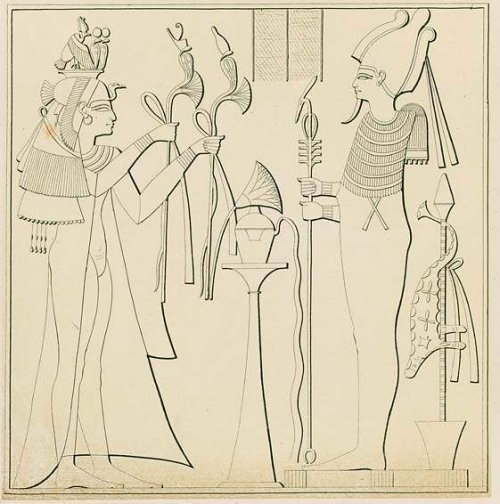
Queen Tiye from the time of Ramesses III. Credit: Wikipedia
“The throne belongs only to my son Pentawere," said Queen Tiye, a woman whose political ambition underlined the harem plot.
In Ramesses III’s Egypt, the situation was difficult, full of internal conflicts and starvation. To find bold and eager people who would support her assassination plan was not a problem. Many wanted to get rid of the pharaoh.
Judicial Papyrus Of Turin – 3,000-Year-Old Document Revealed The Harem Conspiracy
It is thanks to the Judicial Papyrus of Turin historians have learned about the plot to murder the pharaoh. The 3,000-year-old document is one of the few surviving papyri related to the event. It was translated in 1937 and contained the entire list of those who participated in the conspiracy and the verdict and punishment they received.
Conspirators Used Black Magic And Spells
According to the Judicial Papyrus of Turin, Queen Tiye enlisted a group of officials throughout the administration as well as servants to help deliver messages beyond the harem. She managed to convince many of these officials to help act out the conspiracy.

The conspiracy started in the pharaoh's harem. The Harem by Gustave Boulanger - repro from artbook. Credit: Public Domain
Pebekkamen, chief of the chamber to Ramesses III, became her ally. This was no simple conspiracy, considering that at least 62 people were implicated and tried as a group, the ancient document revealed. Conspirators used magical statues that represented gods and people as well as magical spells to weaken the pharaoh and make him an easy target for assassination. The attack against pharaoh Ramesses III was planned to be carried out while he was in the harem.
What Happened To The Conspirators Who Planned To Murder Pharaoh Ramesses III?
After the attack on his father, the heir Ramesses IV quickly took control.
The ancient papyrus revealed that four trials were held and all those who participated in the plot received harsh sentences - 31 people were sentenced to death, 10 were permitted to take their own lives, and 21 were executed. Pentawere was one of those ordered to take his own life. What happened to Queen Tiye is not mentioned, but it’s hard to believe she would have survived.
Was Pharaoh Ramesses III Murdered?
Since the Judicial Papyrus of Turin did not reveal what happened to Ramesses III, the pharaoh’s death has long been considered a mystery.
Egyptologists thought that he might have overseen the trials himself. Historians speculated that Ramesses III survived the initial attack and perhaps died some days later, but some evidence in the papyrus indicated that the plot might have been successful.
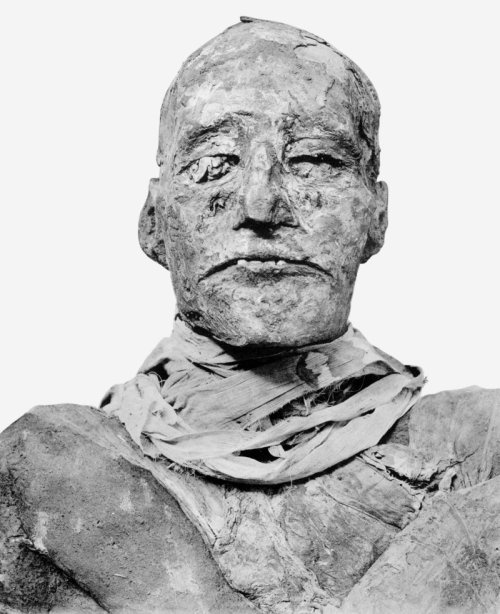
Mummy of Ramesses III, a victim of the conspiracy. Credit: G. Elliot Smith - lib.uchicago.edu
Had Ramesses III been poisoned perhaps? There has long been a dispute about how he was killed, but the mystery was solved some years ago. It was long believed that Ramesses III's body showed no obvious wounds. Still, a CT scan conducted by Ashraf Selim and Sahar Saleem, professors of Radiology in Cairo University, revealed that beneath the bandages was a deep knife wound across the throat. The wound was so large that Ramesses III could not have survived. Scans also revealed that the pharaoh’s left toe had been chopped by a heavy sharp object like an ax.
So, the conspirators did murder Pharaoh Ramesses III by cutting his throat, but their plan to put Pentawere on the throne failed. Pentawere, who had participated in the harem conspiracy, either killed himself or was executed following the assassination attempt
Instead, Ramesses III was succeeded by his son, Ramesses IV.
Written by Ellen Lloyd – AncientPages.com
Updated on April 27, 2024
Copyright © AncientPages.com All rights reserved. This material may not be published, broadcast, rewritten or redistributed in whole or part without the express written permission of AncientPages.com
Expand for referencesSusan Redford - The Harem Conspiracy: The Murder of Ramesses III
Prof. Zahi Hawass - New Forensic Evidence Found for the Murder of Ramesses III
Hawass, Zahi; Ismail, Somaia - Revisiting the harem conspiracy and death of Ramesses III: anthropological, forensic, radiological, and genetic study. BMJ. BMJ Publishing Group Ltd
More From Ancient Pages
-
 Secrets Of Mica Chambers Of Teotihuacan
-
 Mysterious Ancient “Fish People” – Who Were They And How Did They ‘Change’ Civilizations Worldwide?
-
 Link Between Changes In Evolution And Climate Discovered
-
 European Bronze Age Treasure Of Villenna Has Artifacts Made Of Meteoric Iron
-
 Wars Of The Roses: Thirty Two Years Of Struggle To Claim English Throne
-
 Mysterious Ancestor Of All Mammals Identified Through Genome Reconstruction
-
 Hulagu Khan Destroyed Thousands Of Priceless Ancient Books Kept In The House Of Wisdom In Baghdad
-
 LIDAR Reveals Secrets Of The Enormous Ancient Maya City Of Calakmul
-
 On This Day In History: Louis Braille – Creator Of Alphabet For Blind People Died – On Jan 6, 1852
-
 Magnificent Treasures From Bronze Age And Roman Era Found In South Wales And Powys
-
 Controversial Evidence – Ancient Chinese Visited America 2,500 Years Ago
-
 Jack The Ripper Letter Mystery Solved By Forensic Linguist
-
 Virginia’s Mysterious Vault With Remarkable Secret Ancient Documents Still Raises Many Questions
-
 Rare Discovery Of A 2,500-Year-Old Ancient Receipt With The Name Of King Darius The Great
-
 Masroor Temples – India’s Marvelous Ancient Cave Temples
-
 Huge Ancient Underground Stone Circle Discovered Inside Cornwall Neolithic Henge
-
 3-D Reconstructions Of Three Wooden Boats Found At Ancient Port In Italy
-
 Ancient Egyptian Temple, 30 Mummy Cards, 85 Tombs And Surveillance Points From The Era Of Ptolemy IIIs Discovered In Sohag
-
 Deciphered Dead Sea Scroll Reveals Secret Calendar And Two Events Not Mentioned In The Bible
-
 Prometheus ‘Fire Bringer’ – Hero Stealing Fire From Gods Giving It To Mortals

