
Mystery Of The Proto-Elamite Tablets – Cracking The World’s Oldest Undeciphered Writing
A. Sutherland - AncientPages.com - Researchers have recently developed a new imaging system that may soon allow to crack the world's oldest and still undeciphered system of writing.
The technique, named reflectance transformation imaging, uses a dome with 76 lights and a camera positioned at the top of the dome.
A manuscript is placed in the center of the dome as 76 photos are taken with one of the 76 lights individually lit for each exposure.
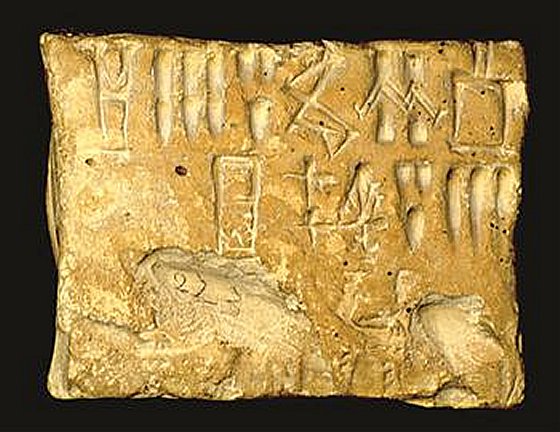
Manuscripts written in the Proto-Elamite writing system used in ancient Iran from 3,200 to 3,000 BC is the oldest undeciphered writing system. Credits: Cuneiform Digital Library
The 76 images are then combined so that researchers can move the light across the surface of the digital image and use the difference between light and shadow to highlight never-before-seen details.
Among the documents are manuscripts written in the so-called proto-Elamite writing system used in ancient Iran from 3,200 to 3,000 BC and which is the oldest undeciphered writing system currently known.
By viewing extremely high quality images of these documents, and by sharing them with a community of scholars worldwide, scientists from the University of Oxford and the University of Southampton hope to crack the code once and for all.
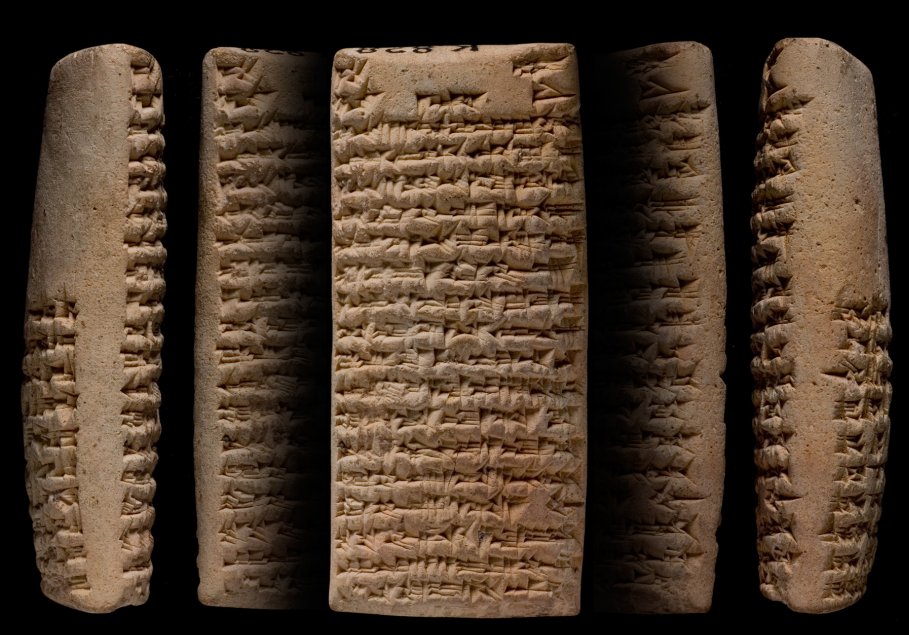
Credit: Cuneiform Digital Library Initiative
"We have never been able to view documents in this quality before," researcher Jacob Dahl said.
"The quality of the images captured is incredible. And it is important to remember that you cannot decipher a writing system without having reliable images because you will, for example, overlook differences barely visible to the naked eye which may have meaning."
"I have spent the last ten years trying to decipher the proto-Elamite writing system and, with this new technology, I think we are finally on the point of making a breakthrough," Dahl said.
New technology has allowed researchers to come closer than ever to cracking the world’s oldest undeciphered writing system.
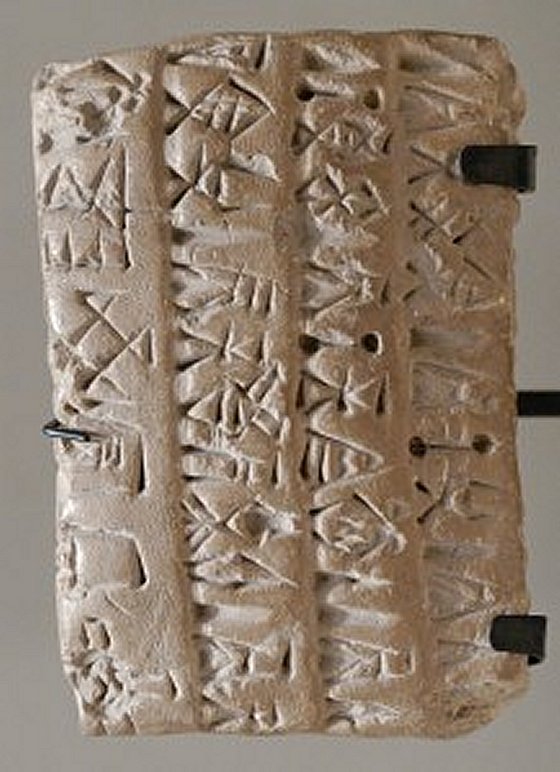
Proto-Elamite Tablet. Credits: Louvre, Paris
"Looking at contemporary and later writing systems, we would expect to see proto-Elamite use only symbols to represent things, but we think they also used a syllabary – for example 'cat' would not be represented by a symbol depicting the animal but by symbols for the otherwise unrelated words 'ca' and 'at".
"Half of the signs used in this way seem to have been invented ex novo for the sounds they represent – if this turns out to be the case, it would transform fundamentally how we understand early writing where phonetecism is believed to have been developed through the so-called rebus principle (a modern example would be for example "I see you", written with the three signs 'eye', the 'sea', and a 'ewe')."
Some features of the writing system are already known. The scribes had loaned - or potentially shared - some signs from/with Mesopotamia, such as the numerical signs and their systems and signs for objects like sheep, goats, cereals, and some others.
Nevertheless, 80-90% of the signs remain undeciphered.
The Louvre gave the researchers access to the c. 1100 proto-Elamite tablets in its collections, half of which can now be viewed on the Cuneiform Digital Library Initiative website.
"The Louvre collection of early writing from Mesopotamia and Iran is incredibly important – it contains the first substantial law code, the first record of a battle between kings, the first propaganda, and the first literature," Dr Dahl said.
"Being able to put these documents online would be a great achievement."
Written by – A. Sutherland - AncientPages.com Senior Staff Writer
Copyright © AncientPages.com All rights reserved. This material may not be published, broadcast, rewritten or redistributed in whole or part without the express written permission of AncientPages.com
More From Ancient Pages
-
 Giulia Tofana Poisoned 600 Men – Beautiful Sicilian Woman And Her Deadly Mission
-
 Rare Ancient Leopard Painting Discovered On Sarcophagus In Aswan, Egypt
-
 Clay Cylinders With Oldest Known Alphabet Unearthed In Ancient Syrian City Of Umm-el Marra
-
 Surprising Evidence Of 12,000-Year-Old Unknown Advanced Secret Knowledge Held By Elite Individuals – The Connection – Part 2
-
 Roman-Germanic Mythical Kneeling Figure With A Human Head And Snake’s Body Unearthed At Stuttgart’s Excavation Site
-
 Aztecs’ Five Suns Creation Myth And Prophecy
-
 Prehistoric Human Migration In Southeast Asia Driven By Sea-Level Rise – Study Reveals
-
 Rare Unexpected Discovery Of Elizabethan-Era Ship At Quarry 300 Meters From The Coast
-
 Mystery Of The Ancient Talayot Sword
-
 Neanderthals Changed Ecosystems 125,000 Years Ago
-
 King Ferdinand’s Secret Code Deciphered After 500 Years
-
 Loss Of Rainforests, Grasslands In Southeast Asia Caused Extinction Of Megafauna And Ancient Humans
-
 Mycenaean Culture Used Lignite For Their Kilns 3,000 Years Ago – Surprising Discovery Reveals
-
 Papyri Was Still In Use After The Arab Invasion In Egypt
-
 Is There An Ancient Secret Connection Between The Statue Of Liberty And The Anunnaki Goddess Inanna?
-
 On This Day In History: Unbelievable Flight Took Place – On Apr 28, 1939
-
 Ravana: Ten-Headed And Multi-Armed Demon King Of Lanka And Chief Antagonist In Epic Ramayana
-
 Katana ‘Soul Of The Samurai’ – Most Famous Japanese Sword With Long Tradition
-
 Researchers Confirm Museum Shrunken Head As Human Remains
-
 Intriguing Fragment Of A Byzantine-Era Jar Handle, Dating Back Approximately 1500 Years – Unearthed

