
Watlington Viking Hoard May Re-Write History Of England
AncientPages.com - British Museum presents a Viking Hoard dating from the time of the ‘Last Kingdom’, when the Anglo-Saxon kingdoms of Mercia and Wessex were fighting for their survival against a ‘Great Heathen Army’ of Viking raiders.
This most valuable hoard was discovered by metal detectorist James Mather in a field in Watlington, Oxfordshire and reported through the Portable Antiquities Scheme (PAS), headed up the launch of the PAS annual treasure report at the museum, which details the thousands of finds reported by detectorists and amateur archaeologists via a network of local museums.
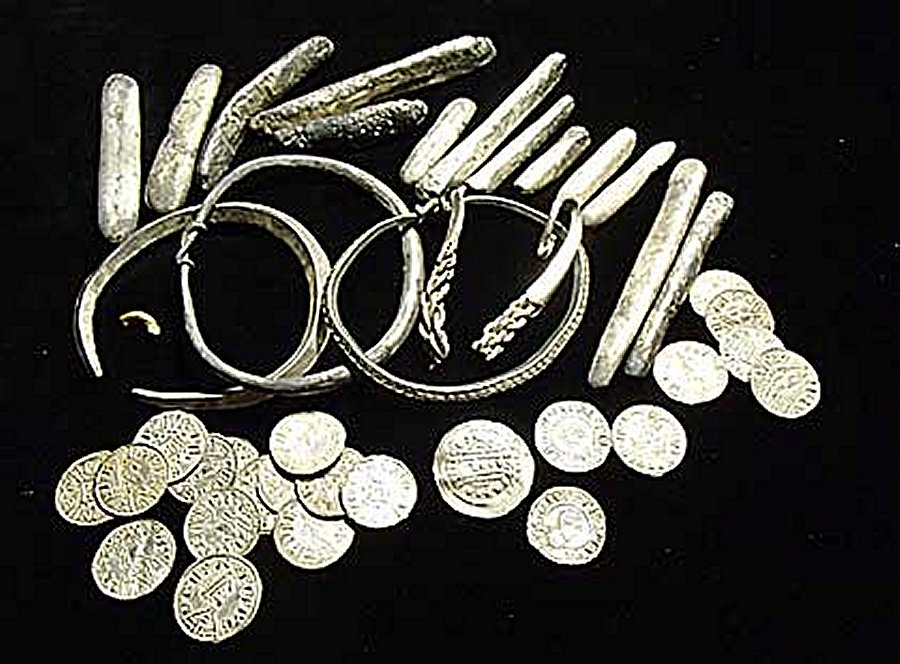
The 186 coins (some fragmentary), seven items of jewellery and 15 ingots were then examined by experts from the museum alongside colleagues from the Ashmolean Museum in Oxford. © PAS
The hoard includes rare coins of King Alfred ‘the Great’ of Wessex (r.871-99) and King Ceolwulf II of Mercia (874-79), as well as Viking arm-rings and silver ingots, and is said by archaeologists to be nationally significant.
Experts believe the hoard was buried around the end of the 870s, in the period following Alfred’s decisive defeat of the Vikings at Edington in 878, a victory which lead to the unification of England.
Following their defeat, the Vikings moved north of the Thames and travelled to East Anglia through the kingdom of Mercia. It seems likely that the hoard was buried in the course of these events, although the precise circumstances will never be known.
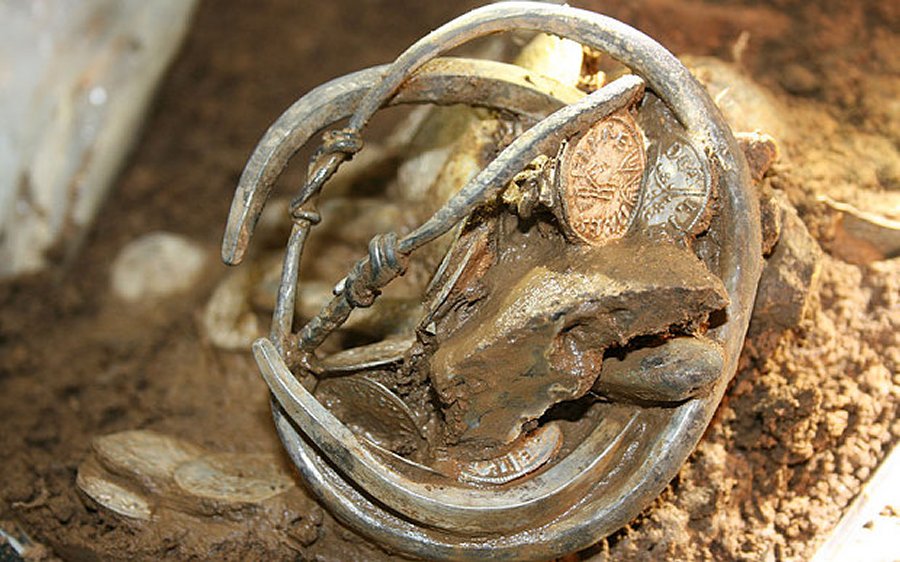
Experts believe the hoard was buried around the end of the 870s, in the period following Alfred’s decisive defeat of the Vikings at Edington in 878, a victory which lead to the unification of England. © PAS
The 186 coins (some fragmentary), seven items of jewellery and 15 ingots were then examined by experts from the museum alongside colleagues from the Ashmolean Museum in Oxford.
Recalling the experience of finding the hoard and helping excavate it with archaeologists from the PAS, finder James Mather said it was the “icing on the cake of my 60th birthday”.
“It highlights how responsible metal detecting, supportive landowners and the PAS contribute to national archaeological heritage.” “I hope these amazing artefacts can be displayed by a local museum to be enjoyed by generations to come," Mather said.

In 867 Æthelred's brother-in-law, Burghred king of Mercia, appealed to him for help against the Vikings. Æthelred and his brother, the future Ælfred the Great, led a West Saxon army to Nottingham, along with Edmund, King of East Anglia, but there was no decisive battle, and eventually Burghred bought off the Danes and they retreated to York...Artist Mark Taylor: Go to his website www.wyrdart.co.uk for this and more ethnic English art.
If the Watlington Hoard is declared Treasure, the Ashmolean Museum and Oxfordshire Museums Service will be working in partnership with others, and potential funders, to try to ensure it is displayed for local people to learn about and enjoy.
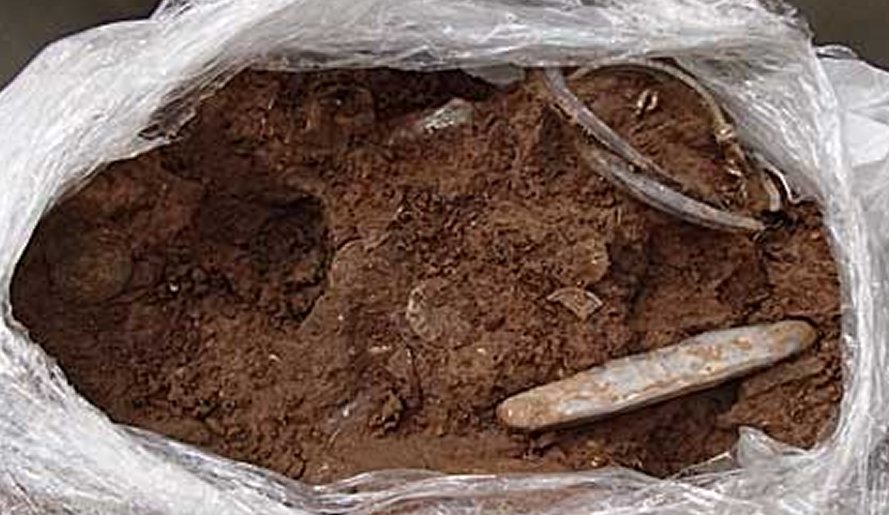
The valuable hoard, which was discovered by metal detectorist James Mather in a field in Watlington, Oxfordshire. © PAS
Since 1997, when the Treasure Act became law, the number of finds reported has increased fivefold from 201 cases in 1998 (the first full year of the Act) to 990 in 2013, and 1008 in 2014.
Of the finds reported as Treasure in 2013 (the last year for which figures are available), 363 were acquired by 91 local museums, so they can be displayed close to where the items were discovered. This year’s annual report reveals that in addition to reported Treasure, a further 113,784 archaeological finds have been recorded by the Portable Antiquities Scheme in 2014. All of them are recorded on the PAS database (finds.org.uk), where local people can learn about them and discover more about the archaeology and history of their local area.
Find out more about the PAS at www.finds.org.uk
AncientPages.com
source: Culture24
More From Ancient Pages
-
 8th Century Sculpture Of Lord Vishnu Belonging To Pandya Dynasty – Unearthed
-
 Unique Gungervaa Shrine With Three Tiny Silk Scrolls Examined With X-Ray
-
 Fascinating Portable Art From Torre Cave, Gipuzkoa – One Of The Most Complete Specimens From The Entire Iberian Peninsula
-
 On This Day In History: Planet Neptune Officially Discovered – On Sep 23, 1846
-
 Discovery Of Queen Nefertiti’s Mummy Will Be Announced Next Month – Zahi Hawass Says
-
 Ancient DNA Sheds Light On How The Caribbean Islands Were Settled
-
 Evidence Prolonged Droughts Ended The Bronze Age Indus Civilization And Its Megacities
-
 Unusual Parcel With 500-Year-Old Horn Container Discovered In South Africa Sheds Light On Pre-Colonial Khoisan Medicines
-
 Unusual Iron Age Cemetery Discovered In Dorset, UK
-
 Exceptional 1,700-Year-Old Roman Mosaics Have Returned Home To Israel
-
 Has An Unknown Ancient ‘Israel Silk Road’ Been Discovered?
-
 3,500-Year-Old Stone Inscribed With A Curse Against The City’s Governor Discovered In Jerusalem
-
 On This Day In History: Samuel F.B. Morse Receives A Patent For His Dot-Dash Telegraphy Signals – On June 20, 1840
-
 Restoration Of Valuable 4th Century Silk Tunics Attributed To St. Ambrose Takes Place In Milan
-
 There Is A Problem With The Footprints Claimed As Evidence Of Ice Age Humans In North America – Scientists Say
-
 Ice Age People Returned To Central Europe Much Earlier Than Previously Thought
-
 History Shows: Taxes And Bureaucracy Are Cornerstones Of Democracy
-
 Effects Of The Volcanic Eruption In Alaska Rippled Through Ancient Egypt During Cleopatra’s Reign
-
 Earliest Evidence Of Rice Harvesting Provided By China’s Ancient Stone Tools
-
 Has The Legendary Viking Stronghold Jomsborg Finally Been Found?

