Conny Waters - AncientPages.com - This year’s heatwave in Europe has impacted several countries, especially France and Spain, which are struggling to control widespread fires. Other nations are also experiencing challenges due to the extreme heat. In Wales, unusually dry conditions have led to drought in some areas.
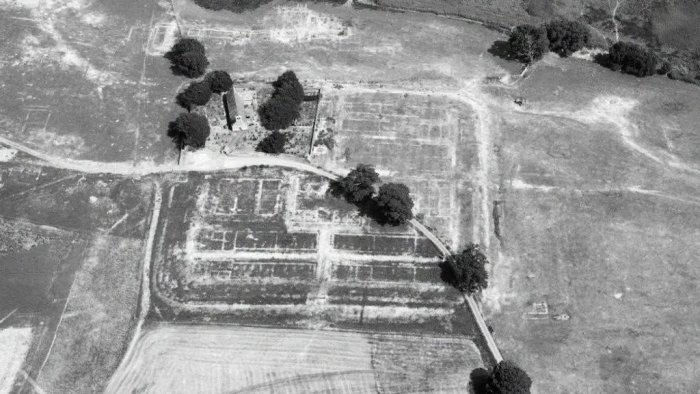
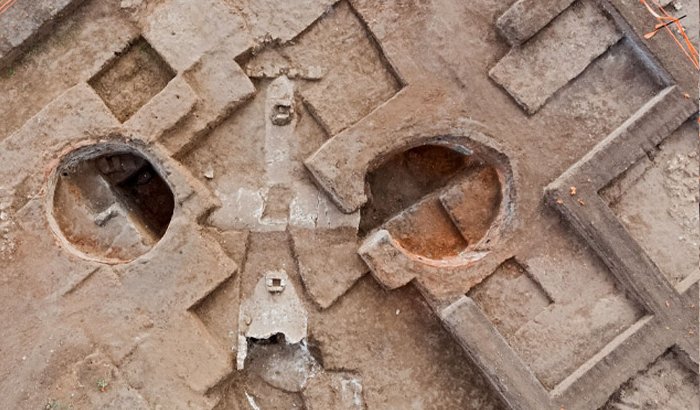
Recent findings have revealed additional information about buried Roman buildings at Caerhun Roman fort in Conwy. Credit: RCAHMW
Since mid-May, the east and north-east of Wales have experienced very dry conditions, while the west and south remained damp and green. However, by late June, a series of heatwaves scorched grasslands throughout much of Wales.
The heatwave has revealed several previously forgotten archaeological sites, which scientists are now investigating. Experts note that the exposed hidden remains include monuments from prehistoric long barrows and forts to Roman buildings and First World War practice trenches. Some of these sites were known but have not been visible this clearly for two or three decades.
Crop marks form when vegetation absorbs nutrients and water from former fortification ditches, resulting in distinctive green growth. These marks can vanish quickly when weather conditions shift. Dr. Toby Driver, the Royal Commission’s aerial archaeologist, has been working rapidly in the heat to document and study these monuments.
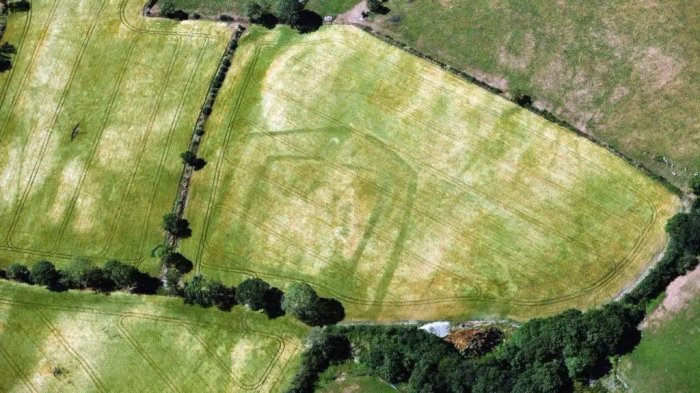
A previously unrecorded Iron Age or Romano-British double-ditched farmstead was identified through cropmarks near Llandysul, Ceredigion. Credit: RCAHMW
“We used to wait 5 to 7 years for a record heatwave summer for aerial archaeology, but now they come around every other year. This year has been pretty windy across Wales, so some of the longer trips to record cropmarks have made for challenging flying!
Sometimes the cropmarks are so clear they jump out as we orbit the aircraft around to photograph them. But some parts of Wales are now so dry that the cropmarks can be faint and pretty hard to see. In these cases, we digitally rebalance the color bands of the image, really making the archaeology ‘pop’ and reveal previously hidden details – these images appear as black and white,” Dr. Driver explained.
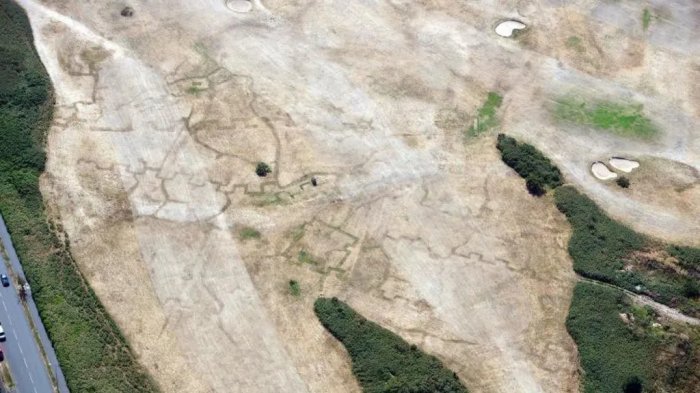
Parchmarks indicating World War One practice trenches are visible beneath the golf course in Deganwy, Conwy. Credit: RCAHMW
The National Archive for the Welsh historic environment has published photographs of Driver's discoveries from flights conducted out of Haverfordwest and Caernarfon airports in June and July.
"This year has been quite windy across Wales, so some of the longer flights to record cropmarks have been challenging," Driver said.
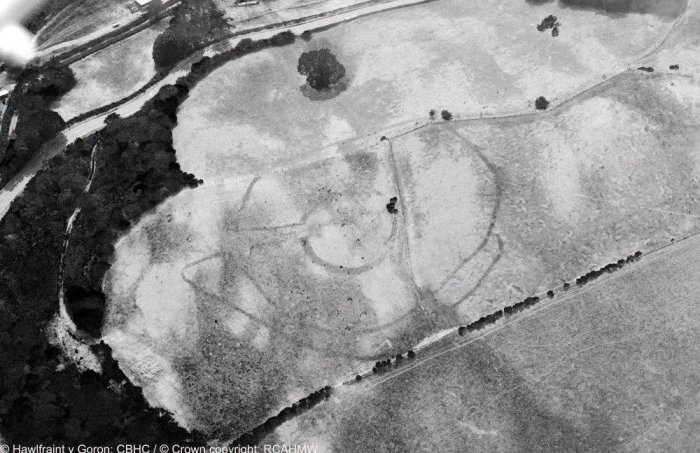
A structure believed to be an Iron Age cattle corral, dating back 2,000 years, has been identified in dry pasture near Lampeter, Ceredigion. Credit: RCAHMW
"Sometimes the cropmarks are so clear they are immediately visible as we circle the aircraft to photograph them. However, some areas of Wales are now so dry that the cropmarks can be faint and difficult to detect."
He added: "In these cases, we digitally rebalance the color bands of the image, which makes the archaeology 'pop' and reveals previously hidden details. These images appear in black and white."
In Welshpool, Powys, cropmarks of a rectangular Neolithic long barrow dating back approximately 5,000 years have been identified. In Conwy, new details have been recorded of buried Roman buildings at Caerhun Roman fort.
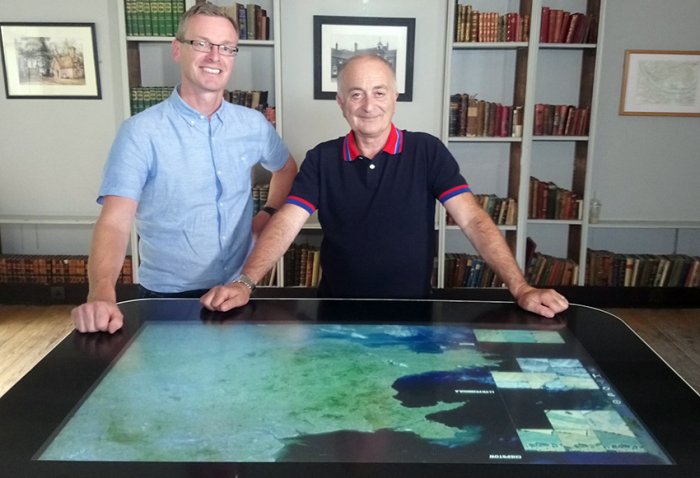
Dr Toby Driver discussing cropmark discoveries with Sir Tony Robinson. Credit: RCAHMW
Dramatic parchmarks of First World War practice trenches beneath a golf course were also observed at Deganwy, Conwy. Additionally, a previously unrecorded Iron Age or Romano-British double-ditched farmstead was revealed in ripening cropmarks near Llandysul, south Ceredigion.
See also: More Archaeology News
Following the remarkable summer heatwave, you can catch Royal Commission aerial archaeologist Dr Toby Driver discussing cropmark discoveries with Sir Tony Robinson on ‘Hidden Britain by Drone’ (Series 2, Episode 5) on Channel 4 at 7pm, Sunday 9 September. Location shots were filmed at a probable new Roman site discovered on the Llŷn Peninsula, Gwynedd, and at Fulham Palace in London.
Source: Royal Commission on the Ancient and Historical Monuments of Wales (RCAHMW)
Written by Conny Waters - AncientPages.com Staff Writer