
Why Were Wampum Belts Important To Native Americans?
A. Sutherland - AncientPages.com - Wampum belts existed long before the European contact with the Native Americans and were used as the official tribal records, to keep historical records, to commemorate important events such as festivals or served as public records of treaties.
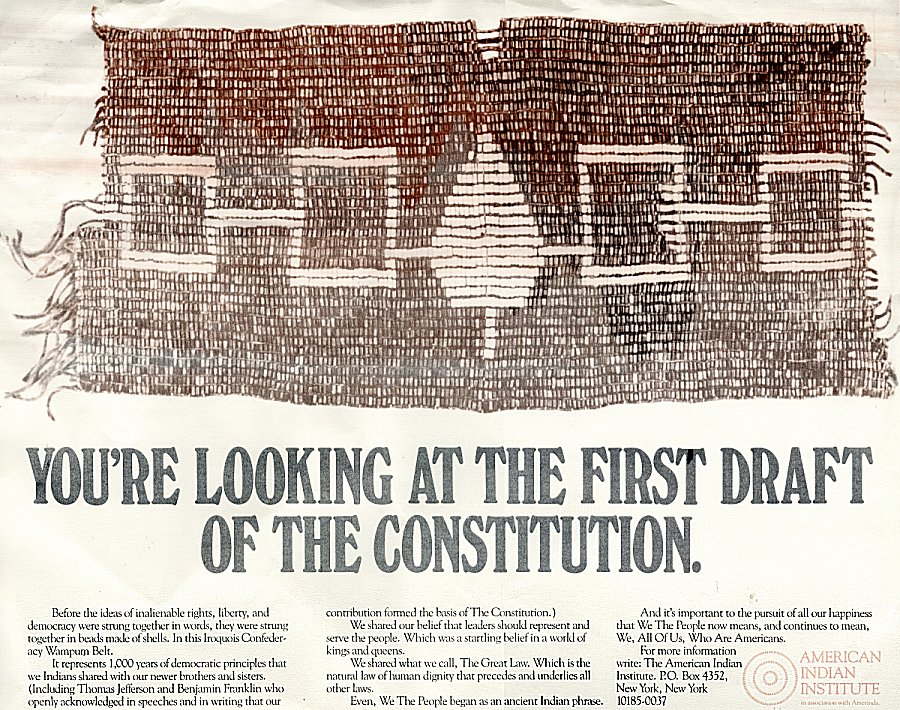
On one such wampum belt recorded the so-called 'Great Law of Peace', the oral constitution of the Iroquois Confederacy, a symbol of unity among the Five Nations (the Mohawk, Onondaga, Oneida, Cayuga, Seneca), which later this constitution with the sixth nation (the Tuscarora) being added about 1142.
The eastern Algonquians who lived along the coast of New England and neighboring Iroquois Indian tribe used wampum for ceremonial purposes. However, it is supposed the Iroquois were the first who started to manufacture the valuable beads for wampum.
They made the belts, strands and ribbons of beautiful, polished shells in many colors.
The belts were also valuable for communications, and as articles of exchange in form of gifts, jewelry and trade goods. Later, English and Dutch settlers began to manufacture wampum of glass beads from Europe in order to trade with the Indians and thus Wampum became an important form of money.
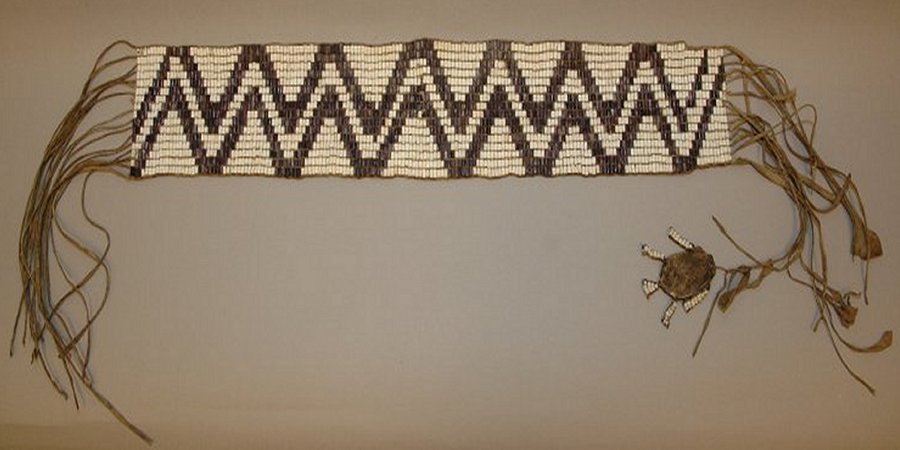
Wampum belt, with a white ground, and two parallel zig-zag lines of purple wampum, three beads in width. Most of the length of the belt is 16 beads wide; however at one end, 12 beads in from the end, the number of skin warps is reduced from 17 to 15. Image credit: British Museum
Wampum (from ‘wampumpeag’, in Algonquian, means "white strings of shell beads) were made of countless beads of white and purple seashells. This one (above) has a medicine bag attached in the form of a tortoise – the animal, which was believed to support the world.
See also:
Cedar – Sacred Tree With Medicine Power In Native American Beliefs
Native American Tradition Of A Vision Quest – How To Enter The Spiritual World
What Was The Symbolism Behind Native American Feathers?
Keepers of the Wampum were respected tribal dignitaries who stored historic strings and belts in special wooden boxes. At the great festivals, ceremonies and annual tribal meetings, the belts were brought out and stories associated with them were recited to the people who could acquaint themselves with the tribe’s history and traditions.
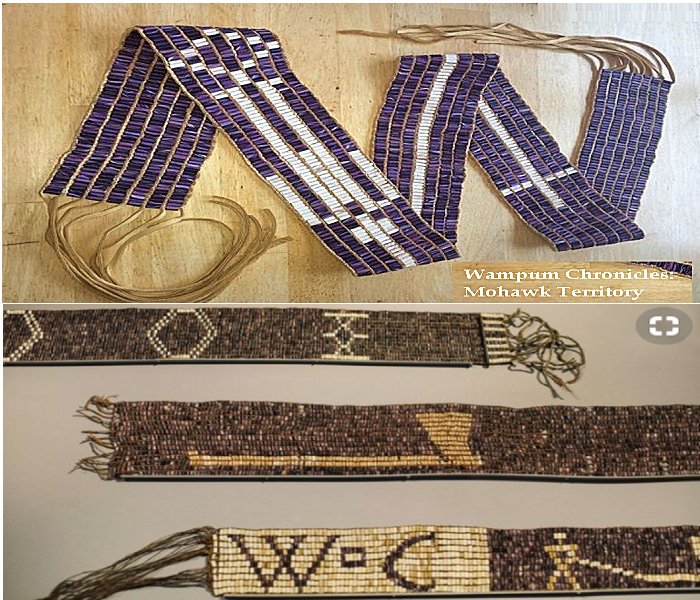
Above: The Wampum Chronicles: Mohawk Territory; Below: “Nation to Nation,” focusing on treaties, indicates a new, more historically serious direction for exhibitions at the National Museum of the American Indian.
Young men were chosen to be assistants and servants to the Keepers of the Wampum and thus they were given a special opportunity to learn the Wampum tradition.
This knowledge was important because, one day these young men would be able to take over the whole responsibility of preserving historic records of the tribe and maintaining the old custom of holding faithfully to tradition.
In addition, wampum belts played an important role during gatherings of tribal councils to demonstrate acceptance or rejection of proposed ideas. According to the tradition, a speaker ended his remarks by passing a belt across the council fire (always kept burning continually during a council of American Indians).
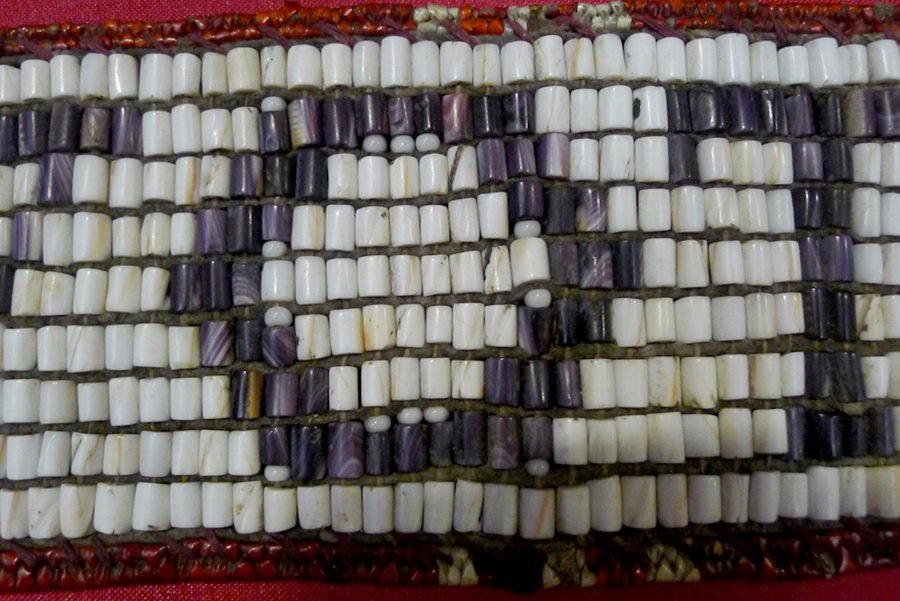
The 1674 Huron-Wendat belt at Chartres Cathedral, France. Photo by Lise Puyo.
If one of the listeners tossed a belt aside, it meant that he rejected or doubted what the speaker said.
The oldest existing wampum belt is the Huron belt, which was given to the Jesuits commemorating the first mission house built in Huronica. It was offered and accepted in 1638, and is presently stored in the Vatican.
Written by – A. Sutherland AncientPages.com Staff Writer
Copyright © AncientPages.com All rights reserved. This material may not be published, broadcast, rewritten or redistributed in whole or part without the express written permission of AncientPages.com
Expand for referencesMore From Ancient Pages
-
 New Study Reveals Rare Mortuary Treatment Of Egyptian Mummy
-
 2,000 Year-Old Books Written By Bian Que The Divine Healer Unearthed
-
 Mysterious Gympie Pyramid: Evidence Of An Ancient Lost Civilization In Australia?
-
 Examined Ancient Bone Suggests Santa Claus Was Real
-
 Aztecs: Facts And History About The Ancient And Powerful Mesoamerican Civilization From Aztlán
-
 How Far South Did Prehistoric Highly Skilled Polynesian Seafarers Sail?
-
 Obscure History Of Upper Mustang: Prehistoric Paintings Discovered In Nepal
-
 Remarkable ‘Hipposandals’ Found At Vindolanda
-
 On This Day In History: Christiaan Huygens Discovers Saturn’s Largest Moon Titan – On Mar 25, 1655
-
 Amazing Ancient Roman Marble Floor Found In The Underwater City Of Baiae, Italy
-
 Book Of Deer And The Lost Scottish Monastery – Archaeologists Report New Finds
-
 Mysterious Ancient Human Skeletons Found In Florida Lake Puzzle Archaeologists – Unknown Lost Settlement?
-
 Home Of The Gods – Arrival Of Golden Ships – Part 1
-
 Ancient Greeks In Ukraine: 2000-Year-Old Settlement With Previously Unknown Structures – Localized By Polish Archaeologists
-
 Unexplained Case Of Ancient Authors Who Foretold One Of the World’s Greatest Catastrophes
-
 Long-Lost Viking Waterway Leading To Orkney, The Great Norse Empire – Discovered
-
 Ancient People In Chaco Canyon Who Had Six Fingers And Six Toes Were Special – Researchers Say
-
 Who Was “Shimon”, Whose Name Appears On A 2,000-Year-old Hebrew Inscription?
-
 Nine-Headed Bird: Mythical Creature Worshiped In Ancient China
-
 ‘Armenian Stonehenge’: 30 Unknown Stones In Carahunge Complex – Surveyed

