
Pax Romana: 200-Year-Long Period Of Stability Within The Roman Empire
A. Sutherland - AncientPages.com - The Pax Romana (‘Roman Peace’) was a period of relative peace and stability across the Roman Empire which lasted for over 200 years, beginning with the reign of Augustus (27 BC - 14 CE), the first emperor of Rome to the reign of Marcus Aurelius (161 -180 CE).
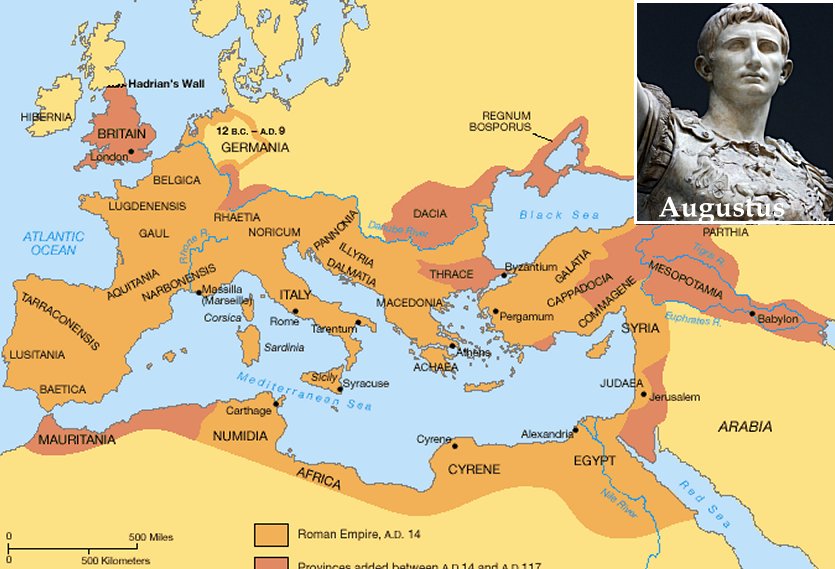
Through the triumphs of Caesar, Augustus, Claudius, and Marcus Aurelius, Rome became one of the largest empires that had ever existed, greater than that of Persia, Assyria, and even challenging that of Alexander the Great.
Augustus, the adopted son of Julius Caesar, laid the foundation for this period of the agreement, which also extended to North Africa and Persia. The main goal of Augustus, who was emperor for 45 years, was to guarantee law, order, and security within the empire.
The empire protected and governed individual provinces, permitting each to make and administer its own laws while accepting Roman taxation and military control.
During the period of Pax Romana, the Roman Republic, and Empire, the borders of Rome continually expanded, so it wasn’t really peace, but the disorder of the previous years was wiped away.
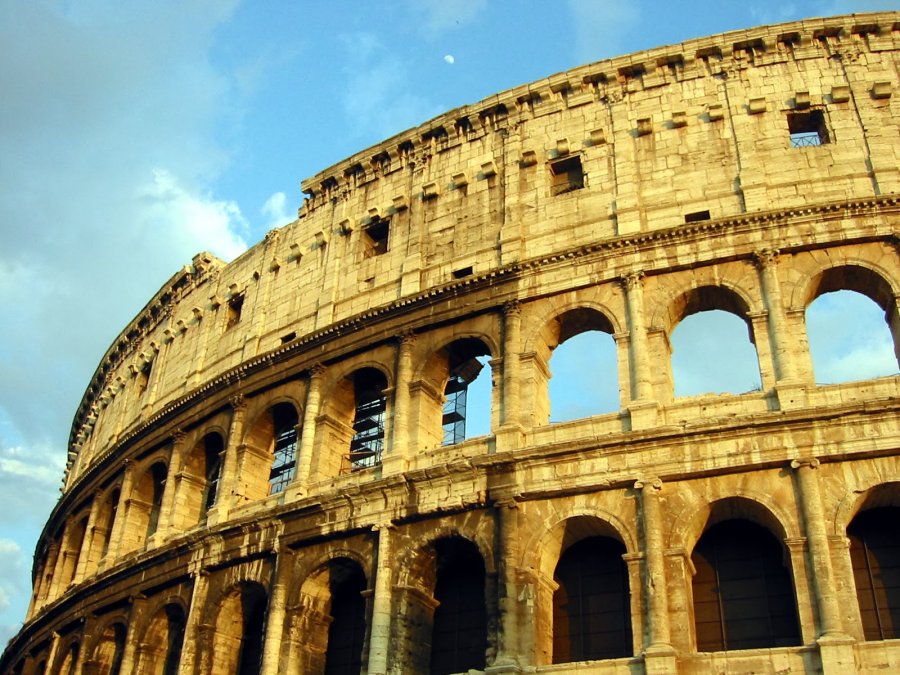
Augustus enacted lay the groundwork for the peace and stability of the Pax Romana.
The Pax Romana was a crucial time for the Roman Empire because the empire itself was stable. The emperors who followed Augustus maintained the Augustan Peace by reducing conflict, expanding the borders, and maintaining harmony at home.
Besides the initial territorial conquests after the Punic Wars, the eternal city added land in the Balkans, Middle East, and North Africa. Later, they would move westward into Gaul, Spain and northward into Germany and Britain. Through the triumphs of Caesar, Augustus, Claudius, and Marcus Aurelius, Rome became one of the largest empires that had ever existed, greater than that of Persia, Assyria, and even challenging that of Alexander the Great.
Many of Rome's most spectacular and huge construction projects were built during this time period, the period we call the Roman Empire. Thousands of miles of roads were built to keep the empire united. Art, literature, and theatre flourished and grew.
Rome was at its height. However, there was a dark and light side of Pax Romana. The era of the Pax Romana did not change conditions for poor people, who lived in poverty, despite all of the wealth of the Roman Empire. There was a huge gap between rich and poor, even if the Romans tried to hide both poverty and unemployment.
Written by – A. Sutherland AncientPages.com Staff Writer
Copyright © AncientPages.com All rights reserved. This material may not be published, broadcast, rewritten or redistributed in whole or part without the express written permission of AncientPages.com
More From Ancient Pages
-
 Baffling Structures Unearthed In A Place Where Prehistoric Human Remains Are Missing Is An Ancient Mystery
-
 Demon Oni: Cruel Harbinger Of Disease And Misfortune In Japanese Folklore
-
 Bulla Felix: Legendary Italian Leader Of Outlaws Who Robbed The Rich And Gave To The Poor
-
 Roman Empire’s Emerald Mines In The Egyptian Eastern Desert – New Evidence
-
 What Is The Link Between Drought And The ‘Barbarian Conspiracy’ In Roman Britain?
-
 13th Century Black Book Of Carmarthen: Erased Poetry And Ghostly Faces Revealed By UV Light
-
 Remarkable Man-Made Underwater Structures Could Rewrite History Of Wisconsin
-
 Modern Humans Used Favorable Climatic Conditions On Their Long Way From Africa To Europe
-
 Why Are Medieval Manuscripts Full Of Doodles Of Snail Fights?
-
 On This Day In History: Great Fire Of Rome Recorded – On July 18, 64 AD
-
 X-Ray Reveal Ghostly Portrait Of Mary Queen Of Scots Hidden Underneath 16th Century Painting
-
 Artifacts And Long History Of Unguja Island – Ancient Humans Impact Island’s Environment
-
 Ivan The Terrible: Military Arsenal Unearthed Near Moscow
-
 Murder Of Duke Béla Of Macsó: A 700-Year-Old Archaeological Mystery
-
 On This Day In History: Parachute Jump From 1,000 m Above Paris Is Recorded – On Oct 22, 1797
-
 New Trove Of Treasures, Funerary Temple, 50 Sarcophagi Unearthed In Saqqara, Cairo
-
 Has The Mystery Of The Secret Sarcophagus Found At Notre-Dame Cathedral Been Solved?
-
 Strange Tale Of Demonic Possession And Exorcism In 17th-Century New France – What Happened?
-
 Mag Mell: Irish Tradition Of Otherworldly Paradise That Could Be Reached Through Death And Glory
-
 Pacific God A’a: Fascinating Polynesian Sculpture Designed To Carry A Human Skull And Bones

