
Unique Incense Burner Of Serapis, The Greco-Egyptian Sun God, Found In The Ancient City Of Ephesus
Conny Waters - AncientPages.com - During excavations in the ancient city of Ephesus, archaeologists uncovered a rare terracotta incense burner featuring the Greco-Egyptian god Serapis. Ephesus, once the most significant Greek city in Ionian Asia Minor, is now an archaeological site near Selçuk in western Turkey.
Ephesus, A Place Where Mythology And History Meet
According to legend, Ephesus was founded by the Amazons—renowned female warriors—and its name may derive from "Apasas," a city in the Kingdom of Arzawa, which translates to "city of the Mother Goddess."
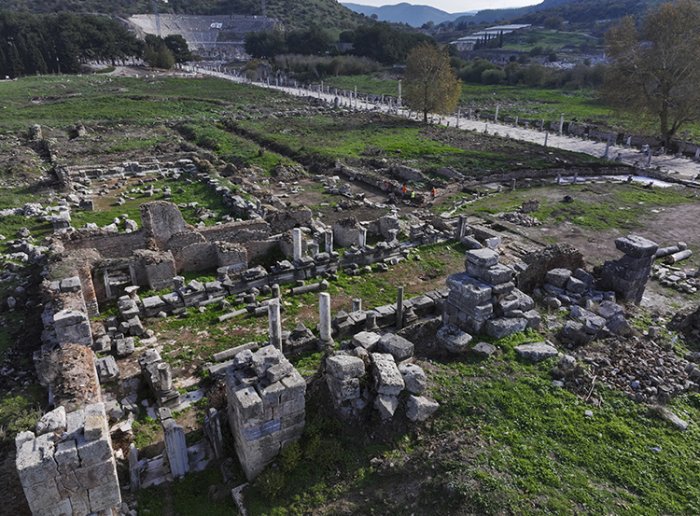
Ruins of the ancient city of Ephesus. Credit: AA
The history of Ephesus includes successive Hellenistic and Roman settlements established as shifting coastlines altered its location over time. Archaeological work has revealed impressive monuments from the Roman Imperial era, such as the Library of Celsus and the Great Theatre. Although little remains today of the Temple of Artemis—once one of the Seven Wonders of the World—it was historically a major pilgrimage destination across the Mediterranean.
Since at least the 5th century CE, another important pilgrimage site has been located nearby: The House of the Virgin Mary, a domed chapel situated seven kilometers from Ephesus. As an exemplary Roman port city with preserved sea channels and harbor basins, Ephesus continues to provide valuable insights for archaeologists studying its rich past and former inhabitants.
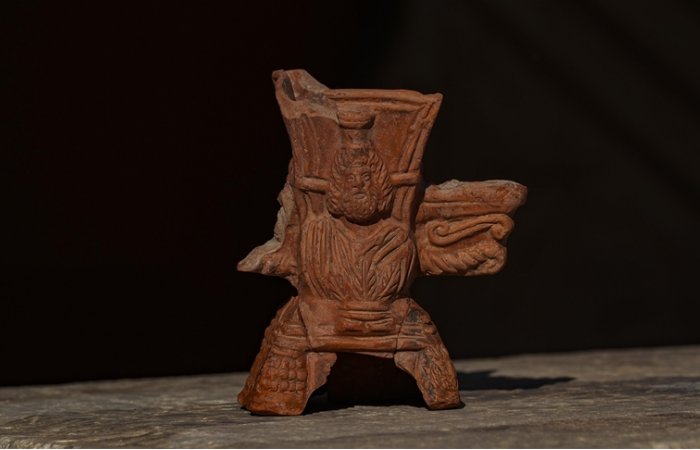
Excavation and restoration efforts at Ephesus, a UNESCO World Heritage site, are ongoing year-round as part of the Ministry of Culture and Tourism's "Eternal Ephesus: A Legacy for the Future" Project. Current work focuses on Harbor Street, which extends approximately 570 meters, and its associated Harbor Baths. Excavations in this area are concentrated on the oval hall, courtyard, toilet, and pool sections. Notably, the team recently discovered an incense burner depicting Serapis.
Credit: Mehmet Emin Mengüarslan/AA
Professor Serdar Aybek from Dokuz Eylül University's Department of Archaeology coordinates the project. He reported that activities under this initiative have continued without interruption since 2023. According to Professor Aybek, the Harbor Baths are situated along the main route to Ephesus’s ancient harbor and represent one of Anatolia’s largest Roman-era structures, covering about 70,000 square meters. During their work in this area, archaeologists often uncover marble decorative pieces, bronze sculptures, and various architectural elements dating back to that period.
God Serapis - A Newborn Old God
Aybek reported that a terracotta incense burner featuring a relief of the Greco-Egyptian god Serapis was discovered during the excavations.
Serapis was a Greco-Egyptian deity associated with the Sun, initially venerated at Memphis, where his worship was intertwined with that of the sacred Egyptian bull Apis. Upon Apis's death, he was referred to as Osorapis, thereby linking Serapis to underworld traditions.

Credit: Mehmet Emin Mengüarslan/AA
The role of Serapis underwent a significant transformation when Ptolemy I Soter (reigning from 305 to 284 BCE) reintroduced him as a new god who embodied numerous Hellenic characteristics. Ptolemy I designated Alexandria as the principal center of the cult of Serapis, thereby merging Egyptian and Greek religious practices in his veneration of Serapis.
Aybek highlighted the significance of the recently unearthed artifact, emphasizing its connection to the Serapis figure. He explained that Serapis was an important deity for Ephesus, home to the Temple of Serapis—one of the largest and most significant structures of the ancient world. From the 2nd century AD onward, references to Serapis appear throughout Ephesus in inscriptions, graffiti, and various artifacts.
The discovered artifact is a terracotta incense burner featuring a reservoir on top and a relief of Serapis on its front. This depiction is notable for its close resemblance to a famous statue attributed to the renowned ancient sculptor Briaxis.
Did An Ancient Workshop In Ephesus Produce This Incense Burner?
The relief shows a clothed bust of Serapis with distinctive facial features: thick hair, a beard, and his characteristic tall headdress atop a pulley-shaped base. These elements make it easy to identify the statue as Serapis and reflect its widespread recognition in antiquity. The incense burner thus serves as an important link to both religious practices and artistic traditions in ancient Ephesus.
Aybek noted that the inscription on the back of the incense burner added considerable significance to the discovery. He explained that this inscription enabled researchers to link the incense burner to a similar artifact previously uncovered in the Hillside Houses. This connection suggests either that there was a workshop in Ephesus dedicated to producing such items or that these products were commonly traded in the area.
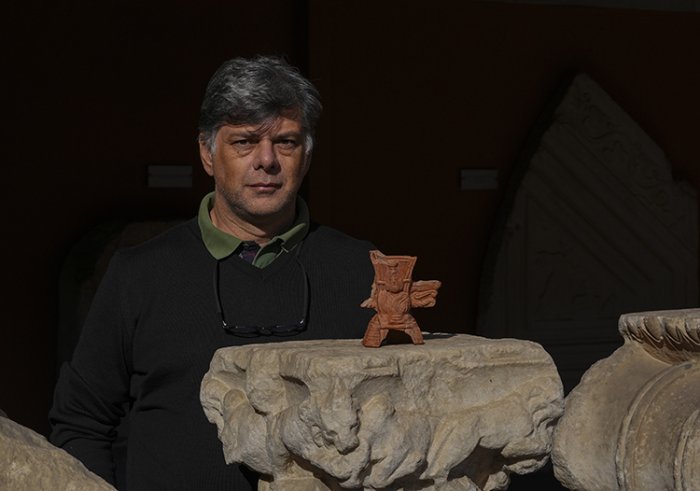
Credit: Mehmet Emin Mengüarslan/AA
Aybek added that the incense burner would be included in the Ephesus Museum collection, saying, "The discovery of identical artifacts in different years during archaeological research in Ephesus, and the fact that these artifacts come from the same workshops, demonstrates how rich the city's infrastructure was, both commercially and religiously. Furthermore, one of our aims is to add new artifacts to the magnificent collection of the Ephesus Museum and to contribute to the cultural richness of our country, especially Ephesus, with these new artifacts."
In antiquity, the god Serapis was typically depicted as a bearded man wearing a distinctive headdress. His cult rose to prominence during the Roman era, prompting the construction of numerous temples dedicated to his worship across various regions.
See also: More Archaeology News
One notable example is the Temple of Serapis in Ephesus, believed to have been established by Egyptian merchants in the 2nd century AD, which highlights the widespread reverence for this deity. However, like many other pagan religions of that period, the cult of Serapis declined significantly during the reign of Emperor Theodosius I. His policies promoting Christianity included laws that restricted pagan practices and ultimately diminished Serapis’s following.
Source: AA
Written by Conny Waters - AncientPages.com Staff Writer
More From Ancient Pages
-
 Intriguing Ket People – The Last Nomadic Hunter-Gatherers Of Siberia
-
 Long-Standing Mystery Of What May Have Triggered Ice Age Solved – New Study
-
 2,250-Year-Old Iron Age Settlement Discovered Near Upton-Upon-Severn
-
 On This Day In History: The Mongol Conqueror Genghis Khan Died – On August 18, 1227
-
 Story Behind The Two Keys On Vatican’s Flag
-
 Were The Knights Templar Guilty Or Innocent Of The Crimes Laid Against Them?
-
 Puzzling Connection Between Fairies, Ghosts And Ancient Civilizations Revealed
-
 ‘Completely Unique’ Seal Matrix Found Near Norwich, UK
-
 On This Day In History: Edgar Allan Poe Known For Tales Of Mystery And Macabre Was Born – On Jan 19, 1809
-
 Amazing Prehistoric Forest Submerged Under Water Thousands Of Years Ago Re-Emerges On Welsh Beach
-
 Remains Of Ancient Roman Military Camp Discovered In Brno, Czech Republic
-
 New Study Questions Claims Homo Naledi Was Advanced
-
 Skilled Neanderthal Hand Engraved Ancient Stone And Hashtag Symbol
-
 Is The Legendary Tsuchinoko Real?
-
 Bayeux Tapestry: Original Location Of Remarkable Romanesque Art – Finally Solved
-
 Wanyūdō The Soultaker – Fearsome Yōkai In Japanese Mythology
-
 On This Day In History: Cliff Palace At Mesa Verde, Colorado Discovered – On Dec 18, 1888
-
 Etzanoa: Long-Lost Native American City Discovered In Kansas After 400 Years
-
 ‘Cradle Of The Scythians’ Studied By Russian-Polish Archaeologists
-
 Archaeologists Survey Bronze Age Konar Sandal Site In Southeast Iran

