
Troublesome Ancient History Of Forks That Were Long A Shocking Sensation
A. Sutherland - AncientPages.com - Should you eat the food using five or three fingers? You should use a fork. At the beginning, a fork did not gain many enthusiasts in Europe.
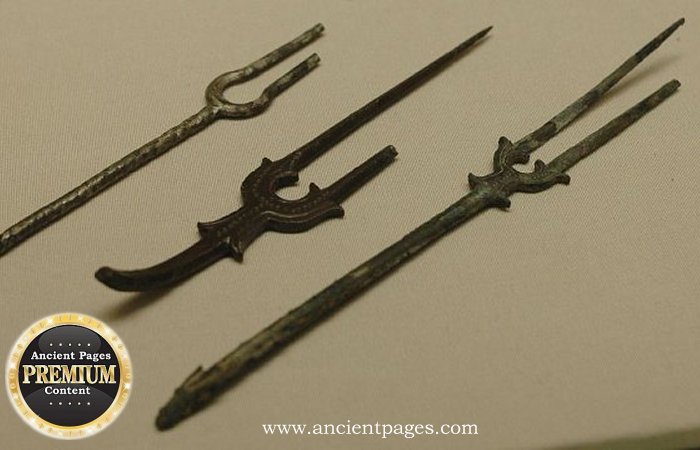
When forks first appeared, they caused a sensation. They were expensive, unfamiliar, and even rejected by the Church, which argued that God had already given people fingers to touch and eat His food. Under such pressure, it would have been easy for the fork to disappear.
Yet it endured. Wealthy families in Tuscany still desired elegant gold and silver forks on their tables. Even though many people didn’t know how to use them and saw them as strange, dangerous, or useless, the fork quietly remained in use among the elite. That quiet persistence proved important.

This is a preview of our premium article available only to members of Ancient Pages.
Become a member to read more - Click here
If you are already a member and have logged in to your account, you can access the article here

See also:
Lipstick ‘Kiss Of Death’ – Its Old History And Tradition Among Women Around The World
Why Did Winter Baths Become So Popular?
What Is The Meaning Of Ancient Hand Signs We Still Use Today?
More From Ancient Pages
-
 Were The Knights Templar Guilty Or Innocent Of The Crimes Laid Against Them?
-
 Mystery Of Paracelsus’s Magical Sword Azoth – Rumors Or Truth?
-
 Din Lligwy: Prehistoric Celtic Settlement Of Anglesey, Wales
-
 Tomte – A Beloved Scandinavian Christmas Gnome
-
 Why The Discovery Of Cleopatra’s Tomb Would Rewrite History
-
 Terracina – Ancient City Where Mythology And History Meet
-
 Dragon Empress Wu Zetian Challenged Confucian Beliefs Against Female Rulers
-
 Miraculous Cauldrons Of The Ancient Celtic World
-
 Does This Cathedral Offer Evidence Our Calendar Is ‘Missing’ 297 Years?
-
 Strange Bodies And Skulls Of Ancient Unknown Mighty Warriors Found In Virginia
-
 Undeciphered Ancient Symbols On Boulders In Pennsylvania And New England Could Be An Ancient Diary Of Forgotten Civilizations And Events
-
 Translated Ancient Text Offers Evidence Of An Unknown Sophisticated Civilization Present In All Corners Of The World
-
 Unexplained Behavior In People Found After Being Lost In National Parks – Strange Encounters With Dangerous Humanoids And The Little People
-
 Garden Of Eden And Its Four Rivers – Possible Locations Of Biblical Paradise Suggested By Archaeologists, Historians And Biblical Scholars
-
 Ancient Cities Built By Biblical Giants – Archaeological Evidence
-
 Gigantic Karnak Temple Complex: Advanced Ancient Technology In Egypt
-
 Cats In The Middle Ages: What Medieval Manuscripts Teach Us About Our Ancestors’ Pets
-
 Myth Of The Pale Sun Followed By A Catastrophe Confirmed By Archaeologists
-
 Secrets Of The Uruk Prophecy Found In The Ancient Library Of A Magician With Divine Powers
-
 Ancient Mysteries Of Japan – Strange Manuscripts Written In Unknown Language Discovered By Scientist – Part 1

