
King Tabnit’s Sarcophagus And Its Surprising Forever-Lost Secret
Ellen Lloyd - AncientPages.com - The sarcophagus of Tabnit was unearthed in 1847. At first glance, it appeared as an ordinary ancient sarcophagus, but the inscription came with a warning. When the workers opened the ancient coffin, they understood this was an unusual archaeological discovery.
Who Was King Tabnit?
Tabnit was the Phoenician King of Sidon who ruled between 549–539 B.C. Though he is today mainly associated with discovering his unusual sarcophagus, there are some historical records about his life.
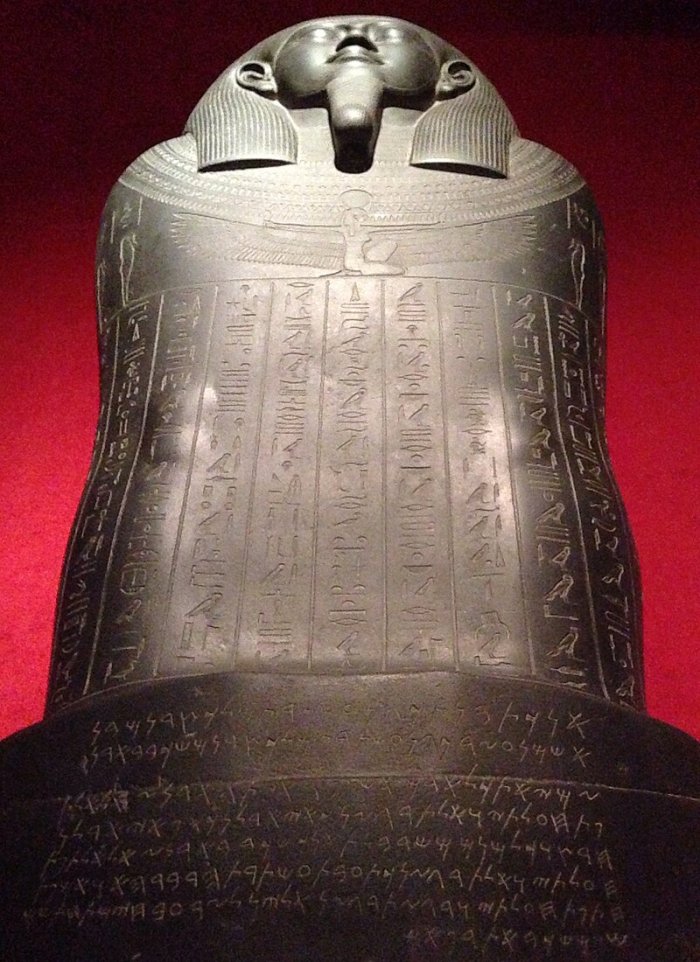
King Tabnit's sarcophagus at the Istanbul Archaeology Museum. Credit: oncenawhile - CC BY-SA 3.0
With the help of archaeological discoveries, historians have confirmed that Sidon was the main Phoenician city during the Persian period.
"The chronology of the reigns of the kings of Sidon at that time is quite well known because documentation is relatively abundant and accurate, contrary to the neo Babylonian domination over this city, the last known Sidonian king being Abdi-Milkuti who ruled c. 685-677 BCE, under Assarhaddon, king of Assyria." 1</sup
Researchers have traced the so-called dynasty of Eshmunazor, the following dynasty of Baalshillem, and the information we possess about these rulers provide a better understanding of historical events in this part of the world.
According to scientists, "the first known king of this dynasty was Eshmunazor, subsequently known as Eshmunazor I. He was succeeded by his son Tabnit who married his sister Amoashtart. Since Tabnit died before the birth of his son Eshmunazor II, the queen mother (HMLKT) Amoashtart assumed the interregnum until the birth, then the co-regency with her young son during his childhood. After that, Eshmunazor II reigned alone. At the end of his reign, he was succeeded by Bodashtart, who was the son of a brother (or a sister) of Tabnit and Amoashtart." 1
Mysterious Ancient Liquid Found In King Tabnit's Sarcophagus
When King Tabnit died, he was not mummified like ancient Egyptian pharaohs. His body was placed inside the sarcophagus and preserved all those years thanks to a specific liquid. Unfortunately, we may never know the whole story behind this curious burial tradition because something unexpected happened before scientists could examine the fluid.
When King Tabnit's sarcophagus was found by Osman Hamdi Bey at the Ayaa Necropolis east of Sidon, together with the Alexander Sarcophagus and other related sarcophagi, Hamdi Bey, the curator of the Istanbul Archaeological Museum arranged for full excavation of the site. Arrangements were also made to transfer the sarcophagus of King Tabnit to Istanbul.
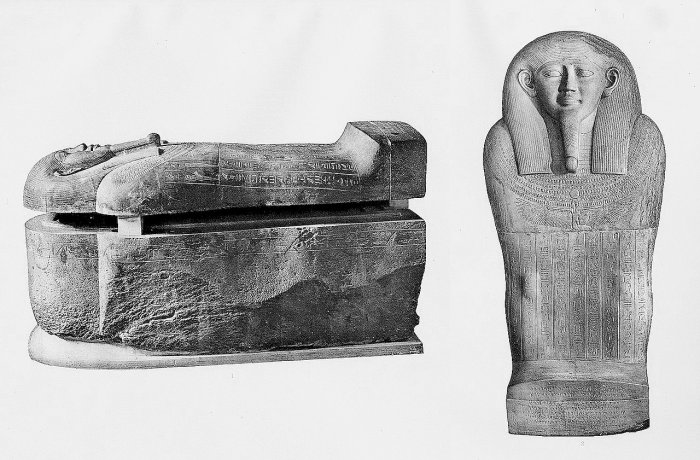
Tabnit sarcophagus (front and side). Credit: Osman Hamdi Bey (Istanbul 30 December 1842 – 24 February 1910) - 1892 - Public Domain
During the excavation, the workmen opened the Tabnit sarcophagus and found it contained "a human body floating in perfect preservation in a peculiar fluid."
"The flesh was soft and perfect in form and colour." 2
Whilst Hamdi Bey was having lunch and was not present at the archaeological site, the workmen "overturned the sarcophagus and poured the fluid out, such that the "secret of the wonderful fluid was again hidden in the Sidon sand". 2
When the original embalming fluid left the sarcophagus, the body of King Tabnit started to become un-preservable. The secret of this mysterious liquid was lost forever, and we can only speculate how the ancient people of Sidon managed to create an embalming fluid that preserved their ruler's body for all those years.
The Curse Of King Tabnit
Another curiosity about King Tabnit's sarcophagus was the frightening inscription that warned against coffin opening.
When scientists translated the Egyptian hieroglyphs, they saw it was a curse!
The curse of King Tabnit made it clear that he did not wish to be disturbed. It was his resting place. Anyone who opened the sarcophagus would suffer impotence and loss of an afterlife.
The curse read:
I, Tabnit, priest of Astarte (Ishtar), king of Sidon, the son of Eshmunazar, priest of Astarte, king of Sidon, am lying in this sarcophagus.
Whoever you are, any man that might find this sarcophagus, don't, don't open it and don't disturb me, for no silver is gathered with me, no gold is gathered with me, nor anything of value whatsoever, only I am lying in this sarcophagus.
Don't, don't open it and don't disturb me,
for this thing is an abomination to Astarte.
And if you do indeed open it and do indeed disturb me, may you not have any seed among the living under the sun, nor a resting-place with the Rephaites (dead ancestors)."
Such curses were relatively common in ancient Egypt and the surrounding areas. Placing one or many curses on the burial coffins or tomb walls was intended to prevent looting and to interrupt the deceased journey to the afterlife.
Based on the many looted ancient tombs archaeologists have unearthed, one can say with certainty that these curses did not deter thieves.
The sarcophagus and King Tabnit's decomposed skeleton are now in the Istanbul Archaeology Museums.
Updated on July 10, 2024
Written by Ellen Lloyd – AncientPages.com
Copyright © AncientPages.com All rights reserved. This material may not be published, broadcast, rewritten or redistributed in whole or part without the express written permission of AncientPages.com
Expand for references- Elayi, Josette (2006) - An updated chronology of the reigns of Phoenician kings during the Persian period (539–333 BCE)
- Jessup, Henry Harris (1910), Fifty-Three Years In Syria
- Gottheil, R. (1889). The Inscription of Tabnit. Hebraica, 5(2/3), 197–197.
- Joy Of Museums - The Curse of the Tabnit Sarcophagus
- Torrey, C. C. (1902). A Phoenician Royal Inscription. Journal of the American Oriental Society, 23, 156–173. https://doi.org/10.2307/592387
More From Ancient Pages
-
 Old Sword Decorated With Inscription And Related To 1173 Battle Of Fornham – Unearthed
-
 Oldest Golden Jewel In The Caucasus Unearthed In Azerbaijan
-
 Unusual Discovery Of A Bronze Age Axe In Norway – Is An Unknown 3,000-Year-Old Shipwreck Nearby?
-
 Ginnungagap From Which The World, Gods, Humanity And All Life Emerged In Norse Beliefs
-
 Capoeira: Ancient Martial Art Disguised As A Dance Became A Symbol Of Resistance To Oppression
-
 How Ancient Seascapes Shaped The Genetic Structure Of European Populations
-
 Rise And Fall Of City-States In Ancient Mexico And Peru Influenced By Climate Change
-
 Ale Conner: Unpleasant And Dangerous Profession In Medieval England
-
 Unexplained Ancient Case Of Missing Time And Mysterious Disappearance Into An Underground World
-
 Strange Bodies And Skulls Of Ancient Unknown Mighty Warriors Found In Virginia
-
 Little People: Ancient Race That Pre-Dates Native Americans, Celts, And Other Settlers Worldwide
-
 Was Prehistoric Baghdad Battery A Unique Find Of The Ancients? – Did Its Manufacturers Discover Electricity By Accident?
-
 Missing ‘Delmenhorst’: 17th Century Danish Warship From ‘Battle Of Fehmarn’ Found
-
 Remarkable Ancient Windcatchers: Air Conditioning Systems Built Since Antiquity
-
 Facial Reconstruction Of A 75,000-Year-Old Neanderthal Woman From Shanidar Cave
-
 5,000 Years Old Beer Enjoyed By Egyptian Pharaohs Recreated
-
 LIDAR Discovers Lost Ancient Cities Older Than Any Known Complex Amazonian Society
-
 Sunken Land Of Lyonesse: Legendary Kingdom That Influenced Stories Of Writers And Fishermen
-
 Submerged Ancient Bridge Found In Genovesa Cave Reveals Humans Settled In Mediterranean Much Earlier Than Previously Thought
-
 ‘Something’ Ancient And Strange Was Found Hidden Inside A Huge Underground Structure – What Happened Next Is A Mystery

