
Sarcophagus Of The Amazons: Etruscan Coffin With Paintings Of Dynamic Fighting Scenes Of Greeks With Amazons
A. Sutherland - AncientPages.com - The Sarcophagus of the Amazons is a large Etruscan sarcophagus of an unknown artist, dated back to the third quarter of the 4th century BC, and preserved in the National Archaeological Museum of Florence.
It is a rare example of an ancient painting still preserving much of its extraordinary freshness. However, the 2007 restorations also contributed to the coffin's appearance.
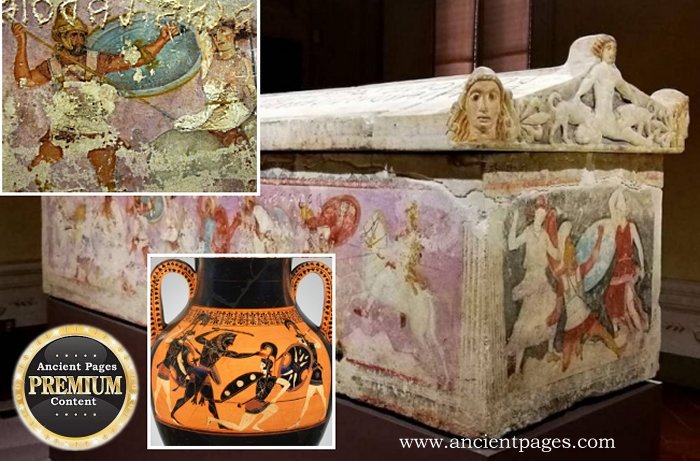
The painted alabaster sarcophagus dates to the 4th century BC (c. 350-325 BC). The four sides of it are decorated with polychrome paintings depicting dynamic scenes of Greeks and Amazons in battle. The beautiful artifact represents an ancient Greek tradition of Amazonomachy, depicting the struggle between the Greeks and the Amazons, illustrated in a variety of ways: on horseback, on foot, in a chariot, etc.
Some brave women are winning, but others must die in this terrible fight. Those who fought the Amazons were Achilles, Bellerophon, Dionysus, Theseus, and Heracles.

This is a preview of our premium article available only to members of Ancient Pages.
Become a member to read more - Click here
If you are already a member and have logged in to your account, you can access the article here

See also:
Tuchulcha: Wicked, Hideously Grotesque Etruscan Demon Identified With Both Male And Female Genders
Tages: Etruscan Prophet Who Revealed Sacred Knowledge Before He Vanished
Tyrannical Tarquin The Proud: The Seventh And Last King Of Rome Was Banished
More From Ancient Pages
-
 Trialeti Culture: Ancient Caucasian People Who Still Hold Their Secrets
-
 Daily Life Of Priests And Priestesses In Ancient Egypt
-
 Undeciphered Singapore Stone’s Carvings – New Attempt To Crack The Puzzle
-
 Scientists Solve The Mystery Of Cicero’s Puzzling Words By Analyzing Ancient Roman Coins – Evidence Of Financial Crisis?
-
 Susanoo-no-Mikoto – Shinto God Of The Sea And Storms Was Banished From Heaven
-
 The Untold Story Of The Great Sphinx – One Of The Greatest – Part 1
-
 Attempt To Smuggle Three Artefacts From Alexandria Port – Failed
-
 Gold Treasures Of Ancient King Discovered In North America Create Historical Problems
-
 Incredible Ancient Star Map Depicting Our Galaxy Is Hidden In Africa
-
 America’s Mysterious Pedro Mountain Mummy And The Hidden Race Of Little People
-
 Shennong – Chinese ‘King Of Medicines’ Who Invented Farming Tools And Herbs For Treating People’s Diseases
-
 Who Made The Mysterious Ancient Cave Paintings And Inscriptions In Oklahoma 2,500 Years Ago?
-
 Riddle Of The Indo-European Language – Which Of The Two Hypotheses Is Correct?
-
 Ruins Of Xunantunich – Mayan City That Once Flourished
-
 Summer Solstice Festivals Around The World – Midsummer Celebration Is An Ancient Tradition Still Alive
-
 Danger Lurking In The Woods – Mysterious Vanishings, Deaths And Unusual Behavior – Part 3
-
 Two Knights, One Horse − How A Legendary Knights Templar Symbol Has Puzzled And Fascinated Since The Middle Ages
-
 Mysterious Disappearance Of King Aegeus Of Athens After His Wedding
-
 Freemasons Secrets – American Democracy Is Part Of An Ancient Universal Plan – The Beginning And The Dream Of A Brotherhood Of Men – Part 1
-
 16 Dead Sea Scrolls Fragments Are Forgeries – U.S. Bible Museum Says

