AncientPages.com - The Knights Templar, a legendary monastic military order forged in the fires of the Crusades, continue to enthrall 21st-century audiences.
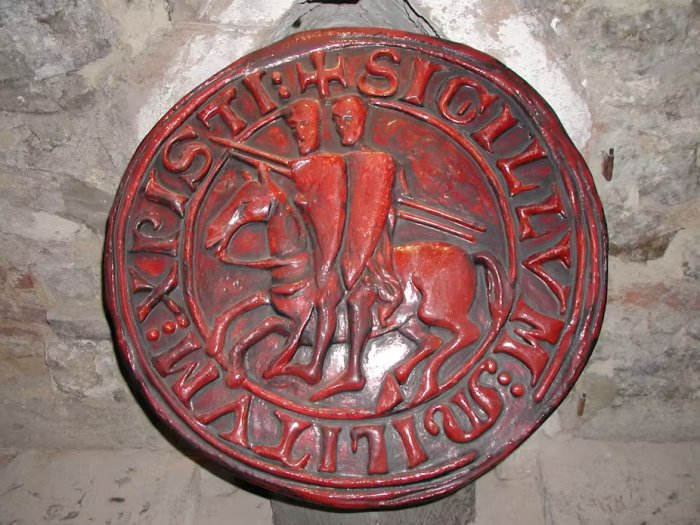
Did this seal symbolize the order’s poverty, homosexuality or companionship with Christ? Hinterkappelen/Wikimedia Commons, CC BY-SA
From the time of their founding in 1119 C.E. to their dissolution in 1312 C.E., the Templars’ mission was to defend Christian kingdoms in the Holy Land against the various Muslim powers that sought to return the region to Islamic rule. In service of this mission, the order fused two defining institutions of the early Middle Ages: the mounted knight and the pious monk.
At the time, this made the Templars something of a puzzle. How could someone be both a pious monk and a ferocious warrior? The Templars themselves tried to address this question in their symbology, which proved as puzzling as the order itself.
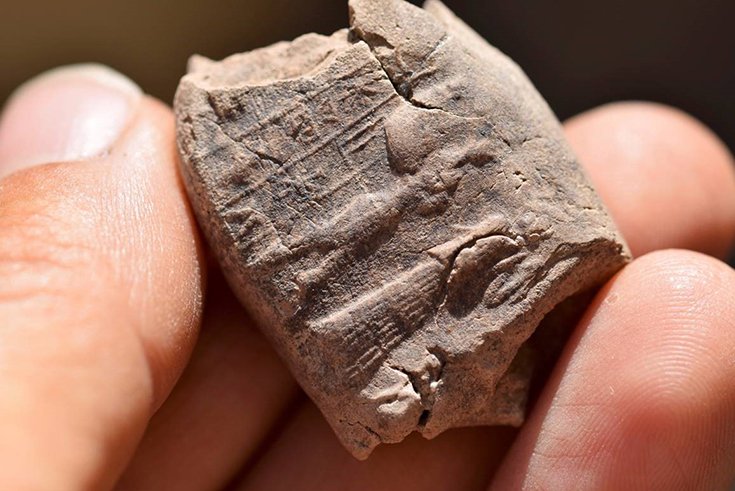
One of the Templars’ more enigmatic symbols was their wax seal – two knights riding a single horse. In the Middle Ages, people used seals to protect important communications from forgery, acting like a signature. Everyone from individuals to organizations had their own unique seal.
While the images on seals could be relatively simple and straightforward, they sometimes conveyed more subtle messages. The message of the Templars’ seal has always been open to interpretation.
Interpreting the Templar seal
While researching medieval geopolitics and the Third Crusade, I came across several interpretations of the Templar seal.
The most popular ties the shared steed to the Templars’ vow of poverty. While the Order was not literally financially constrained, the symbol likely was meant to demonstrate that the Templars took the vow seriously.
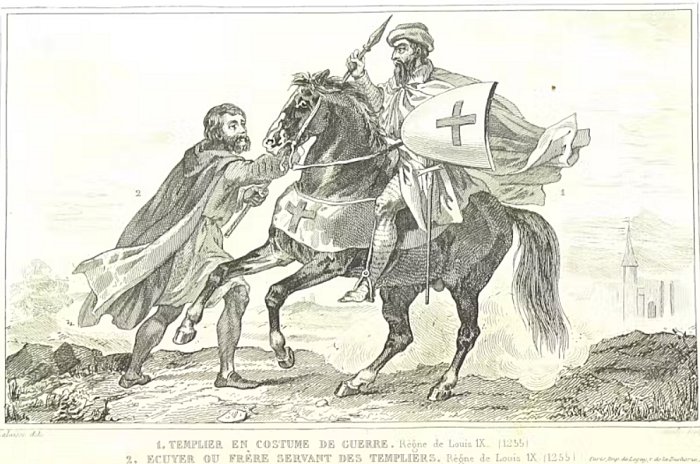
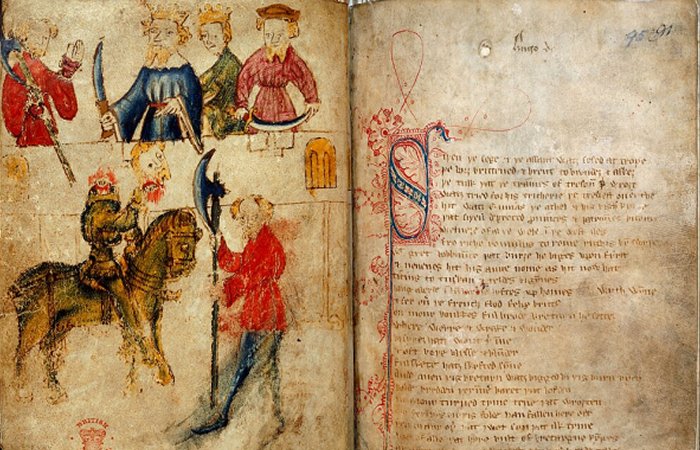
The Knights Templar were a military order of monks. From the archive of the British Library via Flickr, CC BY
Another draws a connection to the Gospel of Matthew, where one figure represents a knight and the other Jesus Christ. This interpretation stems from a Bible passage where Christ says, “For where two or three are gathered in my name, there am I with them.” The idea is that the two knights on a single horse embody the ever-present companionship of Christ with the Templars who had gathered in his name.
As part of a campaign to discredit the Templars, some suggested the two knights symbolized the homosexuality said to be rampant within the order.
Some propose that the two knights represent a duality within the order itself. The single horse could signify the unification of their seemingly contrasting roles as warrior-monk.
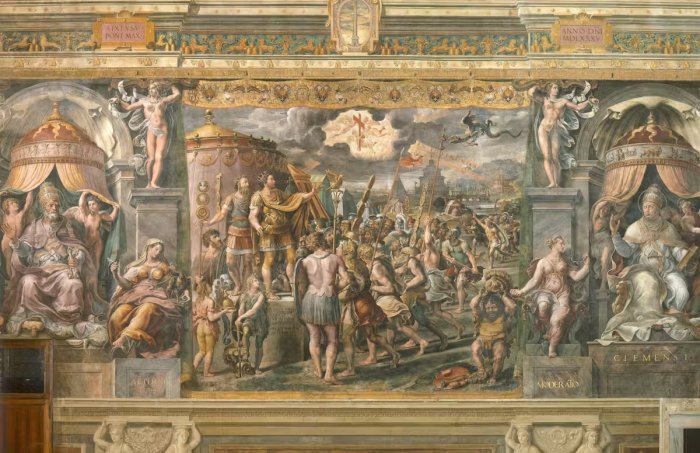
Constantine is said to have had a divine vision while preparing for battle. School of Raphael/Wikimedia Commons
The seal’s inscription adds another layer of intrigue. Originally, the inscription read “Sigillum Militum Christi” – Latin for “Seal of the Soldiers of Christ.” In the mid-13th century, the order’s 19th grand master changed the inscription to “Sigillum Militum Xpisti,” replacing the Latin word for Christ with the Greek. Some scholars argue that using the Greek letters “XP” instead of the Latin “CHR” was intended to invoke Emperor Constantine’s vision at the Battle of the Milvian Bridge in 312 C.E. His victory allowed him to end the official persecution of Christians in the Roman Empire.
Multiple meanings
While the exact meaning of the seal remains a riddle, there is little doubt it served as a powerful symbol of the knights’ commitment to their ideals.
The seal’s many interpretations resonate with different audiences. For some, it represents Christian soldiery and unwavering brotherhood. For others, it evokes the enigmatic nature of the Templars. And for others, it suggests corruption and sexual misconduct.
The seal serves as a window into the Knights Templar’s identity and impact on medieval Christian history. It is a symbol likely to continue to spark curiosity for centuries to come.
Provided by The Conversation
This article is republished from The Conversation under a Creative Commons license. Read the original article.