
Artifacts Discovered At Yirra Confirm Aboriginal People Lived In Pilbara During The Last Ice Age
Conny Waters - AncientPages.com - Archaeological excavation on a sacred site in the Pilbara has found proof Aboriginal people lived in the region during the last Ice Age.
Scientists have analyzed stone tools, charcoal, and bone collected from the Yirra rock shelter at Rio Tinto's Eastern Channar mine. The study results confirm the Yinhawangka people's ties to the land.
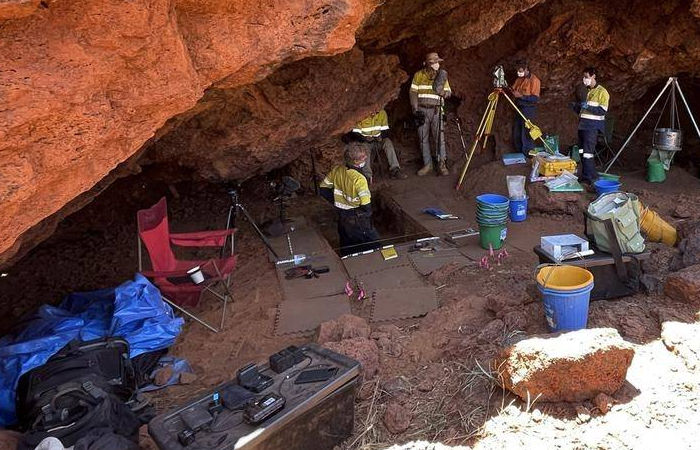
Artifacts collected at a Pilbara rock shelter show Aboriginal presence for over 50,000 years. Credit: Archae-aus
It is evident Aboriginal people lived in the eastern Pilbara region for more than 50,000 years, including throughout the height of the last Ice Age.
"The Yinhawangka Aboriginal Corporation commissioned the excavation project of the Yirra rock shelter at Rio Tinto's Eastern Channar mine about 17km southeast of Paraburdoo.
The project was led by YAC in collaboration with Archae-aus heritage consultants, and researchers from the University of Western Australia and had funding from Rio Tinto.
YAC chairperson Halloway Smirke said Yirra has great significance not only to the Yinhawangka people, but also to the Wangarada and Ngarngarada.
"We hope that Yirra will help us tell our ancestral story to Australia and our future generations," he said.
"We would still be visiting this site if it wasn't for the mining leases.
"All Pilbara groups should have this kind of science work done on cultural sites. Important sites like Yirra need to be protected, especially when they turn out to be amongst the oldest known places of human habitation in Australia."
Initial dating results indicate it is one of the oldest sites found in Australia, with Yirra providing proof of Aboriginal occupation in the region for more than 50,000 years and throughout the height of the last Ice Age," the Pilbara News reports.
According to Professor Peter Veth from the University of Western Australia, the early age range of this site is extremely important to the traditional owners of Yirra.
"Radiocarbon dating had shown the age of the site reached 23,000 years with hearths laid down during the Last Glacial Maximum," he said.
"By expanding the excavation and using new dating methods, such as optically stimulated luminescence dating, the age of the Yirra site has been extended to the radiocarbon 'barrier' — and beyond 50,000 years."
TO learn more about this historical site and those who lived there during the last Ice Age, scientists are now organizing an ongoing analysis of the Yirra site. This project requires collaboration between researchers and landowners.
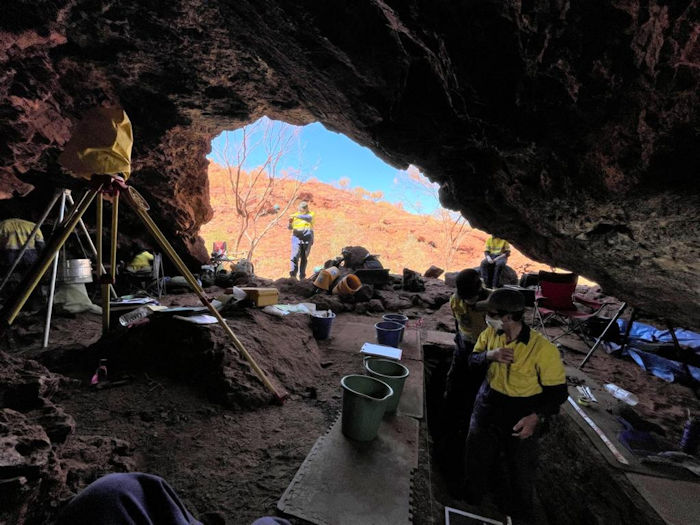
Excavation activity at Yirra. Credit: Archae-aus
According to the Pilbara news, the site was originally excavated by Archae-aus excavation project manager and director Fiona Hook with her husband Dr. Bruce Veitch and traditional owners more than 20 years ago."
They had long known the Yirra site was special and contained intact hearths from the last Ice Age. "There was no charcoal left to date after 23,000 years ago," Hook told the Pilbara News.
"We knew the old people were there before that as we found artifacts below the oldest date. We've now proven that beyond doubt."
See also: More Archaeology News
Rio Tinto iron ore chief executive Simon Trott said the findings were a major archaeological breakthrough of international significance, expanding knowledge of Aboriginal occupation in the Pilbara.
"We acknowledge the significance of Yirra and are committed to working in partnership with the Yinhawangka people to ensure it's preserved for future generations," he said.
Written by Conny Waters - AncientPages.com Staff Writer
More From Ancient Pages
-
 Burial Chamber Of Ankhesenamun, Tutankhamun’s Wife May Soon Be Found
-
 On This Day In History: Treaty Of Paris Was Ratified – On January 14, 1784
-
 Geomagnetic Fields Reveal The Truth Behind Biblical Narratives
-
 On This Day In History: Treaty Of Picquigny – Negotiations Between England And France – On Aug 29, 1475
-
 Figurines Unearthed At 9,000-Year-Old Çatalhöyük Site Symbolize Elderly Women, Not Goddess Cybele
-
 1,600-Year-Old Estate Of Wealthy Samaritan With A Rare Greek Inscription – Discovered
-
 Clay Cylinders With Oldest Known Alphabet Unearthed In Ancient Syrian City Of Umm-el Marra
-
 Mysterious Ancient Inscription With Unknown Language Found Near Lake Bashplemi, Georgia
-
 LIDAR Will ‘Map’ The Ground Surface To Reveal New Picture Of Ancient Native American Culture
-
 Ancient Mesopotamian Discovery Changes Our Understanding Of Early Agriculture Practices
-
 Oldest Human Remains In Northern Britain, Belonging To An 11,000-Year-Old Female Child, Discovered At Heaning Wood Bone Cave In Great Urswick, Cumbria
-
 Huge Defensive Wall Excavated At Tel Erani, Israel Is More Than 5,300 Years Old
-
 Remarkable Intact 700-Year-Old Ring With Image Of St. Nicholas Found In Jezreel Valley, Israel
-
 Ice Mummies Of Pazyryk Culture In Siberia Had Complex Tattoos On Their Bodies
-
 Hidden Silver Casket With Bones Of 13th Century Saint Found
-
 Ancient Brewing And Natufian Rituals – What Came First, Beer Or Bread?
-
 New Clues To Minoan Writing System
-
 Dozens Of Ancient Villages Discovered In British Columbia – The Pit Houses ‘Older Than The Pyramids’!
-
 Bronze Age DNA Shows Direct Genetic Link To Current Inhabitants Of Southern Poland
-
 On This Day In History: Tycho Brahe 1st Sketches “Tychonic System” Of Solar System – On Feb 13, 1578

