
Coricancha – Stunning Golden Garden And Lost Treasures Of The Inca
Ellen Lloyd - AncientPages.com - Today, there are only some ancient ruins left, but during the times of the Inca, Coricancha must have been a marvelous place to see. Coricancha was a garden of gold and silver where the Inca placed small, beautiful metal objects created in the image of plants, animals, and people.
Located in the Inca capital at Cuzco, Peru, the Coricancha (Qorikancha) complex contained the Temple of The Sun. It was dedicated to significant Inca deities such as the Creator God Viracocha, the Moon Goddess Quilla, and the Sun God Inti.
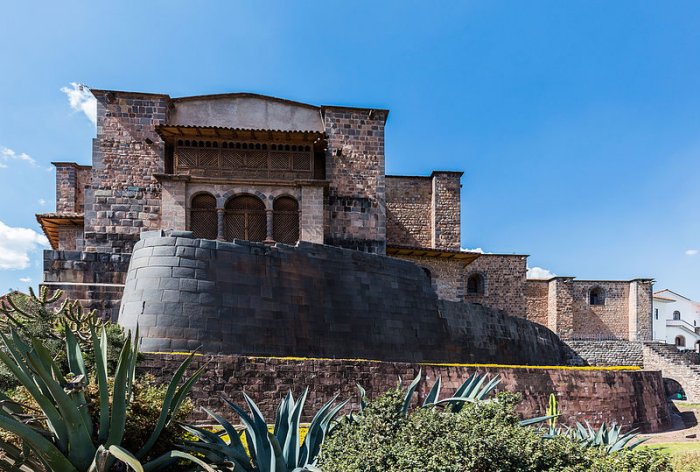
Coricancha, Cusco, Peru. Credit: Wikipedia
Myths and legends tell the Inca transported large quantities of gold to decorate the temples and their golden garden.
Qori" means goldwork, and its Spanish form is cori. "Kancha" represents an enclosed space bounded by walls. Hence, the name corresponds to approximately "place that has gold."
It is not entirely clear who constructed the Coricancha complex. The site is usually attributed to Pachacuti Inca Yupanqui, the 9th Inca ruler (1438-1471 CE). Still, Inca mythology reveals legendary Manco Capac built a temple at the site in the early 12th-century C.E, and archaeologists have unearthed pre-empire structures.
As previously mentioned in another article published on Ancient Pages, Manco Capac was the legendary founder of the Inca dynasty of Peru.
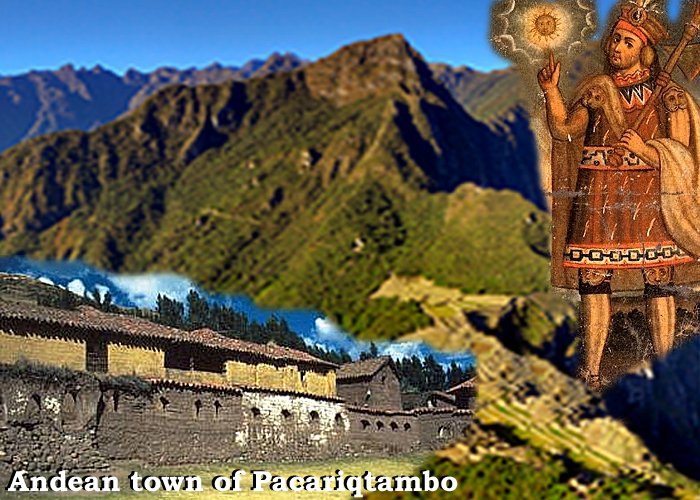
According to the Inca, Manco Capac emerged from one of the three openings in the mountain Tambotoco, near Pacaritambo (or Pacariqtambo) ('tavern of the dawn'), located some six leagues (approximately 33 km) to the south-southwest of Cuzco, Peru.
Even though his figure is mentioned in several chronicles, his existence remains unclear.
While he remains a semi-mythical figure whose actual period cannot be clearly pinpointed, he is regarded as an Inca hero. Many ancient legends connect Manco Cápac to the foundation of Cuzco.
The Lost Treasures Of Coricancha
The garden of the temple was dedicated to the great Sun God Inti. The Inca brought many offerings to their mighty deity; all garden objects were made of gold or silver.
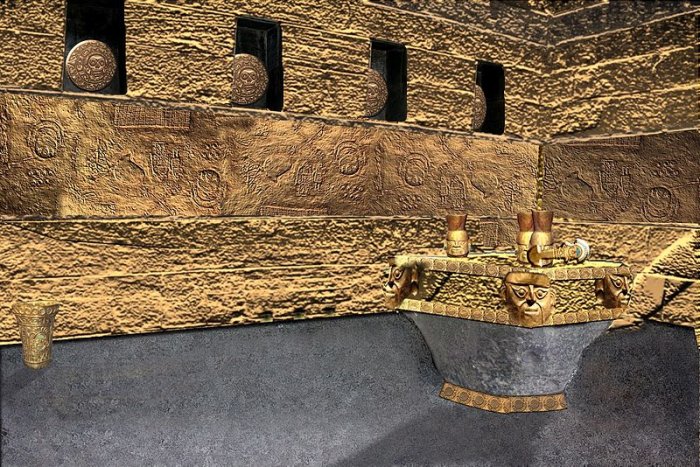
A digital reconstruction of the room when it was filled with gold. Credit: Martinangel, Wikipedia
When the Spaniards entered Coricancha, they looted all Inca treasures and sent them to Spain.
Pedro de Cieza de León describes a golden garden in his 1554 account:
"In the month of October of the year of the Lord 1534, the Spaniards entered the city of Cuzco, head of the great empire of the Inkas, where their court was, as well as the solemn Temple of the Sun and their greatest marvels. The high priest abandoned the temple, where [the Spaniards] plundered the garden of gold and the sheep [llamas] and shepherds of this metal along with so much silver that it is unbelievable and precious stones, which, if they were collected, would be worth a city."
According to records from 1534, the Spanish king Charles V had a gold maize stalk with three leaves and two ears of corn in his collection. Royal inventories also describe gold and silver llamas, female figures, a lamb, and a male figure that is believed to have originated from Coricancha.
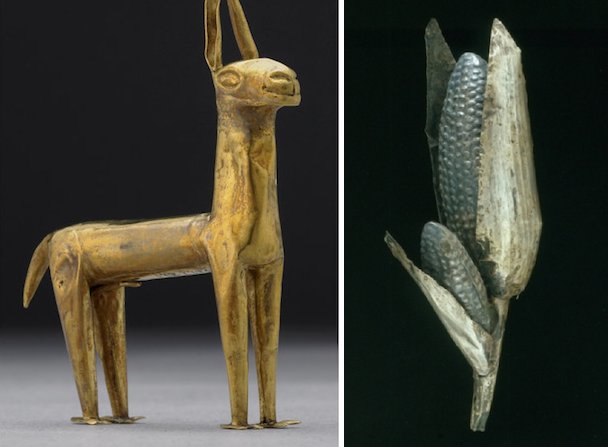
Left: Miniature gold llama figurine, Inka, 6.3 cm high, © Trustees of the British Museum. Right: Maize cobs, Inka, c. 1440–1533,(Ethnological Museum, Berlin)
To the Inca, who produced these small objects, the offering had much greater value than gold. The offerings had a symbolic meaning, and the miniatures of animals, plants, and figures acted as symbols of the Inca's supernatural origin in the Sun and their control over the natural world as descendants of the most powerful deity.
Today, almost nothing remains of the magnificent ancient Inca treasures except a few golden corn stalks.
The magnificent golden garden of the Inca is long gone, but fortunately, its history has not been forgotten.
If you are interested in lost Inca treasures, you may find the story of the Lost Golden Chain Of Huayna Capac intriguing.
Updated on March 24, 2024
Written by Ellen Lloyd – AncientPages.com
Copyright © AncientPages.com All rights reserved. This material may not be published, broadcast, rewritten or redistributed in whole or part without the express written permission of AncientPages.com
More From Ancient Pages
-
 Beautiful And Unique Ancient Roman Hoard Discovered In UK
-
 Giant Egyptian Pyramids Hidden Beneath The Sand Dismissed By Egyptologists Without Investigation!
-
 Connection Between Viruses And Ancestors Of All Complex Life Has Been Found
-
 Sculpted Head Of Ancient Warrior Wearing A Serpent Helmet Found At Chichen Itza
-
 3,500-Year-Old Neo-Hittite Hieroglyphs Found In Cappadocia
-
 Unexplained 17th Century Encounters With A Malevolent Entity That Defy Rational Explanation
-
 Yet Another Beautiful Roman Mosaic In Hatay, Turkey
-
 Archaeologists Have Discovered A Mummy Wrapped In Gold – Here’s What It Tells Us About Ancient Egyptian Beliefs
-
 Huge Ancient Mesoamerican Scorpion-Shaped Mound Served As An Astronomical Observatory – Not Just For The Elite But Farmers Too
-
 Hiidenkirnut: Spectacular Millennia-Old Devil’s Churns In Finland
-
 Tarkhan Dress – The World’s Oldest Woven Garment
-
 Ming-Era Two Shipwrecks With 100,000 Ancient Relics Examined By Scientists
-
 These Curious Burials Could Challenge Historians’ Ideas About Anglo-Saxon Gender
-
 Assyrian King Ashurbanipal’s Great Library With Thousands Of Cuneiform Tablets
-
 On This Day In History: The Battle Of Fulford – King Hardrada Against Saxon Troops – Was Fought – On Sep 20, 1066
-
 New Light On Prehistoric Chalk Plaques From Stonehenge Using Innovative Technology
-
 On This Day In History: Peasants’ Revolt First Great Popular Uprising In English History – On June 12, 1381
-
 Has The Mystery Of The Secret Sarcophagus Found At Notre-Dame Cathedral Been Solved?
-
 Ancient Roman Statues of Goddess Venus And Other Precious Artifacts Found In A Trash Pit In France
-
 London’s Underground Rivers Were Deliberately Hidden

