
Silphium – Remarkable Ancient Herb That Mysteriously Vanished
Ellen Lloyd - AncientPages.com - Once, a long time ago, there was a very precious herb in the ancient city of Cyrene, a Greek city on the North African coast near present-day Shahhat, a town located in northeastern Libya.
According to one legend, Silphium was first discovered after a “black” rain swept across the east coast of Libya over two and a half millennia ago. The herb spread its broad roots ever further from then onwards, growing luxuriantly on lush hillsides and forest meadows.
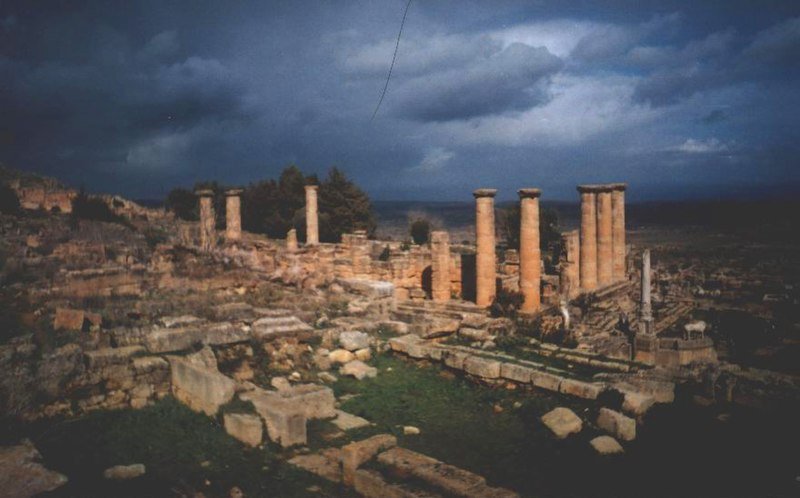
Ancient ruins of Cyrene. Credit: Wikimedia Commons - CC BY-SA 3.0
In time, ancient people discovered that the herb known as silphium was amazing in several ways. Silphium was so delicious and useful that the plant became very valuable.
Ancient cultures used silphium for medical applications, and the plant could help with several health problems.
According to Roman author Pliny, the Elder repeated fumigations with the root could be used to treat bites of feral dogs as well as problems related to growths of the anus.
Silphium had a wonderful smell. The perfume was coaxed from its delicate blooms while its sap was dried and grated liberally over dishes from brains to braised flamingo. Known as “laser,” the condiment was fundamental to Roman haute cuisine as eating your food horizontally in a toga.
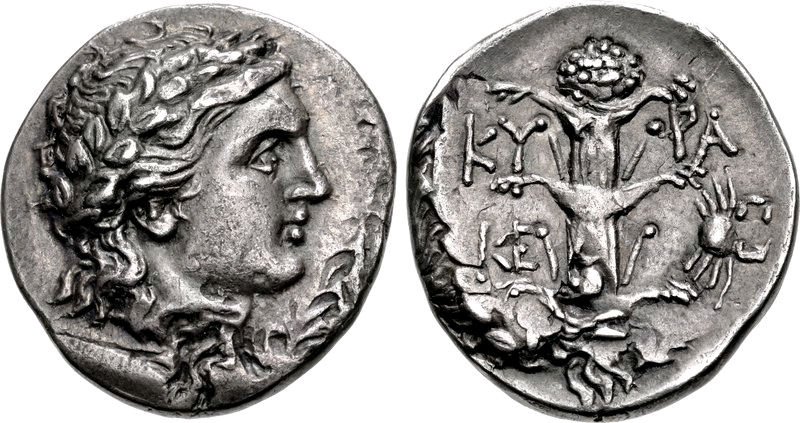
Silphium was so fundamental to Cyrene's economy. The locals stamped its image on their money. Image credit: Classical Numismatic Group, Inc - CC BY-SA 3.0
Ancient people placed it in the bedroom where its juice was drunk as an aphrodisiac or applied “to purge the uterus.”
Some scholars have suggested the herb was the first genuinely effective birth control. The seeds of the herb are heart-shaped, and some think this could be why we associate the symbol with romance to this day.
Ancient Romans were so fond of Silphium that they referenced their darling herb in poems and songs. The herb was also mentioned in great works of literature.
For centuries, local kings held a monopoly on the plant, which made the city of Cyrene, at modern Shahhat, Libya, the richest in Africa. Before they gave it away to the Romans, the Greek inhabitants even put it on their money. Julius Caesar even went to store a cache (1,500lbs or 680kg) in the official treasury.
There are many reasons why Silphium was worth its weight in gold.
Sadly, Silphium has vanished. Not only from the region but our planet altogether.
Pliny The Elder wrote that within his lifetime, only a single stalk was discovered. It was plucked and sent to the emperor Nero as a curiosity sometime around 54-68 AD.
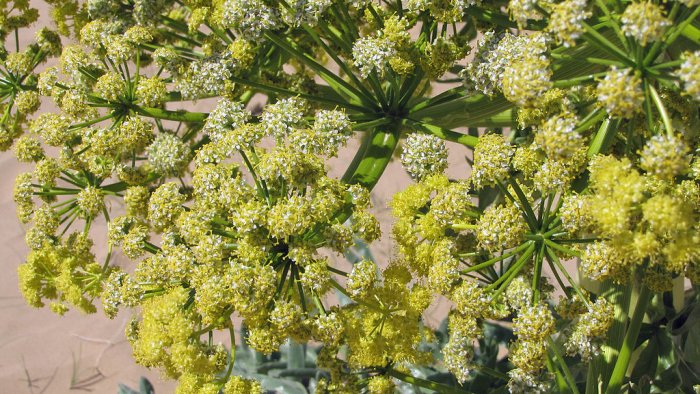
Silphium is thought to have been a close relative of asafoetida. Image credit: Valery Fassiaux - Public Domain
Why Silphium vanished is unknown. Perhaps the plant was over-harvested and overgrazed. Its own biology may have also undermined it.
Interestingly, scientists discovered that asafoetida silphium might have belonged to a group of fennel-like plants, the Ferula.
These plants are related to carrots and grow wild as weeds across North Africa and the Mediterranean.
Incredibly, two of these plants – giant Tangier fennel and giant fennel – still exist in Libya today. One of these may be Silphium.
Maybe it’s still possible to re-discover the lost ancient plant Silphium.
Written by Ellen Lloyd – AncientPages.com
Copyright © AncientPages.com All rights reserved. This material may not be published, broadcast, rewritten or redistributed in whole or part without the express written permission of AncientPages.com
More From Ancient Pages
-
 Sphinx Room Discovered At Emperor Nero’s Famed Domus Aurea (Golden House)
-
 Saptarishi – Seven Sages Who Guided Humanity During Four Great Ages
-
 Paris Of Troy: He Caused Destruction Of Troy As The Seer Had Predicted
-
 Tezcatlipoca: Enigmatic Aztec God Who Looked Inside People’s Hearts And Observed Their Deeds On Earth
-
 ‘Domus de Janas’ Underground Tombs Dated To 3400-2700 BC And Built By Ozieri Culture On Sardinia
-
 Remarkable 2,000-Year-Old Smoke-Absorbing Lamps Reducing Pollution Discovered
-
 Spectacular Chand Baori Stepwell Of India That Resembles Reversed Pyramid
-
 Did The Great Sphinx Of Giza Have A Twin And Was It Destroyed By A Lightning Strike?
-
 12 Ancient Egyptian Symbols Explained
-
 Levänluhta People Could Survive Fimbulwinter Thanks To Their Diverse Livelihoods
-
 Traces Of Advanced Beings Who Walked Earth Millions Of Years Ago: Controversial Ancient History Examined
-
 A 1,000-Year-Old Bronze Coin Accidentally Discovered By A Little Boy
-
 Lady Cao – Moche Queen Who Re-Wrote Ancient History
-
 Hellenistic Decorated Tombs And Tombstone Probably Used As A False Door Unearthed In Egypt
-
 The Third Greatest Fire Temple That Existed In Ancient Iran’s Sassanid Age – Unearthed
-
 Ancestral Puebloans Survived Devastating Climate Change Hiding In New Mexico Lava Tubes
-
 Mount Nemrut: ‘Throne Of The Gods’ – Mysterious Royal Tomb Surrounded By Gigantic Sculptures
-
 How Did A Roman Sarcophagus End Up On A Beach Near Varna In Bulgaria?
-
 Rare Viking Boat Burial At Kiloran Bay In Colonsay, Scotland Remains A Fascinating Find
-
 Spectacular Ancient Underground ‘Stonehenge’ Dolmen De Soto Reveals Its Secrets

