
Hadrian’s Wall: North-West Frontier Of The Roman Empire For Nearly 300 Years
A. Sutherland - AncientPages.com - The Romans were skilled builders, and throughout their vast empire, we find their impressive, massive, and long-lasting structures.
"The most impressive Roman remains in Britain today are military. Foremost amongst them are the fortifications of Hadrian's Wall, which hint at Britain's place within the Roman Empire.

It was not a sleepy, urbanized province like Greece, Italy, or North Africa. Britain sat on the edge of the empire, somewhat precariously, since half of the island lay within the sphere of "Barbaricum."
Warfare, or the threat of it, was a fact of life.: three of Rome's thirty legions sat here waiting to test their mettle against the hostile tribes of the north." 1

This is a preview of our premium article available only to members of Ancient Pages.
Become a member to read more - Click here
If you are already a member and have logged in to your account, you can access the article here

See also:
Scipio Africanus – Rome’s Greatest General Who Defeated Unbeatable Hannibal
Ancient City Of Timgad: Largest Roman Settlement Ever Built In North Africa
More From Ancient Pages
-
 Årsgång – Year Walk In The Forest – Mystical Journey To Gain Knowledge About The Future – An Ancient Swedish Ritual
-
 Amergin: First Druid And ‘Wondrously Born’ Son Of Mil, Founder Of Poetry, Was Judge In Irish Mythology
-
 Utiseta – Norse Vision Quest – Ancient Spiritual Tradition Of Northern Europe
-
 Mystery Of The Man Whose Supernatural Abilities Still Captivate Scientists
-
 Unusual Viking Secret Hidden Underground In California Reminds Of A Similar Discovery In Colorado
-
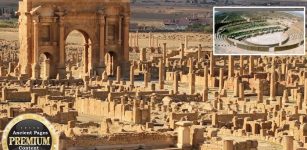 Ancient City Of Timgad: Largest Roman Settlement Ever Built In North Africa
-
 Was Tintagel Castle A Fortress Used By Iconic Hero King Arthur?
-
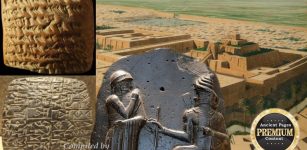 How Did Mesopotamia Change The World?
-
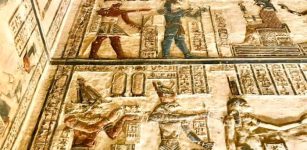 New Images From The Magnificent Dendera Temple Where Restoration Works Continue
-
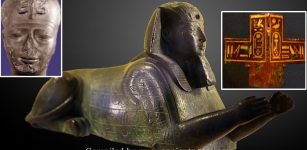 Pharaoh Apries: Was The Betrayed Egyptian King Murdered By His Own People?
-
 Has The Mystery Of The 11,000-Year-Old Amazonian Rock Art Been Solved?
-
 Sirrush – Powerful “Glamorous Snake” Guarded Marduk But Did This Hybrid Really Exist?
-
 Ruins Of Xunantunich – Mayan City That Once Flourished
-
 Khepri – Egyptian Progenitor God, Spirit Of Life, Resurrection And The Rising Sun
-
 Mysterious Ancient Ruins Of Fortress Discovered In Scottish Highlands
-
 Are The Ten Commandments Based On The Forty-Two Principles Of Maat That Appeared 2,000 Years Earlier?
-
 Stunning 3,400-Year-Old Palace Of the Kingdom Of Mitanni Discovered Thanks To Drought
-
 Nicolas Bourbaki: The Greatest Mathematician Who Never Was
-
 Puzzling Ancient Artifacts And Skeleton Discovered In Iowa – Evidence Of A Lost Ancient Civilization?
-
 Maya Storm God Huracán Taught That When We Damage Nature, We Damage Ourselves

