
Yum Kaax, Mayan God Of Agriculture, Lord Of Woods And Caretaker Of Animals
A. Sutherland - AncientPages.com - The pantheon of early South and Mesoamerican gods included many deities to whom people regularly made offerings.
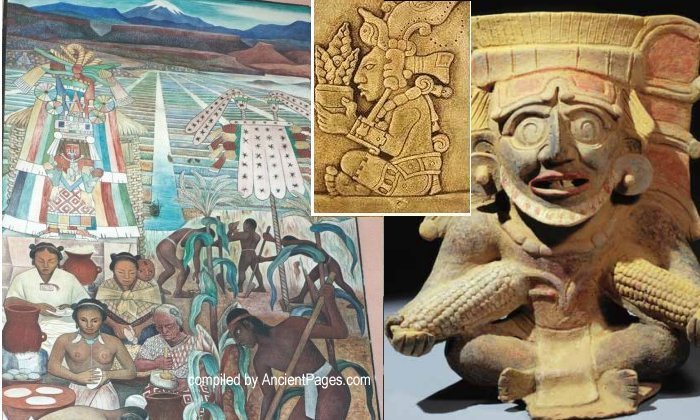
One of them was Yum Kaax (also known as Ah Mun, Yum K'aax, or Yum Uil), often portrayed with the most sacred food of the Maya people - corn. His name originates from the Maya words 'Yum' ("lord") and 'Kaax' ("forest") or "the wild."
Therefore, this great deity is, first of all, Lord of the Forest and guardian of all wildlife.
The ancient Maya regarded Yum Kaax as a benevolent agricultural god symbolizing abundant life and prosperity. During the Classical period, he was identified as a priest watering corn grains over Mother Earth's head.
Among his most respected titles were "lord of the forest land" (or "lord of the forest") and "Lord of the harvest." In many Mayan beliefs, he was the god of corn and agriculture, the ruler of the jungle and nature.
Yum Kaax whose counterpart in the Totonac culture was Centeotl, was known to have a passive nature, making him helpless and frequently attacked by birds, insects, and troublesome rodents. He depended on Chac, the god of life-giving rain, and on humans, who represented Yum Kaax's greatest and most trusted ally.
The Maya people in ancient times believed that by their rituals, they could attract the rain needed for grains and leaves, free them of weeds, and drive away or at least discourage pests that harmed them.
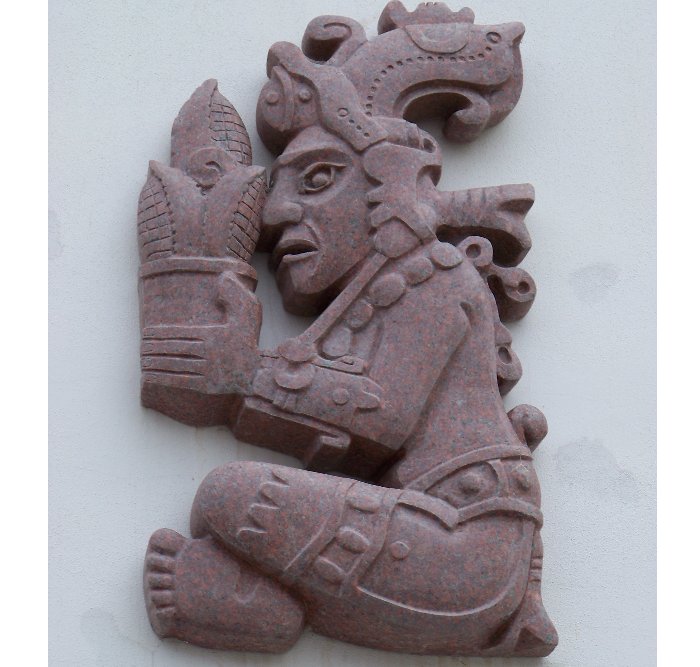
Relief image of Yum Kaax in front of the entrance to the Botanical Garden of Teplice, Czech Republic. Source
Yum Kaax was a grateful deity showing his gratitude for good people by providing life for them through his food. It was his way of showing that he could give much in return for all this care.
The One Who Punished Bad Hunters
As the patron of the cultivation, Yum Kaax was involved in a variety of agricultural works. He protected animals and plants for human use and nourishment and helped those who hunted for their food.
Yum-Kaash was honored and loved, and the hunters respected this young god. He could either lead them to good hunting or punish them by turning the arrow back if proper respect was not given to an animal. Therefore, they had to direct special prayers and perform certain rituals, asking for Yum Kaax's permission and guidance, particularly during the hunting of deer.
An old legend says that if a hunter gets deep into the forest without asking the deity for permission, he may be in danger of being harmed or lost. Sometimes, he can return home safely but may experience particular food, water, or possessions losses. The hunters in old times believed that Yum Kaax protected the forests, cared for wild animals, and punished evildoers who harmed them.
Also, farmers invoked him before clearing the land for cultivation and wanted to receive his benefits and indispensable help in case of need.
In ancient Mayan society, keeping a good relationship with their gods was vital, so it was not strange that sometimes human sacrifices were made to please the deities.
In the pantheon, Yum Kaax—a symbol of youth and strength—was among the youngest Mayan gods. Among the Mayans of Yucatan, he was often considered the son of Itzamna and Ixchel, the rainbow goddess.
One of Yum Kaax's physical representations was a young man wearing a headdress in the form of corn and holding a corn cob with both hands. Another time, as the Lord of Woods, he has a vase with three ears of corn. Therefore, he was often mistaken for a god of corn.
The Mayans kept their belief that this young god kept their crops healthy, preventing them from starving to death. When the field withered up, Yum-Kaax perished, and when it turned green again, the deity resurrected. It frequently happened that the deceased Maya ruler in the afterlife was depicted as the young god of maize. The Mayans believed that the gods from cornmeal created them.
As the Lord of the Harvest, Yum Kaax symbolized the resurrection and rebirth of life. He represented the cyclical nature of all life on our planet.
Written by – A. Sutherland - AncientPages.com Senior Staff Writer
Updated on March 30, 2024
Copyright © AncientPages.com All rights reserved. This material may not be published, broadcast, rewritten or redistributed in whole or part without the express written permission of AncientPages.com
More From Ancient Pages
-
 Enigmatic 2,000 -Years-Old Carved Stone Owl Pipes – An Ancient Unsolved Secret Of Illinois
-
 Rare 2,500-Year-Old Scythian Bone Sceptre Discovered In Bulgaria
-
 35,000 Unique Artifacts Discovered In 720-Year-Old Iroquoian Village In Canada
-
 What Were The Most Important Inca Laws That All Citizens Had To Respect?
-
 Mystery Of The Ancient Red Sign Witnessed In The Sky Over Japan
-
 Imago Mundi: Famous Babylonian World Map Is The Earliest Known In The World
-
 When Science, Spirituality and Magic Meet – Re-Discovering Old Ancient Knowledge
-
 What Can Archaeology Tells Us About Climate Change?
-
 On This Day In History: Battle Of The Egadi Islands Took Place – On Mar 10, 241 BC
-
 Rare Minoan Sealstone Is A Miniature Masterpiece Unearthed In 3,500-Year-Old Tomb Of Powerful Mycenaean Warrior
-
 Wreckage of The French Steamship That Sank In Atlantic In 1856 Found Off The Coast Of Massachusetts
-
 Norse God Tyr Who Gave Viking Warriors Courage And Self-Confidence In Battle
-
 Denisovans Or Homo Sapiens: Who Were The First To Settle Permanently On The Tibetan Plateau?
-
 The Chinese Nostradamus And His Striking Predictions
-
 Why Should There Be An Iron Throne Inside The Cheops’ Pyramid?
-
 Baths Of Caracalla: Italian Antique Thermae Complex For Leisure, Gossip, Business And Socialisation
-
 Prehistoric Sime Skeleton And Now 15,000-Year-Old Bone Pendant Depicting ‘Venus’ Found In Vlakno Cave, Croatia
-
 Bassetki Cuneiform Tablets Reveal Location Of Lost City Of Mardaman In Northern Mesopotamia
-
 Cannabis Protected India’s Famous Ellora Caves From Decay For 1,500 Years
-
 Resourceful Neanderthals Could Dive 13ft If Necessary To Collect Shells

