
Mansehra Rock Edicts – Last Words Of Emperor Ashoka
Ellen Lloyd - AncientPages.com - Emperor Ashoka (304 B.C -232 B.C.) is long gone but this great historical figure left behind an everlasting legacy and he is remembered for his energy, determination, and promotion of Buddhism. Considered one of India's greatest emperors, Ashoka ruled almost all of the Indian subcontinent from 268 to 232 B.C.
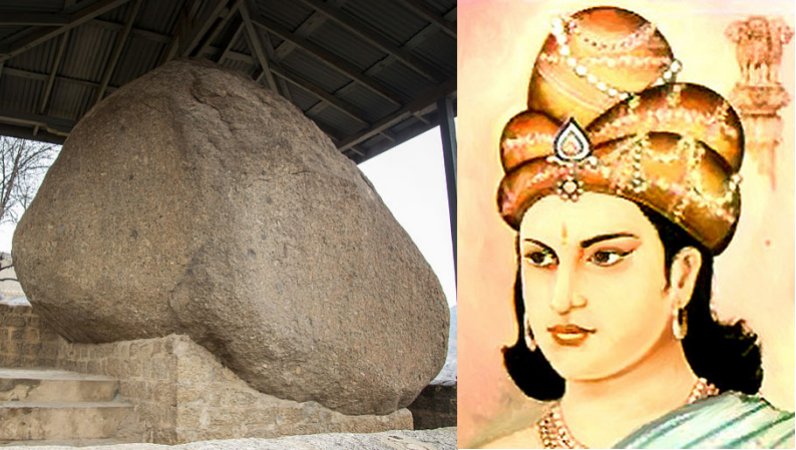
Left: The giant rock of Ashoka. Credit: Faysal Elahi, CC BY-SA 4.0 - Right: Artistic impression of Emperor Ashoka. Credit: Pinterest
“From the Volga to Japan his name is still honored. More living men cherish this memory today than have ever heard the names of Constantine or Charlemagne,” H.G. Wells writes in the Outline of History. 1
The early part of his reign was undoubtedly bloodthirsty, but after witnessing the mass deaths of the Kalinga War, Emperor Ashoka changed as a person and converted to Buddhism.
Emperor Ashoka won the Kalinga War, a battle fought between him and the Mauryan army led by King of Raja Anantha, but the price was high. The war took a tremendous toll of life and property. More than 100,000 soldiers were killed, and 150,000 civilians were deported.
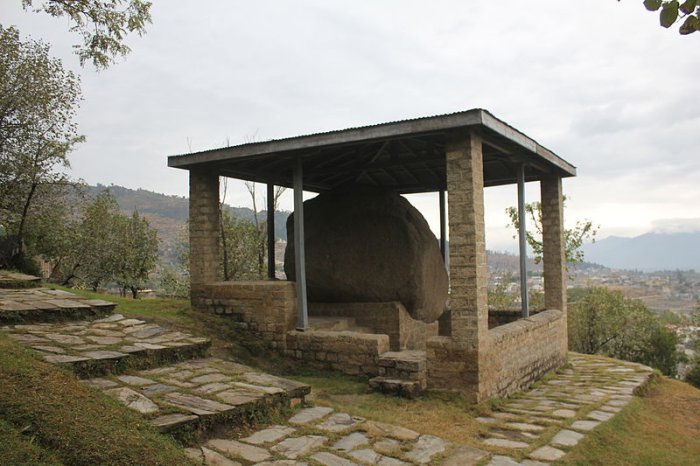
One of the major rock edicts with an inscription made by Emperor Ashoka. Credit: Muhammad Zahir, CC BY-SA 3.0
Legend tells that one day after the war had finished, Emperor Ashoka came to the city and he was shocked to see the complete destruction and dead corpses. The horrible scenes of death led to his conversion to Buddhism and he became a more peaceful emperor.
Emperor Ashoka’s last words were preserved for future generations. The Mansehra rock edicts, cut into the surface of three large boulders can be found on a small rocky mountain outside the city of Mansehra in Khyber Pakhtunkhwa province of Pakistan. The edicts date back to the 3rd century B.C. and it is widely believed the text is written in the ancient Indic script of Gandhara culture, Kharosthi.
In the fourth rock edict and three others, scientists found evidence that Emperor Ashoka “wished to remind his subjects of certain religious shows at which he had exhibited to them in effigy the gods whose abodes they would be able to reach by the zealous practice of dhamma.” 2
On the thirteenth edict, Emperor Ashoka expressed his feelings after witnessing the destruction of Kalinga.
According to the translated text, Ashoka felt great remorse for what had happened.
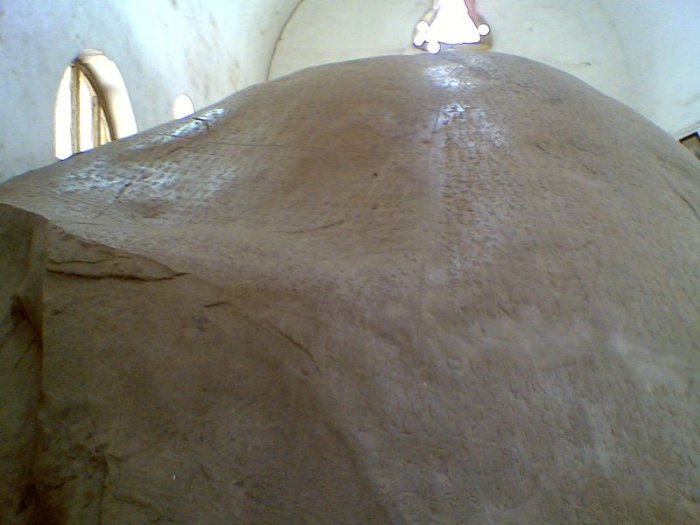
Major Rock Edict contains inscriptions by Ashoka. Credit: Jadia Gaurang, CC BY-SA 3.0
“Directly after the Kalingas had been annexed began His Sacred Majesty’s zealous protection of the Law of Piety, his love of that Law, and his inculcation of that Law. Thence arises the remorse of His Sacred Majesty for having conquered the Kalingas, because the conquest of a country previously unconquered involves the slaughter, death, and carrying away captive of the people. That is a matter of profound sorrow and regret to His Sacred Majesty.” 3
The Mansehra rock edicts are of great historical importance, but due to environmental degradation, the ancient script is fading away and it’s almost impossible to read the message today. Pakistan has tried to cover the rocks with canopies to shelter the boulders from weather conditions. Hopefully, this important historical site can be saved, and the last words of Emperor Ashoka will still be accessible to future generations.
The site has been submitted for inclusion in the UNESCO World Heritage Sites and is currently on the tentative list.
Written by Ellen Lloyd – AncientPages.com
Copyright © AncientPages.com All rights reserved. This material may not be published, broadcast, rewritten or redistributed in whole or part without the express written permission of AncientPages.com
Expand for references- G. Wells – The Outline of History
- Hultzsch, E. "New Readings in Asoka's Rock-Edicts." Journal of the Royal Asiatic Society of Great Britain and Ireland, 1913, 653-55
- Vincent Smith - Asoka: The Buddhist Emperor of India
More From Ancient Pages
-
 Jebel Sahaba: Analysis of 13,000-Years-Old Bones Reveals Prehistoric Violent Raids But Not A Single Armed Conflict
-
 Unclear Purpose Of Mysterious Rock-Cut City Of Petra – Was It A Fortress Or Sacred City?
-
 What Ancient Dung Reveals About Epipaleolithic Animal Tending
-
 Guardians Of The Mounds – Battle To Save Scythian Burial Mounds From Destruction Continues
-
 2,000 Year-Old Books Written By Bian Que The Divine Healer Unearthed
-
 ‘Face Of First European’ – Oldest Fossil Of European Human Ancestor Found At Spain’s Atapuerca Archaeological Site
-
 Underwater Artifacts Shed New Light On Battle Of The Egadi Islands Between Romans And Carthage
-
 Hypnos: God Of Sleep Who Owns Much Of Our Lives In Greek Mythology
-
 World’s Oldest Toy Car – Could This 7500-Year-Old Discovery Be The Earliest Evidence Of The Wheel?
-
 Mysterious Ancient Inscriptions Never Meant To Be Read – Biblical Secrets Revealed
-
 Yama – Hindu God Who Rules Over The Dead And Souls And Guards Akashic Records
-
 Evidence Humans Used Fire 1 Million Years Ago In Israel Discovered By Artificial Intelligence
-
 Susanoo-no-Mikoto – Shinto God Of The Sea And Storms Was Banished From Heaven
-
 The Untold Story Of Mexico’s Ancient Giant Indians – Cunning Plan And The Evil Nation – Part 2
-
 ‘Tonina Chiapas’ Mayan Pyramid In Southern Mexico Is Among The Largest Yet Found
-
 Maat – Ancient Egypt’s Most Important Religious Concept
-
 Viking Burial Rituals: High Ancient Funeral Pyre Reflected High Social Status
-
 Strange Case Of The ‘Impossible’ Glove Remains Unexplained – The Discovery – Part 1
-
 Water Storage Failure And Short-Lived Koh Ker Capital Of Khmer Empire
-
 Lost Kingdom Of Cleopatra – Legendary Lost City Of Heracleion

