
Ranikot Fort: Gigantic Great Wall Of Pakistan Shows Greatness Of Indus Valley Civilization
A. Sutherland - AncientPages.com - Ranikot Fort also known as the Great Wall of Sindh is a historical fort near Sann, Jamshoro District, Sindh, Pakistan. Even its remains show the greatness of the Indus valley civilization of the third millennium BC.

The fortification wall runs on three sides of the area, while on the northern side the lofty peaks of the higher hillocks serve as a wall.
Ranikot Fort- located 90 kilometers (56 mi) to the north of Hyderabad - is most probably one of the world's largest forts.
The fort’s eastern gate is known as Sann Gate and the whole structure is really gigantic; it is 35 km in length and connects barren hills. The fortification wall, which has solid semi-circular bastions at several intervals, perfectly follows the natural contours of the hilly landscape of the region.
The fortification wall runs on three sides of the area, while on the northern side the lofty peaks of the higher hillocks serve as a wall.
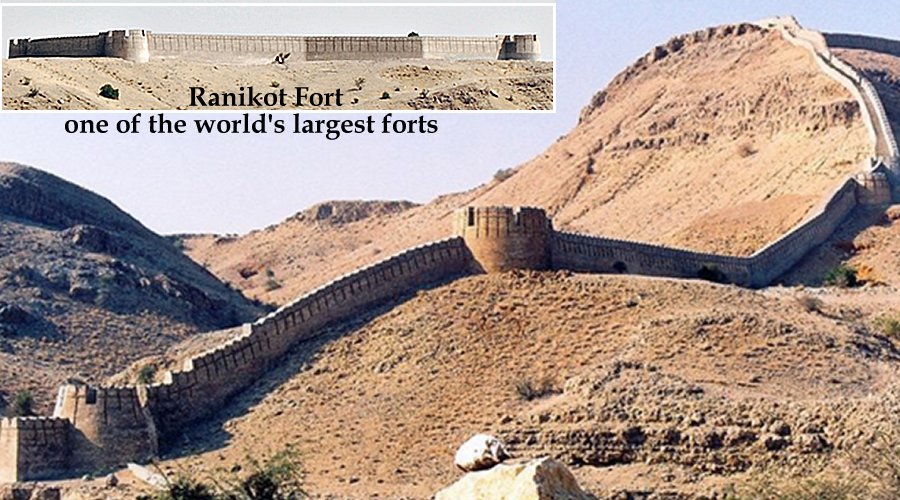
The northern part of the fort's perimeter is a natural high hilly formation while on the other three sides it is covered by fort walls. Within this main fort, there is a smaller fort known as the "Meeri" which is about 5–6 miles from the entry gate of the main fort and is reported to have served as the palace of the royal family of Mirs.
The original purpose and architects of Ranikot Fort are unknown. However, it is believed that the fort was built during the regimes of the Sassanians, the Scythians, the Parthians, or the Bactrian Greeks.

Archaeologists point to the 17th century as the time of its first construction but Sindh archaeologists now agree that some of the present structures were reconstructed by Talpurs in 1812.
Radiocarbon tests conducted at the Sann Gate confirmed that this gate was probably renovated between the early part of the 18th century and the early part of the 19th century, prior to Britain invading the fort when the Kalhoras, or most likely the Talpur Mirs of Sindh ruled over the area.
The fort is huge, connecting several bleak mountains of the Kirthar hills along contours, and measures 31 kilometers (19 mi) in length. The fort is combined with several bastions in between and three of them are of semi-circular shape.
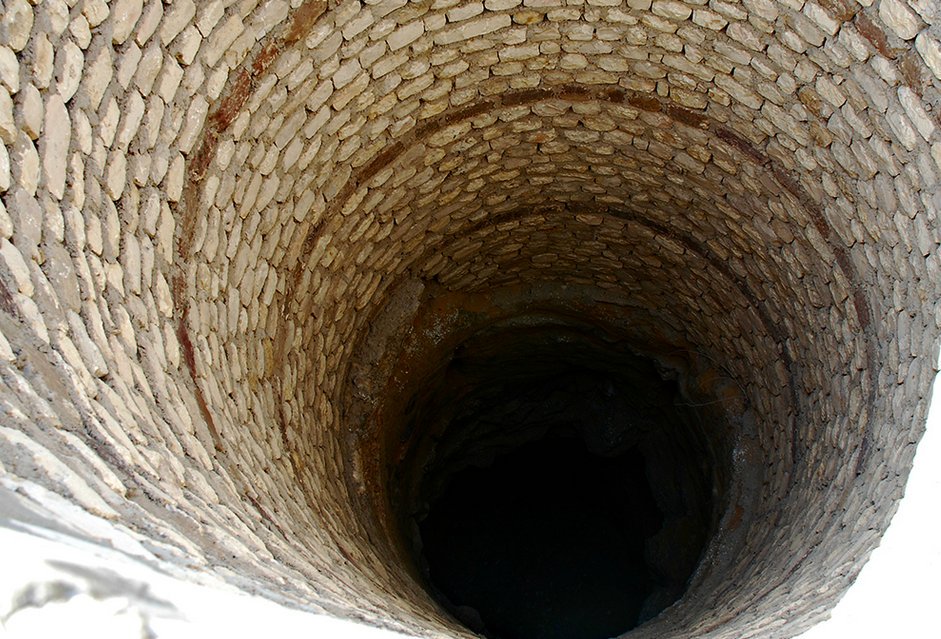
The whole architecture of the fort is restricted to stone and lime.
The northern part of the fort's perimeter is a natural high hilly formation while on the other three sides it is covered by fort walls. Within this main fort, there is a smaller fort known as the "Meeri" which is about 5–6 miles from the entry gate of the main fort and is reported to have served as the palace of the royal family of Mirs.
The entire fort structure has been built with stone and lime mortar. The fort is built in a zig-zag form, with four entry gates in the shape of a rhomboid.

The southern entry gate has a double doors gate. Within the gates, there are two niches that have floral ornamentation and carved stones.
Two of the gates, facing each other are crossed diagonally by the Sann river; the first gate is on the western side and is skirted by the river water and is difficult to approach.
The southern entry gate has a double doors gate. Within the gates, there are two niches that have floral ornamentation and carved stones. The Sann gate, which is also the entrance to the Meeri, is well preserved and can be climbed to reach the top of the fort from both sides to get a scenic view of the terrain around the fort.
Written by – A. Sutherland - AncientPages.com Senior Staff Writer
Copyright © AncientPages.com All rights reserved. This material may not be published, broadcast, rewritten or redistributed in whole or part without the express written permission of AncientPages.com
Expand for referencesMore From Ancient Pages
-
 On This Day In History: Knights Templar Arrested In The Kingdom Of France – Oct 13, 1307
-
 On This Day In History: Statue of Liberty Arrived In New York Harbor – On June 17, 1885
-
 Priceless Artifacts From The Bactrian Hoard Are Missing – Where Are They?
-
 Ancient Giants In Ecuador Were Killed By Fire From The Sky – Indian Legends Reveal
-
 Unusual 300,000-Year-Old Jawbone May Belong To An Unknown Vanished Human Lineage
-
 Stone Tools In Lapa do Picareiro Cave Reveal Modern Humans Reached Western Parts Of Europe 5,000 Years Earlier Than Previously Thought
-
 Deception And Hidden Truth – Ancient Struggle Of The Eagle And Serpent – Part 2
-
 Colossi Of Memnon Guarded Temple Of Pharaoh Amenhotep III And Curious Sound Phenomenon
-
 On This Day In History: Great English Dramatist And Poet William Shakespeare, Was Probably Born – On Apr 23, 1564
-
 Why Is The Yarm Viking Helmet Special?
-
 Kaillachuro’s Hunter-Gatherers Built Monumental Burial Mounds In The Titicaca Basin 1,500 Years Earlier Than Previously Thought
-
 Rare Gothic Boxwood Miniatures – Precious Marvel Of Human Ingenuity
-
 Chartres – Symbol Of Power And Secret Ancient Knowledge
-
 82 Mysterious 3,000-Year-Old Pits Discovered In Sweden – Bronze Age Cooking Pits And Ancient Ceremonial Center?
-
 Mystery Of The Lost Continent Destroyed By An Ancient Cataclysm – Wars Between The ‘Yellow Men And Black’ Men – Part 1
-
 Colors On These Ancient Pots Hint At The Power Of An Empire
-
 Controversial Story And Secret Knowledge Of Li Ching-Yuen Who Lived For 256 Years
-
 On This Day In History: ‘The Wars Of The Roses’ – Fighting For The Throne Of England At Tewkesbury – On May 4, 1471
-
 Unusual Neolithic Burial From Grotta Di Pietra Sant’ Angelo Puzzles Archaeologists
-
 Tetzacualco – Mesoamerican Mini Model Of The Universe Discovered Underwater

